Tanzania's most underrated highland gateway
About Karatu — The Complete Introduction
Karatu is a highland town at 1,400 metres altitude in the Arusha Region of northern Tanzania, positioned between Lake Manyara and the Ngorongoro Conservation Area on the northern safari circuit. It is the closest major town to the Ngorongoro Crater — the gate is only 17 kilometres away — and serves as the overnight base for thousands of safari guests each year who use it as a rest point before or after the Ngorongoro Crater descent and Lake Manyara game drive.
But most visitors see only the main road through town. The Karatu that most safari guests never discover is a remarkably beautiful highland landscape of terraced coffee and banana farms, ancient Iraqw farming villages, highland cedar and acacia forests, and one of northern Tanzania's most distinctive cultural communities. The Iraqw people — Cushitic-speaking highland farmers who have cultivated these volcanic soils for centuries — are one of Tanzania's most historically fascinating ethnic groups and one of the least visited by international tourists. A properly arranged Iraqw cultural walk near Karatu is more genuinely revelatory than many more famous cultural experiences in East Africa.
Karatu also hosts Gibbs Farm — a working coffee estate with one of the finest small lodges in Tanzania, whose gardens, farm tours, and food experience represent a completely different category of Tanzania travel from the safari park circuit. The highland climate — cool, green, and frequently misty in the mornings — is a profound relief after the heat of the Serengeti or Tarangire plains. For travellers who have time to stop, Karatu rewards deeply.

The Karatu highlands sit on volcanic soils from the ancient Ngorongoro and Olmoti volcanic complex — the same nutrient-rich material that makes the Ngorongoro Crater's interior so extraordinary for wildlife also makes the surrounding highlands extraordinarily fertile for agriculture. The Iraqw people recognised this productivity centuries ago and developed a terraced farming system that has sustained dense settlement in this landscape without deforestation or soil erosion — an agricultural achievement that has no equivalent in the East African highlands at the same scale. Walking through this landscape with an Iraqw guide who understands both the agricultural and cultural history is among the most intellectually stimulating half-day experiences available in northern Tanzania.
Complete activity guide
Things to Do in Karatu — The Complete 2026 Guide
Eight activities and experiences in and around Karatu, from the famous Ngorongoro Crater day trip to the deeply personal Iraqw cultural walk and the Gibbs Farm coffee experience. Each is covered in depth with logistics, pricing, and best season.
17 km from Karatu · Full day 7–8 hrs
Ngorongoro Crater Day Trip
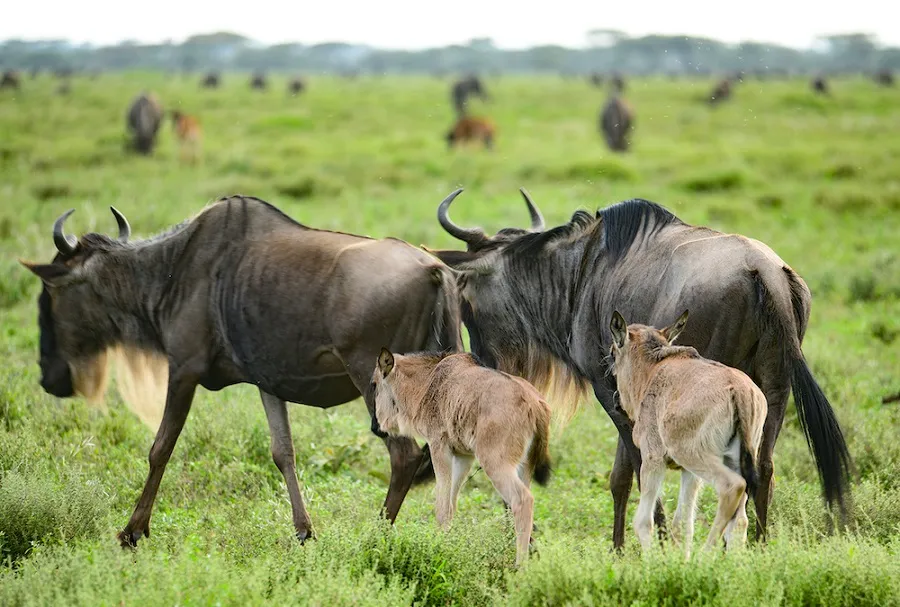
The Ngorongoro Crater is Africa's most wildlife-dense location — 25,000 large mammals in a single 260 km² ancient caldera whose walls enclose a permanent, self-contained ecosystem that has evolved in isolation for three million years. Staying in Karatu places you just 17 km from the crater gate — the closest town to the gate on the entire circuit. An early morning crater descent (arriving gate at 6:00–6:30 am) is the standard approach, reaching the crater floor before other vehicles and maximising the time in the finest wildlife conditions. The Ngorongoro Crater delivers: Tanzania's finest black rhino encounter probability (approximately 30 individuals, the highest density anywhere on Earth); the famous thick-maned crater lion prides; 5,000+ buffalo; 4,000 zebra; leopard in the Lerai Forest; the hippo pool at the crater river; and flamingo on the Magadi soda lake. All resident — no migration dependency, no seasonal conditions affecting the encounter quality. The crater is extraordinary in every month of every year.
The Ngorongoro Crater day trip from Karatu is the single most rewarding wildlife day available from any base on the northern circuit. Karatu's proximity to the gate (30 minutes) means guests can descend earlier than those driving from more distant accommodations — giving a significant advantage for black rhino positioning in the pre-6:30 am window when the guide network intelligence is most precisely actionable. A full-day crater experience from Karatu returns to town by approximately 5:30–6:00 pm, leaving the afternoon for a Karatu cultural walk or highland farm visit.

Karatu town · Half-day or full day · 3–6 hrs
Iraqw Tribe Cultural Walk — Karatu Highlands
The Iraqw cultural walk through the Karatu highlands is one of northern Tanzania's finest and least-known experiences — a guided walk through active Iraqw farming communities and ancient terraced landscapes with an Iraqw guide whose family has farmed this land for generations. The Iraqw people are Cushitic-speaking highland farmers who migrated to this region from the Ethiopian highlands several centuries ago, developing sophisticated agricultural systems that allowed dense settlement on the volcanic soils without the deforestation and soil loss that has affected other East African highlands. The terraced coffee, banana, maize, and bean farms you walk through are living evidence of this agricultural tradition — systems that predate colonial settlement by hundreds of years and continue to function with remarkable productivity at 1,400 metres altitude.
The walk visits a traditional Iraqw homestead (tlama) — a distinctive compound design with a central cattle byre, family sleeping rooms arranged around it, and a separate storage building for the harvest. The guide explains Iraqw social structure (clan organisation, marriage patterns, age-set ceremonies), the significance of cattle in Iraqw economy and culture, traditional food preparation (ugali from maize, mbege banana beer, roasted coffee), and the specific agricultural calendar that has shaped the landscape. Unlike many cultural tours that are performative, the Iraqw walk moves through communities in which daily life is genuinely in progress — women weaving, children returning from school, elders working the farm. The encounter is real rather than staged, and is among the most authentic cultural experiences available in northern Tanzania.

Karatu · 5 km from Karatu town · 2–4 hrs
Gibbs Farm — Coffee Estate Tour and Lunch
Gibbs Farm is one of Tanzania's most celebrated properties — a 100-acre working organic coffee and vegetable estate on the slopes of the Ngorongoro highlands, established in the 1920s as a farming estate and developed into Tanzania's finest small highland lodge over the past three decades. The farm is a mandatory stop for food-conscious travellers in northern Tanzania — a place where the relationship between Tanzanian soil, Tanzanian climate, and the food on your plate is completely visible and completely direct. The estate grows coffee at altitude under shade trees using traditional organic methods, produces a full range of highland vegetables and fruits, maintains a herb garden of extraordinary diversity, and runs a bakery that produces bread, pastries, and preserves entirely from farm-grown ingredients.
The Gibbs Farm coffee tour is an education in what Tanzanian coffee actually is — the guide walks guests through the shade-grown arabica varieties (Bourbon, Kent, and local cultivars), the hand-picking process, the on-site wet mill, the drying tables, and the roasting. The cup at the end of the tour — freshly roasted, freshly ground, prepared in the farm's kitchen — is one of the finest coffee experiences available in Tanzania. The farm-to-table lunch (for non-staying guests, available by reservation) uses entirely estate-grown ingredients — bread from the bakery, salads from the gardens, fruit from the orchards — and is widely considered one of the finest food experiences available anywhere on the northern Tanzania circuit. The farm's gardens, surrounding cedar forest, and highland bird diversity (over 200 species recorded on the estate) make it a full nature experience as well as a gastronomic one.
60 km from Karatu · Full day 8–10 hrs
Lake Manyara National Park Day Trip
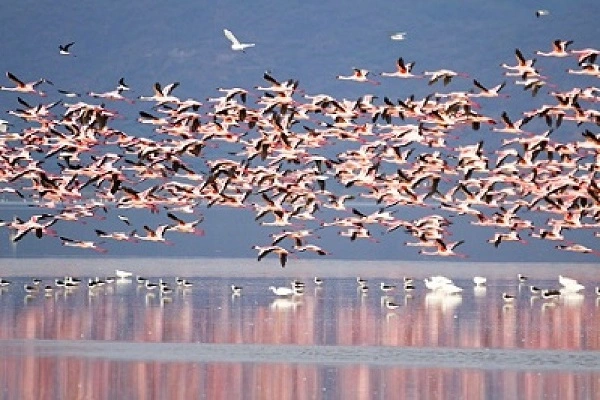
Lake Manyara National Park is 60 kilometres from Karatu and is accessible as a full day trip — departing at 7:00 am and returning by 6:00–7:00 pm. Lake Manyara is East Africa's most distinctive short-circuit safari park — home to East Africa's only tree-climbing lion population, a phenomenon unique in the world among savanna lions. The park compresses extraordinary habitat diversity into 50 km of length: the groundwater forest at the base of the Rift Valley escarpment (blue monkey, olive baboon, 400+ bird species, fig trees); the open floodplain; the alkaline soda lake with flamingo flocks, great white pelican, and spoonbill; and the hippo pools at the forest edge. The Rift Valley escarpment rising 600 metres behind the lake is one of the most dramatic visual backdrops in African wildlife photography. From Karatu, the drive down the escarpment to the lake floor is itself a spectacular landscape experience — the full length of the lake visible from above before descending to the park gate.

Karatu · 3–4 hrs · Active
Karatu Highland Forest Walk and Birding
The highlands around Karatu support fragments of indigenous montane forest — cedar, olive, and croton woodland at 1,400–1,800 metres that represents the remnants of the much larger highland forest that once covered the entire Ngorongoro volcanic complex. These forest fragments are rich in highland bird species, colobus monkey, and the high-altitude flora of the Ngorongoro highlands: orchids, giant tree heathers, and mossy undergrowth that contrast completely with the dry savanna of the national parks below. A guided highland forest walk from Karatu is a genuinely restorative experience after the heat and dust of the safari circuit — cool, green, birdsong-filled, and utterly different from every other landscape on the northern circuit.
The birding on a Karatu highland forest walk is exceptional — the highland forest holds species absent from the lowland parks including highland robin-chats, sunbirds, weavers, and raptors. The guide uses bird calls to locate species otherwise invisible in the dense forest understorey. Colobus monkey troops are regularly encountered in the larger forest patches, and the forest understory plants — used in Iraqw traditional medicine — are explained by the guide with genuine botanical and cultural knowledge. The walk is suitable for all fitness levels and does not require special footwear beyond comfortable walking shoes.

Karatu town · 2–3 hrs · Self-guided or guided
Karatu Town Walk and Local Market
Karatu's daily market is one of the finest local produce markets on the northern Tanzania safari circuit — a reflection of the extraordinary agricultural productivity of the surrounding highlands. The market sells fresh highland produce: coffee beans (both green and roasted), bananas (over a dozen varieties grown locally), avocados, passion fruit, tomatoes, courgettes, peas, beans, and the spectrum of vegetables that the 1,400-metre altitude and volcanic soils produce in abundance. The market is primarily frequented by local Iraqw and Mbulu farmers, giving it an authentic character entirely absent from the curio-market culture of Arusha and Moshi. Tuesday and Friday are the busiest market days, when farmers from the surrounding highlands bring their week's production to town — creating a vivid, aromatic, and genuinely photogenic scene of highland market life.
A guided Karatu town walk (with a local guide who can provide cultural context and language interpretation) also visits the town's Lutheran church (established by early German Lutheran missionaries in the colonial period and still an active community centre), the local secondary school compound (many of whose students are Iraqw children from surrounding farming families), and the roadside wood carvers whose work reflects Iraqw artistic traditions. The walk ends at a local tea house for chai and mandazi (fried dough), eaten with Karatu market vendors at communal plastic tables — one of the most human and unhurried food experiences on the northern circuit.

Karatu highlands · 2–3 hrs · Cultural + farm
Karatu Local Coffee Farm Visit
Beyond the celebrated Gibbs Farm, Karatu's surrounding highlands contain dozens of small-holder family coffee farms where Iraqw farmers have been growing arabica coffee under shade trees at 1,400–1,800 metres for generations. A visit to a local Karatu coffee farm — arranged through community contacts rather than the commercial lodge network — provides a different and arguably more genuine coffee experience than the larger estate tours: a family farm of 0.5–2 hectares, coffee grown between banana and macadamia shade trees, harvested by hand by the farmer's children and extended family, processed on a small hand-pulper behind the house, and dried on raised beds in the farm yard. The coffee that eventually reaches export markets from these farms is, in most cases, the same quality as the certified specialty coffee sold for $25 a bag in European coffee shops — bought at the farm gate for approximately $1 per kilogram of green beans.
The farm visit includes the complete coffee explanation (cultivar identification, altitude effect on bean density, traditional roasting on a cast-iron pan over wood fire, grinding in a hand mortar, and the finished cup). The farmer's wife typically serves the cup with fresh mandazi and seasonal fruits. Guests may purchase green or roasted beans directly from the farmer at fair-trade or above fair-trade rates — the direct economic benefit to the farming family from one guest's purchase is significant. This experience is specifically recommended for guests who want an authentic farm interaction rather than a lodge-managed commercial tour.

Karatu highlands · 3–6 hrs · Active
Highland Cycling and Mountain Biking
Karatu's highland landscape — gently rolling volcanic hills at 1,400 metres, connected by a network of sealed and gravel roads passing through coffee and banana farms, Iraqw homesteads, and highland forest patches — is ideal cycling terrain. The cool highland climate makes extended cycling comfortable even at midday, unlike the heat of the national park zones. A guided cycling route from Karatu town passes through the agricultural heartland of the Iraqw highlands, with farm visits, market stops, and highland viewpoints incorporated into the route. Mountain bikes are available for hire from several Karatu operations at approximately $15 per day — a full suspension trail bike recommended for the gravel roads. The cycling experience can be combined with a Karatu town market stop, a local coffee farm visit, or a highland bird walk depending on the group's interests and available time.
Where to stay in Karatu
Karatu Accommodation — The Complete 2026 Guide by Tier
Karatu has more accommodation variety per square kilometre than almost any other town on the northern Tanzania circuit — from budget guesthouses to one of Tanzania's most celebrated small lodges. Here is the complete accommodation guide by tier.
Budget · $25–$70/room/night
Budget Guesthouses and Hostels
$25–$70 per room per night
Karatu town has several budget guesthouses along the main road and in the quiet streets behind it. The Safari Centre, Karatu Simba Lodge, and Twiga Lodge are reliable budget options with clean en-suite rooms, nets, and basic breakfast. Not scenic or special but functional, well-priced, and close to the market and town amenities.
Mid-range · $210–$220/person/night
Comfortable Lodges and Safari Camps
$210–$220 per person per night all-inclusive
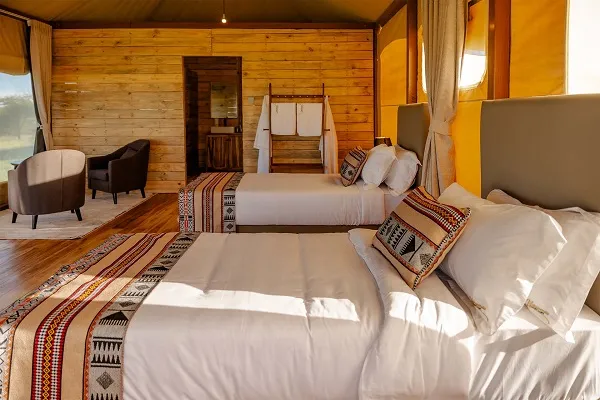
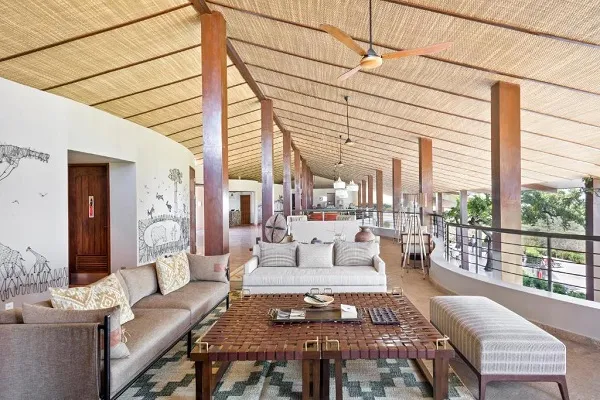
The mid-range tier in Karatu is very strong — several well-run lodges in the highland landscape 3–8 km from town. Karatu Simba Resort, Acacia Farm Lodge, and Country Lodge offer comfortable rooms in garden settings with full board. Acacia Farm Lodge's gardens are particularly beautiful. This tier is the standard accommodation included in our northern circuit safari packages for Karatu nights.
Luxury · $440–$2100/person/night all-inclusive
Gibbs Farm — Tanzania's Finest Highland Lodge
From $440 per person per night all-inclusive
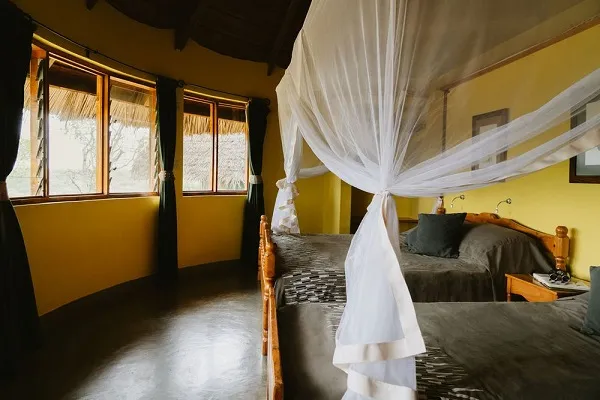
Gibbs Farm is the finest highland lodge in Tanzania — a working organic coffee and vegetable estate whose 17 cottages sit in extraordinary gardens with views over the Ngorongoro highlands. The food (entirely from the farm's own production) is the finest on the northern circuit. Farm tours, forest walks, and highland birding all from the property. A completely different Tanzania experience from any park lodge. Books 3–6 months ahead for peak season.
Logistics and getting to Karatu
Getting to Karatu — From Arusha, Moshi, and the Northern Circuit
From Arusha — The Standard Route
Karatu is 145 km from Arusha, a drive of 2.5–3 hours on the fully sealed Arusha–Dodoma highway. The road passes through Usa River (30 minutes), Mto wa Mbu (90 minutes — a good stop for fresh fruit at the market), the descent of the Rift Valley escarpment with spectacular views, and the Lake Manyara shore before climbing back up the escarpment to Karatu. This route is the standard approach for all northern circuit safaris and is safe and well-maintained throughout 2026. Our circuit safari vehicles collect guests from Arusha or Moshi hotels and drive to Karatu on Day 1 or 2 of the circuit.
Position in the Northern Circuit
Karatu is the natural overnight stop between Lake Manyara National Park and the Ngorongoro Crater on the northern circuit. The standard circuit order is: Arusha → Tarangire → Lake Manyara → Karatu overnight → Ngorongoro Crater → Serengeti. Guests on the standard 4-day and 5-day private circuits spend one or two nights in Karatu, using the town as the overnight base for the Ngorongoro Crater day. The 17 km from Karatu to the crater gate means early morning gate entry (6:00 am) is logistically straightforward in a way that is impossible from more distant accommodations.
Most guests on the standard 4-day circuit spend only one night in Karatu — arriving after Lake Manyara, sleeping, descending the crater, and departing for the Serengeti the same afternoon. Adding one extra night in Karatu creates the opportunity for a morning Ngorongoro Crater descent AND an afternoon Iraqw cultural walk or Gibbs Farm visit on the same day — making Karatu's cultural and natural experiences available without sacrificing any safari park time. The extra night costs approximately $210–$150 per person at mid-range accommodation and adds one of northern Tanzania's genuinely distinctive experiences to the circuit at minimal cost. We specifically recommend a 2-night Karatu stop on any 5-day or longer northern circuit itinerary.
Distances and Driving Times from Karatu
| Destination | Distance | Driving time | Road condition |
|---|---|---|---|
| Arusha | 145 km | 2.5–3 hrs | Sealed, good |
| Moshi | 200 km | 3.5–4 hrs | Sealed throughout |
| Ngorongoro Crater Gate | 17 km | 25–30 mins | Sealed, excellent |
| Lake Manyara NP Gate | 60 km | 1–1.5 hrs | Sealed, good |
| Tarangire NP Gate | 100 km | 1.5–2 hrs | Mostly sealed |
| Serengeti (Naabi Gate) | 145 km | 3–4 hrs from Ngorongoro | Unpaved last section |
| Lake Eyasi (Hadzabe) | 65 km | 1.5–2 hrs | Partly unpaved |
| Lake Natron | 120 km | 2.5–3 hrs | Gravel last section |
When to visit Karatu
Karatu Seasonal Guide — When to Visit 2026–2027
Karatu's highland climate is pleasant year-round — the 1,400-metre altitude moderates the equatorial heat into a mild, often-cool environment that is comfortable in every season. What changes by season is the agricultural landscape, the road conditions to more remote destinations, and the price level of surrounding safari parks.
January–February
Short Dry Season
High seasonWarm, dry, and clear. The Ngorongoro Crater is at its finest — dry season concentrates animals at the crater water sources. Gibbs Farm coffee harvest beginning. Excellent for all Karatu activities. The crater is most visited in this period — book accommodation 6+ months ahead for January–February. The southern Serengeti calving season makes February/March a superb circuit month with Karatu as the base for Ngorongoro days.
March–May
Long Rains
Best valueThe long rains arrive in March–May. Karatu's highland landscape is at its most vivid green. Road conditions to more remote destinations (Lake Natron, Lake Eyasi) may become challenging in heavy rain. Ngorongoro Crater and Karatu itself are excellent. Accommodation rates at their lowest. The Iraqw farms are at peak growing season — the most beautiful landscape for the cultural walk.
June–October
Dry Season Peak
Peak seasonTanzania's main tourist season. The Serengeti crossing season (July–October) drives overall northern circuit demand — Karatu accommodation fills, rates are highest, advance booking essential for all properties (3–6 months for mid-range, 6–9 months for Gibbs Farm). Ngorongoro excellent. Highland climate cool and dry — ideal for forest walks and cycling. Coffee cherry ripening begins in August.
November–December
Short Rains / Good Season
Good valueShort rains bring brief afternoon showers and morning mist in the highlands — the most atmospheric photography season in Karatu. Coffee harvest peaks in October–November — the finest time to visit Gibbs Farm and the local coffee farms. Accommodation rates 15–20% below peak. Ngorongoro Crater excellent year-round. Recommended for guests who want atmosphere, photography, and fair pricing.
Everything you need to know
Karatu Practical Travel Guide — Money, Safety, Health, and Logistics 2026
Money in Karatu
Karatu has a CRDB Bank ATM (on the main road, between the market and the town centre) that dispenses Tanzanian Shillings (TZS) and accepts Visa and Mastercard. USD cash is widely accepted at lodges, coffee farms, and tour operators. The market and local restaurants operate in TZS only — bring small TZS bills for local purchases. Exchange rates at Karatu's bureau de change (in the main commercial area) are fair. Note that Gibbs Farm and mid-range upward lodges accept credit cards — budget guesthouses typically require cash.
Mobile Network and Connectivity
Vodacom and Airtel both have coverage in Karatu town and along the main road. Network quality is good within the town but drops off in the highland farm areas away from the main road. WhatsApp and standard internet use work well in Karatu town; streaming video is slow. Gibbs Farm and most mid-range lodges have Wi-Fi — quality varies. The Ngorongoro Crater area has very limited connectivity.
Health in Karatu
Karatu has a district hospital and several private clinics that provide basic medical care. The altitude (1,400 metres) is not sufficient to cause altitude sickness but some guests experience mild headaches in the first 24 hours. Malaria risk in Karatu is present but lower than in the lowland parks due to altitude — antimalarials are still recommended as part of the full Tanzania circuit. Tap water in Karatu is not safe to drink — use bottled water or the filtered water provided by all lodges. Sunscreen and insect repellent are essential.
Dining in Karatu
Karatu's dining options range from local Tanzanian restaurants on the main road (ugali, beans, grilled chicken, rice — approximately $2–$5 per meal) to the extraordinary farm-to-table experience at Gibbs Farm ($35–$55 for a day-visitor lunch). Acacia Farm Lodge and Country Lodge both have good dinner menus for non-staying guests by arrangement. The local tea houses near the market serve chai, mandazi, and chapati from 7:00 am — the best and most authentic breakfast option in Karatu town at approximately $1–2 per person.
Guest experiences in Karatu
Karatu Travel Reviews — Real Guest Experiences 2026

"We spent two nights in Karatu on the northern circuit and I am so glad we did. The Iraqw cultural walk on the afternoon after the Ngorongoro Crater was a completely different kind of experience from any wildlife activity. Our guide had been born on a farm 400 metres from where we walked. He knew every family in every compound. He showed us which banana variety his grandmother used for mbege, and which terracing technique his grandfather had introduced to prevent the erosion that damaged neighbouring farms. This is the Tanzania that the standard safari circuit does not show. I came to see the Serengeti and I left having been shown something more ordinary and more human — and equally unforgettable."
Iraqw Cultural Walk · Karatu · October"Gibbs Farm for two nights was the finest accommodation of the entire Tanzania trip — and I stayed at excellent safari lodges in the Serengeti and Ngorongoro. The food is genuinely extraordinary: bread from the bakery at 7 am, coffee roasted that morning, salads from the garden that was picked an hour before lunch. The highland atmosphere — the mist in the cedar trees at dawn, the bird sound, the silence — is a complete contrast to the dust and heat of the national parks. I stayed at Gibbs Farm to recover between safari legs and ended up wishing I had booked an extra night. The farm tour and coffee experience are not to be missed."
Gibbs Farm · 2 nights · September
"I had one morning free in Karatu before the Ngorongoro descent and decided to walk to the local market rather than sit at the lodge. The market on a Tuesday morning in November is an extraordinary scene — Iraqw women in traditional wraps selling avocados the size of softballs and bananas in varieties I had never seen, farmers arguing over coffee bean quality, a chai stand with 20 people standing around plastic chairs at 8 am. I spent $3 on breakfast and $8 on local coffee beans to take home. The beans made the finest coffee I have had since. Nobody visits Karatu for the town. They should."
Karatu Town Market · November · Self-guidedEvery Karatu question answered
Karatu Travel FAQ — Complete Guide 2026–2027
-
Karatu is known primarily as the gateway town to the Ngorongoro Crater — the closest major town to the Ngorongoro Conservation Area gate, only 17 km away. It is also the home of the Iraqw highland farming people, one of Tanzania's most historically fascinating ethnic groups, and the location of Gibbs Farm, one of Tanzania's most celebrated small lodges and working organic coffee estates. Beyond these well-known associations, Karatu's broader highland landscape — terraced coffee and banana farms, indigenous forest fragments, and a cool climate unlike any other town on the northern circuit — makes it genuinely worth spending 2 nights on any circuit itinerary. Karatu's market (especially Tuesday and Friday) is one of the finest fresh produce markets in northern Tanzania and provides a genuinely local experience entirely different from the tourist market culture of Arusha.
-
Karatu is 17 kilometres from the Ngorongoro Conservation Area main gate — a drive of approximately 25–30 minutes on the sealed road. This is the closest major town to the Ngorongoro gate on the entire northern circuit. From the gate, it is a further 15–20 minute drive along the crater rim to the descent road, and approximately 30 minutes down the winding descent road to the crater floor. Total drive from Karatu to the crater floor is approximately 75–90 minutes. This proximity means Karatu-based guests can reach the gate by 6:00–6:30 am for the earliest possible descent — a significant advantage for black rhino and crater lion positioning in the dawn window that more distant accommodations cannot match.
-
Yes — Gibbs Farm accepts day-visitors for farm tours and lunch by prior arrangement. The farm-to-table lunch (approximately $35–$55 per person) is considered one of the finest food experiences on the northern Tanzania circuit — entirely from the farm's own production, served in the farm's dining room or garden. A morning coffee farm tour (approximately $15 per person) takes guests through the shade-grown arabica cultivation, wet mill, drying tables, and roasting process. The farm's gardens and surrounding cedar forest are also accessible to day visitors. We recommend contacting Gibbs Farm directly or through us to make a reservation — day visitor space is limited and fills ahead of time during peak season (June–October). For guests staying in the Karatu area, a Gibbs Farm half-day visit and lunch is the single most rewarding single afternoon activity available near the town.
-
The Iraqw (also called Mbulu or Gorowa) are a Cushitic-speaking agricultural people who have inhabited the Karatu highlands and the Mbulu plateau for several hundred years, having migrated south from the Ethiopian highlands in a series of movements documented in oral tradition. They are linguistically and culturally distinct from the surrounding peoples — the Maasai (Nilotic pastoralists), the Datoga (Nilotic agropastoralists), and the Hadzabe (Khoisan hunter-gatherers) — and represent a third cultural strand of northern Tanzania's remarkable ethnic diversity. The Iraqw developed sophisticated terraced farming systems, communal water management, and a dense settlement pattern on the volcanic highland soils that created some of the most productive agricultural land in East Africa. Their traditional homestead architecture (the tlama compound), their oral literature, and their medicinal plant knowledge are among the most developed of any Tanzanian highland group. A guided Iraqw cultural walk near Karatu, led by an Iraqw community member, is one of the most intellectually rewarding cultural experiences available in northern Tanzania.
-
The standard northern circuit itinerary includes one night in Karatu — arriving after Lake Manyara, sleeping, and departing for the Ngorongoro Crater next morning. This single-night format allows the Ngorongoro Crater descent but nothing else. Two nights in Karatu is strongly recommended for guests who want to add any Karatu-specific activity — arriving after Lake Manyara, spending the afternoon on an Iraqw cultural walk or Gibbs Farm visit, descending the Ngorongoro Crater the next morning, and departing for the Serengeti in the afternoon. This 2-night format adds approximately one day to the circuit itinerary (requiring a 5-day or longer package) but adds one of northern Tanzania's genuinely distinctive experiences without sacrificing any park time. Guests staying at Gibbs Farm specifically should book 2–3 nights to take full advantage of the farm's activities, food, and atmosphere.
-
Karatu's highland climate at 1,400 metres is mild and pleasant throughout the year — significantly cooler and more comfortable than the national parks at lower altitudes. Daytime temperatures range from 20–28°C in the dry season and 18–24°C in the rainy seasons. Nights are cool year-round (10–16°C) — a warm layer is always useful at Karatu. The long rains (March–May) bring frequent afternoon showers and morning mist — creating the most atmospheric but wettest period. The short rains (November–December) are lighter and more pleasant — brief afternoon showers with long sunny mornings. The dry season (June–October) is warm, clear, and dusty in the lowland parks but cool and green at Karatu's altitude. The highland forest around Gibbs Farm and the forest walks are most beautiful in the short rains — the mist, the birdsong, and the vivid green create extraordinary photography conditions. For overall comfort and activity conditions, Karatu is excellent in every season.
-
Lake Eyasi (Hadzabe and Datoga cultural experience) is 65 km from Karatu — a drive of 1.5–2 hours partly on unpaved road. A day trip from Karatu is possible but results in a rushed experience. The Hadzabe morning hunt begins at 6:00 am and requires arriving at the camp before dawn — meaning departure from Karatu at 4:30–5:00 am. An overnight stay at a lakeside camp near Lake Eyasi (approximately $210–$200 per person per night) is strongly recommended for the Hadzabe experience. Lake Natron is 120 km from Karatu — a 2.5–3 hour drive with the last section on gravel. A Lake Natron day trip from Karatu is feasible but very long. The best approach for both Lake Eyasi and Lake Natron is a 2-day extension from Karatu (overnight at each destination) that forms a natural add-on to the northern circuit before or after the Serengeti portion. We arrange combination Lake Eyasi + Lake Natron 2-day packages departing and returning to Karatu — contact us via WhatsApp for current pricing and availability.