The honest Tanzania budget safari guide
Tanzania Safari on a Budget — What Is Actually Possible?
Tanzania is not the cheapest safari destination in Africa — but it is the finest wildlife destination in the world, and at the budget tier, it is significantly more accessible than most travellers believe. The key distinction in Tanzania safari planning is between cost-cutting and value-finding. Cost-cutting (bottom-dollar operators with unlicensed guides, old vehicles, and dangerous accommodation) is a genuine risk in Tanzania. Value-finding — choosing the right format (group joining vs private), the right season (value season vs peak), and the right itinerary duration for your specific goals — is how you experience Tanzania's extraordinary wildlife at a price that works for your budget without compromising the experience.
This guide is built on honesty. We will tell you exactly what each budget level delivers, where the real costs are, what you cannot cut without compromising the experience, and where the genuine savings are available without affecting wildlife quality. The guide covers group joining safaris, budget camping safaris, budget private lodge options, the value season calendar, the best budget-friendly park combinations, how to see all Big Five on a budget, and the 10 most common budget safari mistakes that cost travellers money and quality.
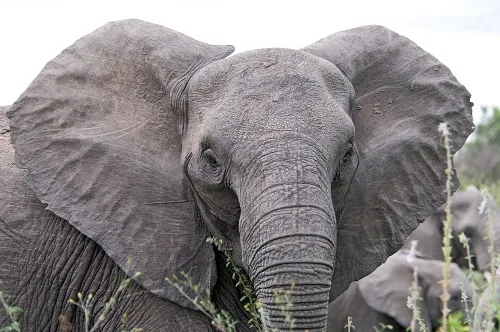
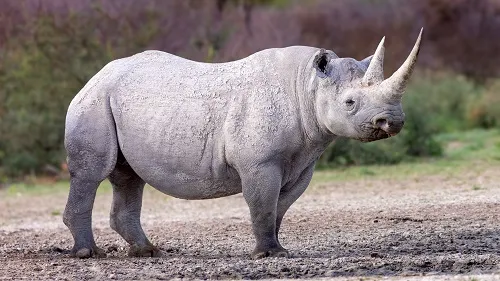
The most important thing to understand about Tanzania safari on a budget: the wildlife does not know what you paid. The Ngorongoro Crater's black rhino does not move differently for a $450 group joining guest than for a $2,000 luxury guest. The Tarangire elephant herd of 300 individuals crosses the road in front of any vehicle that is positioned there at the right time. What changes at the budget tier: the vehicle occupancy (shared vs private), the accommodation standard (comfortable vs extraordinary), and the schedule flexibility (fixed vs fully flexible). The wildlife itself — Tanzania's incomparable wildlife — is available to every guest at every budget.
The guide quality is the most important variable on any Tanzania safari — more than the vehicle, the accommodation, and the route. A licensed, knowledgeable expert naturalist makes a budget safari extraordinary. An unlicensed or inexperienced guide makes a luxury safari disappointing. When evaluating budget operators, always ask for your guide's licence number and years of experience in the specific parks on your itinerary. We use the same licensed expert guides for our group joining and budget private safaris that we use for our luxury itineraries. This is non-negotiable and is where budget operators most commonly cut corners.
No hidden fees. Real numbers.
What a Tanzania Safari Actually Costs — The Honest Breakdown 2026
The most common complaint about Tanzania safari planning is that published prices are confusing, inconsistent, or obscure hidden costs. Here is the complete honest breakdown of every cost involved in a Tanzania safari — what is typically included, what is typically excluded, and what will surprise you if you do not budget for it in advance.
The Complete Cost Architecture of a Tanzania Safari
| Cost Item | Budget option (joining) | Mid-range private | Included? |
|---|---|---|---|
| Safari vehicle (4x4 Land Cruiser) | Shared — your share ~$30–$60/day | Private — full cost ~$200–$260/day | Yes — in price |
| Expert licensed guide | Shared guide — your share ~$20–$40/day | Private guide — ~$210–$200/day | Yes — in price |
| Tarangire park fee (per person) | $70.80/day (2026) | $70.80/day (2026) | Yes — in price |
| Lake Manyara park fee | $53.10/day (2026) | $53.10/day (2026) | Yes — in price |
| Ngorongoro Crater descent fee | $295.60/vehicle + $70.80pp (2026) | $295.60/vehicle + $70.80pp (2026) | Yes — in price |
| Serengeti park fee | $82/day (2026) | $82/day (2026) | Yes — in price |
| Accommodation (mid-range) | Shared room, comfortable lodge | Private room, comfortable lodge | Yes — in price |
| All meals (Day 1 dinner → final day lunch) | Included | Included | Yes — in price |
| Bottled water in vehicle | Included | Included | Yes — in price |
| Hotel pickup and drop-off (Arusha/Moshi) | Included | Included | Yes — in price |
| Tanzania tourist visa | ~$50 USD (online) | ~$50 USD (online) | No — pay separately |
| Personal travel + medical evacuation insurance | ~$210–$200 for 2 weeks | ~$210–$200 for 2 weeks | No — buy yourself |
| Guide tip (recommended) | $10–$15/day per group | $15–$25/day per group | No — discretionary |
| Alcoholic beverages | Not included — available at lodges | Not included | No — extra cost |
| International flights | Kilimanjaro airport (JRO) — book separately | Same | No — book separately |
Park Fee Reality Check — Why Budget Safari Prices Cannot Go Much Lower
Tanzania's government-mandated park entry fees are non-negotiable and non-discountable. They apply identically to every guest at every price point. The Ngorongoro Crater descent fee alone — $295.60 per vehicle plus $70.80 per person per day — makes the Ngorongoro Crater one of the most expensive single-day wildlife experiences in the world in terms of access cost. This is why the cheapest 2-day group joining safari (Tarangire and Ngorongoro) legitimately costs $450 per person rather than $260 — the park fees account for approximately $260 of the $450, with guide, vehicle, accommodation, and food making up the balance.
If you see a 2-day Tanzania safari advertised for $150 per person, one of three things is true: the Ngorongoro Crater is not actually included; the guide is unlicensed and the park fees are being evaded (which is illegal and can result in arrest at the park gate); or the operator is running at a loss and will recover the money through hidden charges. The published park fees are public knowledge — any operator advertising below-cost prices should be investigated carefully before booking.

Prices significantly below our published group joining rates (which already represent the minimum viable cost for a legitimate safari); operators who cannot provide their guide's (Tanzania Association of Tour Operators) registration number; guides without a valid TANAPA (Tanzania National Parks Authority) guide licence; vehicles without valid national park registration stickers; accommodation not named in the booking confirmation; payment requested only in cash with no receipt; and no written contract or booking confirmation before payment. In Tanzania's safari market, if a price seems impossibly low, the explanation is always a compromise you do not yet know about.
Every legitimate budget option available
Tanzania Budget Safari Options — From $210 to $1450 Per Person
The group joining format is the definitive budget Tanzania safari choice — the same expert guide, the same parks, the same vehicle, at significantly lower per-person cost because the vehicle and guide are shared. Here is every legitimate budget option, from the cheapest single day to the maximum group joining circuit.

1-Day Group Joining — Arusha NP
Arusha National Park. Colobus monkey, giraffe, zebra, flamingo, Mount Meru. Daily departures. Pickup 7 am, return 6 pm.
Best post-Kilimanjaro option
2-Day Group Joining — Tarangire + Ngorongoro
Tarangire elephants and Ngorongoro Crater. 1 overnight crater rim. Black rhino, crater lions, Big Five possible.
Best budget overnight safari
3-Day Group Joining — Tarangire + Manyara + Ngorongoro
Three-park classic circuit. Lake Manyara tree-climbing lions. Ngorongoro Crater dawn. 2 nights.
Classic 3-park circuit
4-Day Group Joining — All 4 Northern Parks
All four essential parks including Serengeti. Complete Big Five possible. 3 nights. One Serengeti migration day.
Complete 4-park circuit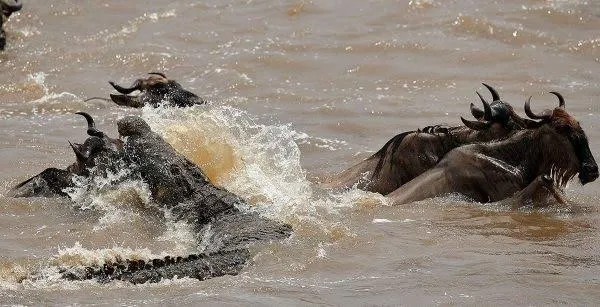
5-Day Group Joining — Flagship Circuit
All 4 parks with 2 consecutive Serengeti days. Day 2 intelligence applied. 4 nights. The top group joining option.
Flagship budget circuit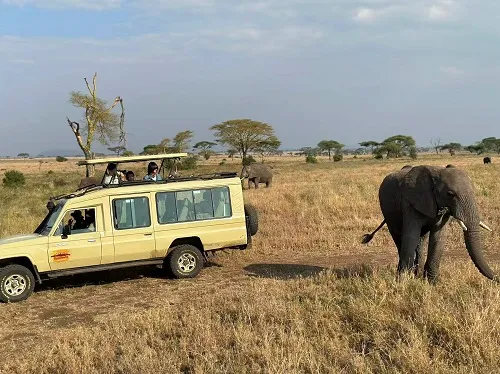
6-Day Group Joining — Maximum Circuit
The maximum group joining format — 3 consecutive Serengeti days. Deep access on Day 3. 5 nights. Most comprehensive budget safari available.
Maximum budget safariBudget Private Safari Options — When a Private Vehicle Makes Sense
For groups of 3 or more, the per-person cost of a private vehicle becomes comparable to or lower than the group joining rate — because the vehicle cost is divided among more people. A group of 4 guests on a private 4-day Tanzania safari pays approximately $500–$700 per person, which is below the 4-day group joining rate of $960 per person. For couples, the private vehicle costs approximately $1,480 per person for a 4-day circuit — significantly more than $960 group joining, but delivering complete schedule flexibility and a dedicated guide. Here is when private makes financial sense on a budget:
| Safari | Joining rate (per person) | Private (2 pax) | Private (3 pax) | Private (4 pax) |
|---|---|---|---|---|
| 4-Day Tanzania Safari | $960 | $1,480 | ~$960 | ~$730 |
| Group vs private: 4 guests | At 4 guests, private ($730pp) is cheaper than group joining ($960pp) — plus full flexibility. | |||
| 5-Day Tanzania Safari | $1250 | $1,850 | ~$1,200 | ~$895 |
| 6-Day Tanzania Safari | $1450 | $2,250 | ~$1,450 | ~$1,080 |
Private rates estimated for groups of 3 and 4 on request. Contact us for exact quotes for your group size.
When to go for the best budget
Tanzania Value Season Guide — Save 25–40% on Your Safari 2026
The single most powerful budget lever available to a Tanzania safari traveller is choosing the right season. Tanzania's park fees do not change by season — they are fixed year-round. But the accommodation cost — which typically represents 40–60% of the total safari budget — can vary by 25–40% between peak and value seasons. Choosing to travel in the green season (March–May) or shoulder season (November–December) rather than peak crossing season (July–September) saves substantial money with very little wildlife compromise at the four northern parks.
January – February 2026
Calving Season
High seasonExtraordinary calving season in Ndutu — 8,000 wildebeest calves per day. High wildlife density and predator activity. Accommodation costs at seasonal peak. For budget travellers who can travel in January, the wildlife payoff rivals peak crossing season at a lower accommodation cost than July–September.
March – May 2026
Green Season — Maximum Value
Best budget25–40% lower accommodation rates. Dramatically beautiful green landscapes. Ngorongoro and Tarangire are outstanding year-round — unaffected by season. Serengeti wildlife dispersed but present. The budget traveller's secret season. Fewer tourists in the parks means more intimate encounters.
July – October 2026
Crossing Season — Peak
Most expensiveMaximum accommodation costs. Highest visitor numbers. The Mara River crossing is extraordinary but budget accommodation fills early. If you must travel in peak season on a budget, book early (6+ months) and stick to group joining format — the savings over private at this season are at their maximum.
November – December 2026
Short Rains — Good Value
Good value15–25% lower rates than peak. Good wildlife across all four parks. Migration herds moving south — Serengeti drives rewarding. Beautiful lush landscapes. An underrated window for the budget traveller — fewer guests, lower prices, excellent wildlife. The second-best budget window after March–May.

Tanzania budget travellers worry about the green season Serengeti — the long grass makes wildlife harder to spot. But the Ngorongoro Crater is entirely unaffected by seasonality. 25,000 large mammals live in the crater year-round, all resident, all accessible in every month. The crater's wildlife — black rhino, crater lions, 5,000+ buffalo, hippo, flamingo, leopard — is consistently excellent in the green season. Tarangire's resident elephant herds are year-round. Lake Manyara's tree-climbing lions are year-round. Budget travellers travelling in March–May are not sacrificing wildlife quality at three of the four parks. The Serengeti is the only park where the green season meaningfully disperses the concentration. Even the Serengeti's resident predator population remains excellent year-round.
All five — accessible at every price point
The Big Five on a Budget Tanzania Safari — Where and How
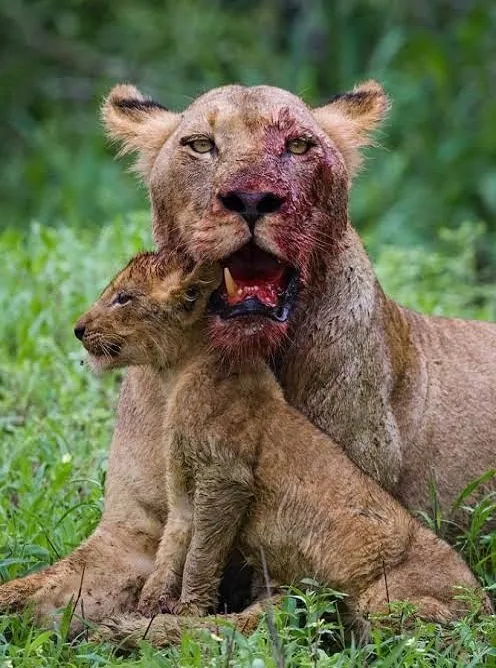
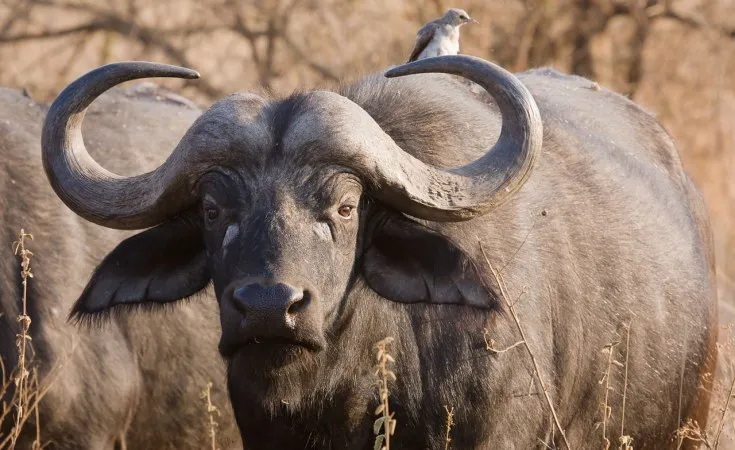
Tanzania's Big Five — lion, leopard, elephant, buffalo, and black rhino — are all accessible on a budget safari. Here is the honest species-by-species guide to seeing each one on a budget, with the minimum safari required and the expected probability.
All Big Five on a Budget — The $450 Minimum
The cheapest Tanzania safari that gives you a realistic chance of seeing all five Big Five members is the 2-day group joining safari (Tarangire + Ngorongoro Crater) at $450 per person. Day 1 at Tarangire delivers elephant virtually certainly, lion, leopard, and buffalo commonly. Day 2 in the Ngorongoro Crater delivers black rhino at high probability (before 9 am with a guide using overnight positioning intelligence), crater lions very commonly, leopard in the Lerai Forest, and buffalo in the thousands. A well-guided 2-day joining safari delivers all five species more reliably than most 7-day private safaris in East Africa at other destinations — because the Ngorongoro Crater's wildlife density makes it categorically different from any other location.
Note that black rhino is the most challenging Big Five member on any budget — it is not guaranteed on any Tanzania safari — but the Ngorongoro Crater offers the highest black rhino encounter probability in Africa at any price point. An early descent (before 6:30 am) with an experienced guide using overnight guide network intelligence gives the best probability. This is standard practice on all group joining and private safaris that include a full Ngorongoro Crater day.
Save money without losing quality
12 Expert Budget Safari Tips — Tested and Honest
These are the tips that actually save money without compromising wildlife quality. Each is based on years of operating Tanzania safaris and knowing where the real costs and savings are.
Solo travellers and couples save $300–$2100 per person by choosing group joining over private vehicle. The wildlife experience is identical. The guide quality is identical. What you share: the vehicle and the fixed schedule. For most budget solo travellers, this is the highest-impact single decision.
Accommodation costs drop 25–40% in March–May. Park fees stay the same. Wildlife quality at Tarangire, Manyara, and Ngorongoro is unaffected by season. The Serengeti's wildlife is more dispersed but the predators remain excellent. This is the most powerful budget lever available after format choice.
The Ngorongoro Crater delivers more wildlife in one day than many 3-day Serengeti circuits. For budget travellers with limited days, a 2-day Tarangire + Ngorongoro joining at $450 delivers more Big Five probability than a 2-day Serengeti circuit at higher cost. The crater is Tanzania's finest wildlife density per hour.
Group joining slots for peak season (July–October) fill 3–6 months in advance. Early booking does not reduce the price, but it guarantees your preferred dates. Late booking in peak season forces you into alternative dates or a more expensive option. Plan early, book early, save through certainty.
The Tanzania tourist visa costs $50 online at evisa.immigration.go.tz. At the airport on arrival, visas cost $50 for some nationalities but the queue adds 1–2 hours. Apply online at least 2 weeks before travel — it is the same price with zero queue.
A 2-week Tanzania travel policy with medical evacuation coverage costs $210–$200. A helicopter evacuation from the Serengeti costs $15,000–$50,000 uninsured. This is the one cost that no budget traveller should skip — it is the cheapest $100 on the entire trip if you need it.
The guide tip ($10–$15 per day per group joining safari) should be in USD cash in $1, $5, and $10 bills. ATMs in Arusha dispense USD and TZS but airport and hotel exchange rates are poor. Bring USD from home and change only what you need locally. Card acceptance is limited outside Arusha town.
Safari clothing sold in Arusha tourist shops charges a significant premium. You do not need specialist gear — any neutral-coloured (khaki, olive, grey) lightweight clothing works perfectly. Do not buy anything labelled "safari" if it costs more than it would at home. The exception: a wide-brim sun hat at a fair local price.
A beer at a Serengeti lodge costs $5–$12 depending on the property. Over a 4-night safari with 2 drinks per evening, this is $40–$96 of optional spending. Non-alcoholic beverages are typically included. If you enjoy a drink, consider bringing a bottle in your checked luggage from your home country — many lodges permit guests to bring their own wine with a corkage fee of $5–$10.
For groups of 4 or more guests, a private vehicle often costs the same as or less than group joining on a per-person basis — while delivering complete schedule flexibility and a dedicated guide. Always request a private vehicle quote for your group size before defaulting to group joining.
Kilimanjaro and safari share the same departure point (Moshi and Arusha). If you are climbing Kilimanjaro, adding a budget group joining safari immediately after your descent costs no additional transport — the guide picks you up from your Moshi hotel. The 1-day Arusha NP joining at $210 is the perfect post-Kilimanjaro addition without blowing the budget.
A licensed Tanzania safari guide has a TANAPA-issued guide certificate with a unique number, renewable annually. Ask for it before booking. An unlicensed guide may offer a lower price but is not legally permitted to operate in national parks and will be turned away at the gate — leaving you stranded. The guide licence is non-negotiable for any legitimate safari.
Where you sleep on a budget safari
Budget and Mid-Range Safari Accommodation — What Each Tier Delivers
Accommodation on a budget Tanzania safari is genuinely comfortable at the mid-range standard included in our group joining and budget private safari prices. Here is what to expect at each tier — and what genuinely matters versus what is marketing language.
Camping / Budget Tent
Camping Safari — The Cheapest Overnight
From +$0–$30 per person per night above basic safari cost
Designated public campsite facilities within or adjacent to the parks. Sleeping in a tent with a sleeping bag (bring your own or hire at low cost). Shared ablution facilities. Basic camp kitchen. Very close to the parks — sometimes inside park boundaries. The cheapest overnight option and genuinely rewarding for adventurous travellers. Cold outdoor showers, basic toilets, and cooking over a camp stove are the norm. Best suited to backpackers and budget overlanders accustomed to camping.
Mid-Range · Standard in our prices
Comfortable Lodge and Tented Camp
Included in all our standard group joining and private safari rates
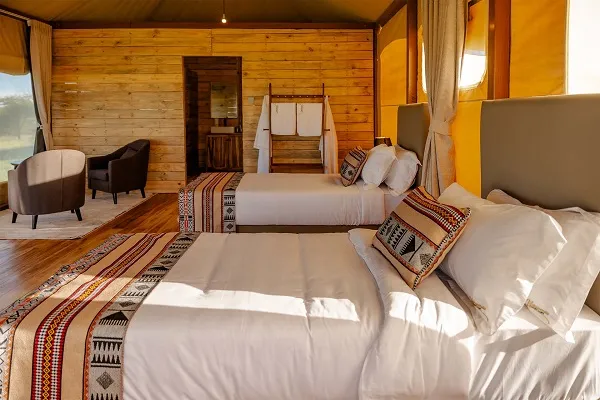
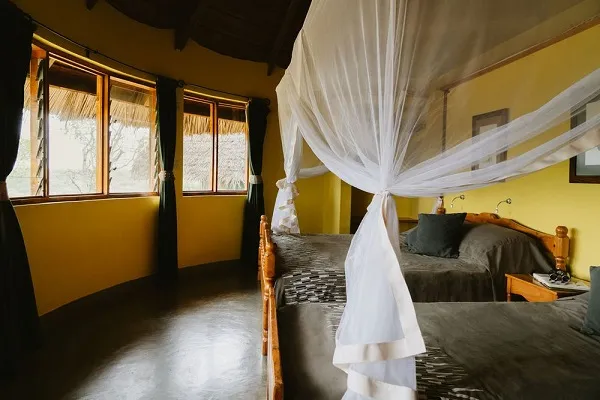
Comfortable en-suite rooms or permanent tented chalets with private bathrooms, hot water, and electricity. Good full-board meals. Cold beer available. Typically positioned close to each park gate for early morning entry. Wi-Fi at most properties (variable quality). This is the standard included in our published prices — genuinely comfortable and appropriate for all travellers. Not luxury, not roughing it. Examples: Tarangire River Camp, Ngorongoro Rhino Lodge, Serengeti Kati Kati.
Budget Upmarket · Upgrade from +$60–$150/pp/night
Budget Upmarket Tented Camps
Upgrade available — contact us for current 2026 pricing
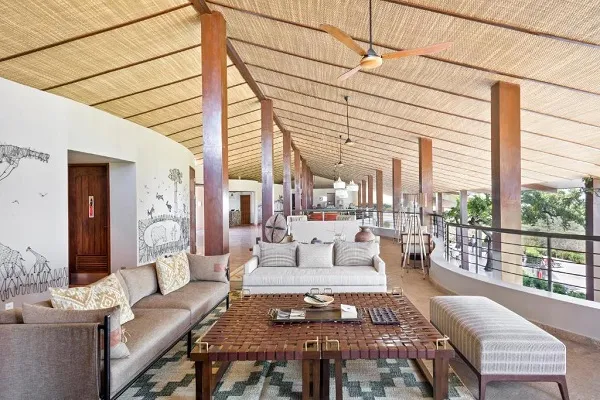
A step above mid-range — larger tents with better furnishings, often more scenic positions, and slightly higher service levels. The price difference is meaningful but not prohibitive for travellers who want a noticeably better overnight experience without committing to full luxury pricing. Lemala's properties, Sanctuary's value tier, and several family-run boutique lodges occupy this tier. Worth considering for honeymoon couples or guests who want a memorable overnight without the full luxury premium.
Avoid costly errors in 2026
The 8 Most Common Budget Safari Mistakes — And How to Avoid Them
These are the mistakes we see budget travellers make repeatedly when planning a Tanzania safari. Each one either costs money directly or reduces the experience significantly. Avoid them all.
Booking the cheapest possible operator without verifying the guide licence
The most dangerous budget mistake. Unlicensed guides are turned away at park gates. Some operators advertise prices below cost because they have no intention of paying the park fees legally.
Fix: Always ask for the guide's TANAPA licence number before booking.Skipping travel insurance to save money
A helicopter evacuation from the Serengeti costs $15,000–$50,000. A 2-week policy costs $210–$200. The maths makes insurance the cheapest expenditure on the trip relative to the downside risk.
Fix: Buy comprehensive travel insurance including medical evacuation coverage before departure.Travelling in peak season on a budget and expecting crossing-season accommodation to be available late
Budget accommodation near the northern Serengeti fills 4–6 months in advance for July–September. Booking 4 weeks out and expecting availability is a common and expensive mistake.
Fix: Book 6 months ahead for peak season, or shift to value season (March–May).Choosing a 1-day Tarangire trip over a 2-day Tarangire + Ngorongoro joining for a small additional cost
The Tarangire 1-day joining costs $140. The 2-day Tarangire + Ngorongoro joining costs $450 — for $240 more you add a night and a full Ngorongoro Crater day with black rhino and crater lions. The per-day cost of the Ngorongoro day is extremely high as a standalone; the 2-day joining amortises it efficiently.
Fix: Always choose the 2-day joining over the 1-day Tarangire trip if you have the time.Ignoring the value of the Ngorongoro Crater for the Serengeti when on a short budget
Many budget travellers prioritise Serengeti days over Ngorongoro because "Serengeti" is the famous name. But for Big Five probability per day, the Ngorongoro Crater outperforms most Serengeti days, especially in the non-crossing months.
Fix: On a 2–3 day budget, prioritise the Ngorongoro Crater. Add Serengeti days once the crater is covered.Exchanging currency at the airport or hotel at poor rates
Airport and hotel currency exchange rates in Tanzania are typically 10–15% worse than the interbank rate. On a $1,000 cash budget, this difference costs $100–$150 immediately.
Fix: Bring USD cash from home. Arusha town bureau de change rates are fair. Use USD directly where accepted.Not verifying what is included in the published price
Some budget operators publish a low base price then add park fees, guide fees, and accommodation as extras at booking. The resulting total is higher than a transparent all-inclusive offer. Always get an itemised quote and compare totals, not base prices.
Fix: Ask every operator: is this price all-inclusive of all park fees, guide, accommodation, and meals?Choosing more days of marginal Serengeti over the complete circuit
Spending 4 days in the Serengeti and missing Tarangire, Lake Manyara, and the Ngorongoro Crater is a common mistake. The three-park circuit alongside 2+ Serengeti days (5-day circuit) delivers a more complete Tanzania experience than 4 days of Serengeti-only at the same price.
Fix: Always include at least one Ngorongoro Crater day and one Tarangire day in any Tanzania circuit.Tanzania's two great adventures
Budget Safari + Kilimanjaro — The Complete Combination Guide
Tanzania's two flagship experiences — Kilimanjaro and the northern safari circuit — depart from the same base (Moshi and Arusha) and complement each other perfectly. At the budget tier, the Kilimanjaro + safari combination is one of Africa's finest travel value propositions: a summit attempt at Africa's highest peak followed immediately by Africa's finest wildlife circuit, all from the same town, with no additional travel cost between activities.
The Most Popular Budget Kilimanjaro + Safari Sequence
The typical budget combination is: Kilimanjaro via the Machame or Marangu Route (6 or 5 days respectively — the most accessible budget options); 1–2 days rest in Moshi or Arusha post-descent; then a 2–4 day group joining safari. Total trip duration: 10–14 days. The Kilimanjaro descent ends in Moshi — the safari departs from Moshi or nearby Arusha. No additional travel costs between activities. The guide from the group joining safari picks you up at your Moshi hotel.
For the budget Kilimanjaro option, the Marangu Route (5 days, huts included, no camping required) is the most cost-accessible route, starting from approximately $1,400 per person through a licensed operator. The Machame Route (6–7 days, camping) starts from approximately $1,600 per person and offers significantly higher summit success rates. After descent and rest, the 1-day Arusha National Park group joining at $210 is the ideal post-Kilimanjaro wildlife day for guests who are short on budget or time. For guests with more time and budget, the 3-day or 4-day group joining circuit follows naturally.
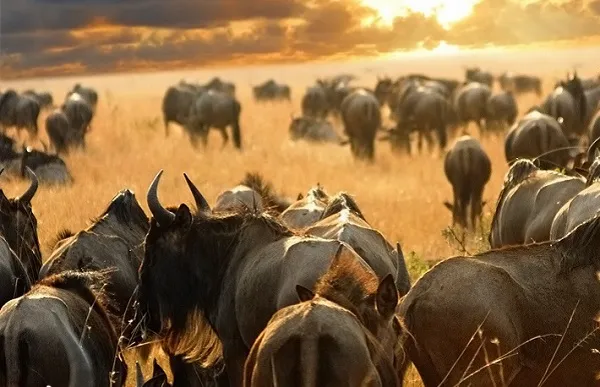
The 1-day Arusha National Park group joining safari ($210) is specifically popular among post-Kilimanjaro guests for three reasons. First, the park is only 30 minutes from Arusha — no long driving on legs that have just descended 5,895 metres. Second, the wildlife (colobus monkey, giraffe, zebra, flamingo, buffalo, baboon) is excellent without requiring the physical alertness of a full Serengeti day. Third, Mount Kilimanjaro is sometimes visible from the park on clear mornings — looking up at the summit you stood on the day before from a vehicle surrounded by giraffe is one of Tanzania's most quietly extraordinary moments.
The classic Tanzania combination
Budget Safari + Zanzibar — How to Add the Beach Without Breaking the Budget
The Tanzania safari and Zanzibar beach combination is one of the world's most popular travel itineraries — the contrast of intense wildlife days followed by rest on the Indian Ocean is a deeply rewarding sequence. At the budget tier, Zanzibar is genuinely accessible: the island has budget guest houses and mid-range hotels available from $30–$200 per room per night, and the Precision Air flight from Arusha to Zanzibar takes approximately 1.5 hours at approximately $90–$160 per person one-way.
Budget Zanzibar Options After Your Safari
Zanzibar Stone Town — the UNESCO World Heritage island capital — has a range of budget and mid-range accommodation starting from $30 per room per night. The old town's labyrinthine coral stone streets, spice markets, Swahili architecture, and seafood restaurants are some of the best-value cultural and gastronomic experiences in East Africa at any budget. For beach time, the east coast (Paje, Bwejuu, Jambiani) has a long stretch of white sand and turquoise water with budget guest houses from $40–$210 per room per night. The north coast (Nungwi, Kendwa) is the most developed and slightly more expensive. For budget travellers adding 3–5 Zanzibar nights to a budget safari, total additional cost is typically $350–$600 per person (flight + accommodation + food) — making the complete Tanzania + Zanzibar budget combination achievable for under $1,200 per person for a 2-week trip.
What to bring without overspending
Budget Safari Packing Guide — What You Actually Need
A budget Tanzania safari does not require specialist equipment. The biggest mistake budget travellers make is buying expensive safari clothing they do not need. Here is exactly what to bring — and what not to spend money on.
Clothing — bring from home, buy nothing "safari-branded"
- Neutral-colour tops (khaki, olive, grey, beige) — any lightweight shirt or t-shirt works
- Lightweight long-sleeve shirt for sun protection in the vehicle (any brand, any material)
- Fleece or light down jacket — Ngorongoro rim is cold at dawn (8–12°C)
- Light waterproof jacket or poncho — rain possible in any season
- Comfortable walking shoes or trainers — no expensive boots needed for vehicle safari
- Wide-brim sun hat — critical for pop-up roof game drives; buy a cheap one anywhere
- Sandals for camp evenings
- Avoid white — it disturbs wildlife. Any neutral colour is fine.
Photography on a budget
- Any smartphone with a good camera — the Ngorongoro Crater elephant is 10 metres from your vehicle
- Basic binoculars (any 8x42) — dramatically improve distant wildlife viewing
- Extra phone battery or power bank — charge nightly at lodge
- Large memory card if using camera — download nightly where possible
- Budget telephoto: any 200–300mm zoom lens improves Serengeti photography significantly
- A dust-proof bag or ziplock for camera equipment — Serengeti dust is significant in dry season
Health and essentials
- Antimalarials — consult your doctor 4 weeks before; Doxycycline is the cheapest option
- High-SPF sunscreen — buy at home, significantly cheaper than in Tanzania
- DEET insect repellent — essential for evening use at lodges
- Antihistamines — dust and pollen exposure is significant in dry season
- Rehydration salts — for hot days in the vehicle
- Basic first aid kit — plasters, antiseptic, ibuprofen
Documents and money
- Passport — 6+ months validity from departure date
- Tanzania e-Visa confirmation — apply at evisa.immigration.go.tz ($50)
- Travel insurance documents — print a copy and save digitally
- USD cash in small bills — $1, $5, $10 for tips and small purchases
- Credit card — for major purchases in Arusha and some lodges
- Emergency contacts — including Resilience Safaris WhatsApp number
Budget safari guest experiences
Budget Safari Reviews — Real Experiences, Real Prices

"Solo traveller, tight budget, 3-day group joining safari. $730 for Tarangire, Lake Manyara, and the Ngorongoro Crater. I found tree-climbing lions within 90 minutes of entering Lake Manyara. The next morning in the Ngorongoro Crater I saw black rhino, all four crater lion prides, two leopard, and flamingo. Five guests from four countries in the vehicle. The guide was exceptional. I did not miss a private vehicle for a single minute."
3-day group joining · $730 · November"Post-Kilimanjaro with very little budget left. Did the $210 Arusha National Park group joining day safari. Colobus monkeys directly over the vehicle, a giraffe herd of 12, zebra, flamingo, and then on the way back — Kilimanjaro appearing from the clouds above the park, the summit I had stood on the day before. The guide was brilliant. Best $210 I spent in Africa. Book this day if you are climbing Kili — do not skip it."
1-day Arusha NP joining · $210 · Post-Kilimanjaro"I travelled in April — green season, off-peak — because I had read this guide's advice. The price was 28% lower than the same October rate. Tarangire had elephant herds in extraordinary numbers because it was calving season for the elephants — dozens of calves visible. The Ngorongoro Crater was the finest wildlife day of my life. No Serengeti in the green season but the other three parks were superb. I paid $730 for three parks, two nights, expert guide. Exceptional value."
3-day group joining · $730 · April (green season)Every budget question answered
Tanzania Budget Safari — Complete FAQ 2026
-
The cheapest legitimate Tanzania safari in 2026 is the 1-day Arusha National Park group joining safari at $210 per person. This includes a licensed expert guide, the park entry fees, and hotel pickup and drop-off in Arusha or Moshi. The cheapest overnight safari is the 2-day group joining safari (Tarangire + Ngorongoro Crater) at $450 per person, which includes 1 night accommodation, all meals from Day 1 lunch through Day 2 lunch, the guide, vehicle, and all park fees. The cheapest 4-park circuit including the Serengeti is the 4-day group joining safari at $960 per person. Note that any advertised safari price significantly below these figures should be investigated carefully for unlicensed guides, hidden fees, or illegal park fee evasion.
-
Tanzania safari costs per person in 2026 range from $210 for a 1-day group joining day safari to $4,050+ for a 10-day luxury private circuit. Budget group joining options: $210 (1 day), $450 (2 days), $730 (3 days), $960 (4 days), $1250 (5 days), $1450 (6 days). Budget private safaris for 2 guests: $730 (2 days), $1,100 (3 days), $1,480 (4 days), $1,850 (5 days). For groups of 4+, private safari per-person costs drop to competitive or below-joining levels. All prices include the vehicle, guide, park fees, accommodation, and meals. Not included in any price: Tanzania visa ($50), personal insurance, alcohol, and guide gratuity.
-
Yes — the 4-day group joining safari ($960) includes one full Serengeti migration day and is the cheapest way to experience the Great Migration. The migration herds are accessible at this price point in any season — though peak crossing season (July–October) delivers the most dramatic river crossings, while calving season (January–February) delivers the most intense predator activity around the calves. One Serengeti day is an excellent migration experience; for more immersive encounters with higher crossing probability, the 5-day joining ($1250 — two Serengeti days) or 6-day joining ($1450 — three Serengeti days) significantly improve the crossing probability and migration immersion.
-
For wildlife encounters: yes — identical. The guide quality, vehicle, park access, and wildlife are the same. The elephant herd does not move differently for a group joining vehicle versus a private one. The black rhino in the Ngorongoro Crater is accessible to both. The key differences: on a group joining safari the vehicle holds up to 7 guests rather than just your group; the daily schedule is fixed (you cannot stay longer at a sighting if others in the group are ready to move); and the overnight accommodation may be shared twin rooms for solo travellers. For guests who need flexibility — staying 90 minutes with a cheetah kill while others want to leave — private is the correct choice. For guests who are comfortable with a fixed schedule and want to save $300–$2100 per person, group joining delivers the same wildlife at lower cost.
-
Our group joining and budget private safari prices include: the shared (joining) or private (private) 4x4 safari vehicle with pop-up roof hatches; a licensed expert naturalist guide; all national park and reserve entry fees for every park on the itinerary; all accommodation (shared comfortable lodge for joining, private room for private safari); all meals from Day 1 lunch or dinner through the final day's lunch; bottled water in the vehicle throughout each day; and hotel pickup and drop-off in Arusha and Moshi. Not included in any price: Tanzania tourist visa ($50), personal travel insurance, alcoholic beverages, guide gratuity, and your return hotel night at the end of the safari.
-
Beyond the published safari price, budget approximately: Tanzania tourist visa $50; personal travel and medical evacuation insurance $210–$200 for 2 weeks; guide tip $10–$15 per day per group (discretionary but appreciated); alcoholic beverages at lodges if desired ($5–$12 per drink); pre- and post-safari accommodation in Arusha or Moshi ($20–$200 per room per night depending on standard); meals in Arusha before and after the safari ($5–$25 per meal); and souvenirs and personal spending. For a 4-day budget group joining safari, budget an additional $200–$400 per person beyond the $960 safari price for all the above items to cover a complete trip.
-
Yes — Tanzania is one of Africa's safest and most visitor-friendly safari destinations. Arusha and Moshi are stable, well-equipped tourist towns with a long history of international safari visitors. The national parks are managed, patrolled, and safe. Solo travellers on group joining safaris are immediately integrated into the vehicle with other international guests and the guide — there is no period of unsupported solo travel within the safari itinerary. The primary safety considerations for budget solo travellers in Tanzania are: using licensed operators with registration; not carrying large amounts of cash visibly in Arusha markets; buying comprehensive travel and medical evacuation insurance; and taking antimalarials as prescribed. Exercise standard urban caution in Arusha and you will have an entirely safe experience.
-
March–May 2026 is the cheapest period for Tanzania safari accommodation — 25–40% below peak season rates. Park fees do not change by season. Wildlife at the Ngorongoro Crater, Tarangire, and Lake Manyara is excellent year-round and unaffected by the green season. The Serengeti is the one park where the green season (long grass, dispersed herds) reduces concentration — but resident predators remain excellent. November–December is the second-cheapest window at 15–25% below peak, with good wildlife across all four parks. If the Mara River crossing is the primary goal, July–October is required — but this is also the peak price window. Group joining park fees and safari costs stay the same year-round; only the accommodation component varies by season.