+255 742 119 753 tours@resiliencesafaris.com
Safari Experts ★ 5.0 Rating
Book Safari
Safari Navigator
Request Quote

Ngorongoro Crater Tanzania —
The Complete 2026 Guide The world's largest intact caldera, 25,000 resident animals, and the most reliable Big Five safari in Africa — here is everything you need to know

Ngorongoro Crater is unlike anywhere else on the Tanzania safari circuit. A 260 km² volcanic caldera, walled in by slopes up to 600 metres high, holds an estimated 25,000 large animals in permanent residence — including the highest density of lions in Africa and one of the most reliable black rhino populations left on the continent. This guide covers the wildlife, the descent roads, the best time to visit, and exactly how to plan a crater floor game drive.

UNESCO World Heritage Site since 1979 Highest lion density in Africa 20–30 black rhino, permanent residents One of Africa's Seven Natural Wonders ~4 hrs from Arusha by road

In this guide

How It Formed

The World's Largest Intact Caldera

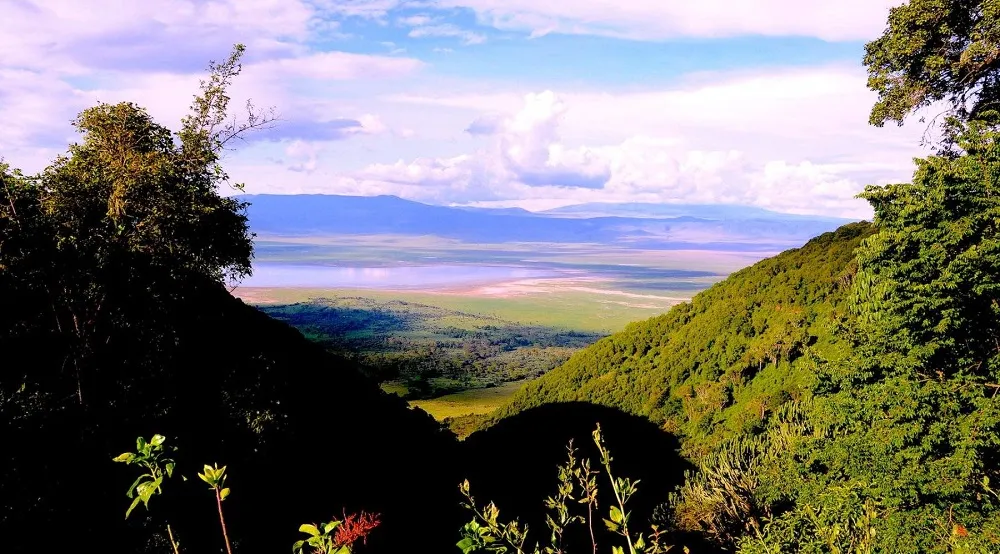
Ngorongoro Crater is what geologists call an unbroken, inactive volcanic caldera — meaning that unlike most large craters, it was never breached or filled by a lake, and the bowl shape remains essentially complete. It formed approximately 2 to 3 million years ago when a large volcano, estimated to have once stood as tall as Kilimanjaro, erupted and then collapsed in on itself, leaving behind the vast natural amphitheater visible today.

The numbers alone explain why the crater feels so unlike anywhere else in Tanzania. The caldera measures roughly 19 kilometres across and encloses 260 km² of crater floor, walled in by slopes rising 400 to 610 metres from floor to rim. The rim itself sits at 2,200 to 2,400 metres above sea level — high enough that mornings on the crater edge are genuinely cold, while the floor below warms quickly once the sun clears the walls.

The same eruption that created Ngorongoro also formed several smaller volcanic features nearby, including the Olmoti and Empakaai craters, and contributed to the fertile plains of Ndutu and the southern Serengeti — the same ground where the wildebeest migration's calving season takes place each year. The Ngorongoro Crater itself was originally part of Serengeti National Park when the park was first established by the British in 1951; it was separated into its own protected area, the Ngorongoro Conservation Area, in 1959, specifically to secure land rights for the Maasai pastoralist communities who live within its boundaries.

"The word Ngorongoro comes from the Maasai word for the sound of a cowbell 'ngoro ngoro.' Stand on the rim at dawn, and it still feels like a name given by people who knew this land intimately."

— Resilience Safaris guide, Ngorongoro rim, 2026

Today the Ngorongoro Conservation Area is unique among Tanzania's protected areas for one further reason: it is the only place in the country where wildlife, livestock, and human communities coexist within the same protected boundary. The Maasai retain grazing rights across much of the 8,300 km² conservation area — though grazing inside the crater itself was restricted in 2015 — making this one of the only landscapes on earth where pastoralist cattle and wild lion prides share the same open ground.

Wildlife Density

25,000 Animals in One Self-Contained Arena

What separates Ngorongoro from every other safari destination in Tanzania is concentration. The Serengeti spans over 14,700 km² of open savannah with wildlife dispersed across a vast, migratory landscape. Ngorongoro packs an estimated 25,000 to 28,000 large mammals into a single enclosed 260 km² caldera that they almost never leave — because the steep walls, while not impassable, mean most resident animals simply stay put year-round.

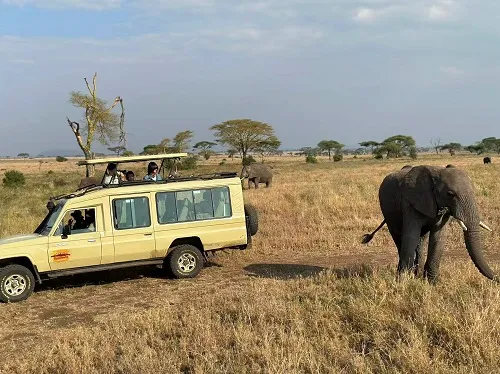
This is, by most estimates, the highest density of lions, elephants, and buffalo found anywhere on the African continent. The resident lion population — numbering somewhere between 55 and 80 individuals depending on the survey year — has lived alongside safari vehicles for so many decades that the prides show almost complete indifference to them, often resting in the shade of a parked Land Cruiser's tyres or hunting within metres of a stopped vehicle.

All five members of the Big Five — lion, leopard, elephant, buffalo, and black rhino — live inside the crater in permanent residence, which is precisely why Ngorongoro is widely regarded as the single best location in Africa to see all five species in one place, often within a single game drive. The crater's elephant population skews toward older, large-tusked bulls that have retreated to the protected floor; sightings of genuinely massive tusks are among the most photographed encounters on the entire northern circuit.

Wildlife absence note
The one notable absence

Giraffes are essentially never seen on the crater floor. The steep, narrow descent roads and the crater's lack of tall acacia woodland make the terrain unsuitable for an animal of their height and browsing needs. Giraffes are common in the wider Ngorongoro Conservation Area outside the crater itself, particularly around Lake Ndutu — but don't expect to see one on a crater floor game drive. Topi and impala are similarly rare on the floor for related terrain reasons.


The Rarest Sighting

Black Rhino — Africa's Most Reliable Sighting

For most travelers building a Tanzania itinerary, the black rhino is the single hardest member of the Big Five to actually see. The critically endangered species has been pushed to such low numbers across the continent that many safari-goers complete multiple trips to Africa without a confirmed sighting. Ngorongoro Crater is the exception.

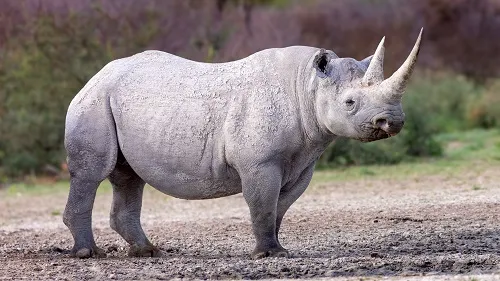
An estimated 20 to 30 individual black rhinos live in permanent residence on the crater floor, protected by armed anti-poaching rangers and concentrated within a relatively small, well-patrolled section of open grassland. Because the terrain offers the animals little natural cover to hide behind, and because the population doesn't range far from the floor's swamps and acacia thickets, sightings here are significantly more probable than in open, vast parks like the Serengeti — making Ngorongoro arguably the single most reliable place in East Africa to see a black rhino in the wild.

20–30
Black rhino, crater floor
Permanent residents, not visitors
Dawn
Best viewing window
Rhinos are most active early morning
North
Most reliable zone
Northern crater floor, near swamp edges
Rhino viewing tip
How to maximize a rhino sighting

Sightings are never guaranteed, but your guide's knowledge of the crater's current rhino activity zones makes a real difference. Descending early — at or shortly after the 6am gate opening — gives the best combination of cooler temperatures, more active rhinos, and fewer vehicles competing for the same sighting. The northern crater floor, near the swamp edges and the base of the forested slopes, is consistently the most productive zone.


What to Expect

Game Drives & Activities

Unlike Tarangire or the Serengeti, Ngorongoro offers a single, focused activity: the crater floor game drive. There are no walking safaris and no overnight stays inside the caldera itself — but the wider Conservation Area surrounding the crater adds several activities worth combining with your crater day.

Safari vehicle descending into Ngorongoro Crater at dawn
The Main Event

Crater Floor Game Drive

4–6 hours · Closed-sided 4x4 only · Maximum 6 hours per entry · Year-round

A full day on the crater floor is the core Ngorongoro experience. Vehicles descend at first light via the Seneto road, spend the morning and early afternoon working the floor's lakes, swamps, and grassland, then ascend via the Lerai or Lemala road before the gate closures. Because the crater is so compact, wildlife encounters occur roughly every 10 to 20 minutes — a noticeably higher sighting rate than any open park in Africa. All game viewing here is strictly vehicle-based; walking on the crater floor is not permitted under any circumstances due to the density of dangerous wildlife.

Lerai Forest elephants Ngorongoro Crater
Crater Floor Stop

Lerai Forest & Ngoitoktok Springs

Picnic stop · Hippo viewing · Elephant browsing · Included on most crater drives

The Lerai Forest, a yellow-fever-tree woodland near the ascent road, is one of the crater's best spots for elephant sightings and the only place permitted for a guided picnic stop outside your vehicle. Nearby, the spring-fed Ngoitoktok picnic site overlooks a hippo pool and a small marsh that draws birdlife throughout the day — a reliable, low-key highlight on an otherwise vehicle-bound day.

Olduvai Gorge archaeological site near Ngorongoro
Optional Add-On

Olduvai Gorge — The Cradle of Mankind

1–2 hours · Museum & viewpoint · En route between Ngorongoro and Serengeti

Within the wider Conservation Area, Olduvai Gorge is one of the most significant archaeological sites on earth — the discovery site of early Homo habilis remains and evidence of hominid occupation stretching back at least 1.75 million years. A small museum and rim viewpoint sit directly on most Ngorongoro-to-Serengeti driving routes, making it an easy and worthwhile stop rather than a dedicated excursion.

Empakaai Crater lake near Ngorongoro Conservation Area
For Longer Stays

Olmoti & Empakaai Crater Hikes

Half-day guided hike · Armed ranger required · Outside the main caldera

For travelers with extra time in the area, the smaller Olmoti and Empakaai craters — formed by the same volcanic activity as Ngorongoro itself — offer guided walking access that the main caldera does not. Empakaai holds a soda lake often visited by flamingos, framed by dramatic crater walls; both hikes require an armed ranger and are typically arranged a day in advance through your lodge or operator.

Maasai community visit near Ngorongoro Conservation Area
Cultural Add-On

Maasai Village Visit

1–2 hours · Community-run · Available near several rim lodges

The Ngorongoro Conservation Area is one of the only places in Tanzania where Maasai communities live within a protected wildlife area, retaining grazing rights across much of the wider 8,300 km² zone. Several bomas near the crater rim welcome guided visits, offering insight into a pastoralist culture that has coexisted alongside this wildlife for generations. As with any cultural visit, modest dress — covered shoulders and knees — is expected.


Timing Your Visit

Best Time to Visit Ngorongoro 2026

Ngorongoro is one of the only safari destinations in Tanzania with genuinely no bad time to visit. Because the resident wildlife population doesn't migrate seasonally — unlike the Serengeti's herds — excellent game viewing is available every month of the year. The real question is less about wildlife and more about weather, crowd levels, and what else you want to combine with your visit.

June – October · Dry Season
Peak Season — Clearest Skies, Most Crowded
The dry season delivers the clearest rim views, the easiest spotting through thinner vegetation, and coincides with peak Tanzania safari season overall. Expect the highest vehicle numbers on the crater floor during this window — Ngorongoro's compact size means traffic is more noticeable here than in open parks. Cooler, often near-freezing temperatures on the rim before dawn.
January – February · Short Dry Spell
Excellent Value — Fewer Vehicles, Same Wildlife
A brief dry period between the two rainy seasons offers nearly the same game-viewing quality as peak season with noticeably fewer vehicles on the crater floor, particularly toward the end of February. Daytime temperatures on the floor can reach the high 70s°F (mid-20s°C). A strong choice for travelers prioritizing experience over crowd avoidance at peak-season prices.
November – May · Green Season
Lush Scenery & Larger Flamingo Flocks
The long and short rains bring vivid green landscapes, calving activity among resident herbivores, and significantly larger flamingo flocks gathering on the crater's alkaline Lake Magadi. Morning mist on the rim can occasionally reduce visibility for the descent, though conditions on the floor itself remain excellent. Lodge rates are at their lowest during this window.
May · Long Rains Tail End
Quietest Month — Use With Some Caution
May is frequently cited as the single quietest month for crowds at Ngorongoro, with wildlife viewing still strong, but it sits at the tail end of the long rains. Roads can be more challenging and rim mist more frequent. Worth considering for travelers comfortable with some weather unpredictability in exchange for a near-empty crater floor.

Getting There

How to Get to Ngorongoro from Arusha

Ngorongoro Conservation Area sits approximately 180 to 190 km from Arusha, and is the most accessible of the northern circuit's major parks — most visitors arrive as part of a multi-day safari rather than a dedicated journey, since the route to Ngorongoro is also the route toward the Serengeti.

Route Distance Time (4x4) Notes
Arusha → Ngorongoro (direct) ~180–190 km ~4 hrs Standard route
Via Mto wa Mbu & Lake Manyara ~190 km ~4–4.5 hrs Scenic, combines parks
Ngorongoro → Serengeti (Seronera) ~145 km ~3–4 hrs Via Olduvai Gorge / Naabi Hill
Crater rim → crater floor ~600 m descent 20–30 min Seneto descent road
Route tip
Why Ngorongoro fits every northern circuit itinerary

Ngorongoro sits directly on the road between Arusha and the Serengeti, so visiting requires no backtracking and no extra travel days — you drive through it on the way. This positioning is exactly why almost every Tanzania northern circuit itinerary, from a 4-day group joining safari to a 10-day private trip, includes a Ngorongoro crater day as standard.


Where to Stay

Ngorongoro Accommodation

There are no lodges or camps inside the crater itself — all accommodation sits on the rim or in the surrounding conservation area and nearby Karatu highlands. Staying directly on the rim delivers extraordinary sunrise views straight into the caldera and the shortest possible drive to the descent road, at a noticeable premium over basing yourself in Karatu, roughly 20 to 30 minutes further out.

Mid-range
Ngorongoro Serena Safari Lodge
Built into the rim · Excellent crater views · From ~$300/night
Ultra-luxury
&Beyond Ngorongoro Crater Lodge
Baroque-meets-bush design · Iconic since 1939 · From ~$1,500/night
Value base
Karatu-area lodges
20–30 min from rim · Significantly lower rates
Accommodation note
Rim vs. Karatu — which to choose

A rim lodge means waking up steps from the descent road and watching sunrise directly into the crater from your veranda — but the elevation also means genuinely cold nights, even in the dry season. A Karatu-based stay costs meaningfully less and still allows an early descent, just with an extra 20 to 30 minutes of driving before sunrise. For most travelers on a value-conscious itinerary, Karatu is the better trade-off; for a once-in-a-lifetime splurge night, the rim is worth it.


Practical Information

Rules, Fees & What to Know Before You Go

Ngorongoro is the most heavily regulated park on the Tanzania northern circuit — for good reason, given the density of wildlife and visitors sharing such a compact space. Here is what's worth knowing before your visit.

06:00–18:00
Crater gate hours
Seneto descent gate closes at 16:00
6 hrs
Max vehicle time on floor
Per entry, per park regulation
25 km/h
Speed limit, conservation area
Strictly enforced for wildlife protection
Closed-sided
Vehicle requirement
Open-sided vehicles not permitted in crater
Mandatory
Licensed guide required
For crater and Olduvai Gorge access
5 vehicles
Max per sighting
Limit around any single animal or kill
Fee structure warning
Understand the fee structure before you book

Ngorongoro has the most complex and costly fee structure of any Tanzania park: a conservation entry fee plus a separate, substantial crater service fee charged per vehicle, per descent — not per day or per person. This means group size matters significantly for value: split among a larger group, the per-person cost drops considerably. These fees are almost always bundled into your safari package price, but understanding the structure helps you evaluate whether a quoted price is fair. Ask your operator to itemize government fees separately from service costs.

Packing tip
What to pack for the crater rim

The rim sits above 2,200 metres, and pre-dawn temperatures regularly approach freezing in the dry season months of June through August. Bring genuinely warm layers — a fleece and a windproof outer shell — for the descent, even though the crater floor itself warms quickly by mid-morning. Binoculars are essential for black rhino and distant lion sightings across the open grassland. Alcohol is not permitted during the crater descent itself.


Expert Answers

Frequently Asked Questions

  • Ngorongoro Crater is the world's largest intact, inactive, unfilled volcanic caldera — a self-contained 260 km² wildlife arena enclosed by walls up to 600 metres high. Unlike open parks such as the Serengeti, wildlife inside the crater does not migrate out; an estimated 25,000 to 26,000 large animals live in permanent residence year-round. This concentration, combined with the crater's compact size, makes it the most reliable single location in Tanzania to see the Big Five, including the critically endangered black rhino, often within one game drive.
  • An estimated 20 to 30 individual black rhinos live in permanent residence on the Ngorongoro Crater floor, protected by armed rangers. This makes Ngorongoro one of the most reliable places in East Africa to see the critically endangered black rhino, since the open grassland of the crater floor leaves the animals with limited cover and the population is concentrated in a relatively small, well-patrolled area.
  • Giraffes are absent from the Ngorongoro Crater floor because the steep, narrow descent roads and the terrain make access difficult for an animal of their height and build, and the crater floor lacks the tall acacia woodland and specific tree species giraffes rely on for browsing. Giraffes are present in the wider Ngorongoro Conservation Area outside the crater itself, particularly around Lake Ndutu, but are essentially never seen on the crater floor.
  • The descent from the crater rim to the floor takes approximately 20 to 30 minutes by 4x4 vehicle via one of the designated access roads. The Seneto road is used for descent only, the Lerai road is used for ascent only, and the Lemala road near Ngorongoro Sopa Lodge can be used for both. The roads are steep, narrow, and unpaved, with gradients in places as steep as 1-in-4, so only registered safari vehicles with experienced driver-guides are permitted.
  • A single full day is the minimum to properly explore the Ngorongoro Crater floor, with vehicles typically permitted up to 6 hours inside the crater per entry under park regulations. Most visitors descend at first light, spend the morning and early afternoon on the crater floor, then ascend before the 4pm Seneto gate closing or the 6pm general closing time. Two nights in the area, allowing an unhurried dawn descent, is the most commonly recommended itinerary.
  • Ngorongoro Crater can be visited year-round with consistently excellent wildlife viewing, since the resident animal population does not migrate seasonally like the Serengeti's herds. The dry season from June to October offers the clearest skies, the best crater-rim views, and is the most popular period. The green season from November to May brings lush scenery, calving activity, larger flamingo flocks on Lake Magadi, and noticeably fewer vehicles on the crater floor, particularly in January, February, and May.
  • Yes — Ngorongoro sits directly on the standard route between Arusha and the Serengeti, so it requires no backtracking and no extra travel days. Nearly every northern circuit itinerary, from a 4-day group joining safari to a 10-day private trip, routes through Ngorongoro on the way to or from the Serengeti, often combined with Tarangire and Lake Manyara on the same circuit. Resilience Safaris includes Ngorongoro as standard on all multi-day northern circuit itineraries.
Planning a Ngorongoro visit? Resilience Safaris — Moshi