The definitive Tanzania safari guide
What is a Private Tanzania Safari?
A private Tanzania safari is an exclusive wildlife journey in a custom 4x4 safari vehicle reserved entirely for your group — no other guests, no shared schedule, no compromises on timing. Your licensed expert naturalist guide drives and leads the safari according to your pace, priorities, and wildlife interests. If you want to remain with a lion pride through a kill for two hours rather than the scheduled 20 minutes, you stay. If you want to reach the Serengeti at first light and drive until the migration herds cross the river, you drive. The private vehicle format is the most rewarding way to experience Tanzania's wildlife because it places the guide's complete attention and the vehicle's complete flexibility entirely in service of your experience.
Tanzania's northern safari circuit encompasses four essential parks — Tarangire National Park, Lake Manyara National Park, Ngorongoro Conservation Area, and Serengeti National Park — each with a completely different character, ecosystem, and wildlife speciality. The parks are connected by a logical 250-kilometre circuit running from Arusha west and southwest, making it possible to cover all four parks in four days, or to spend ten days in the ecosystem and barely scratch what the Serengeti contains.
Resilience Safaris operates private Tanzania safaris from Moshi and Arusha with -licensed guides and a fleet of custom Land Cruisers. Every departure is private — the vehicle is yours from hotel pickup to hotel drop-off. Safaris range from 2 to 10 days, with the Ngorongoro Crater, Tarangire, Lake Manyara, and the Serengeti all accessible in every format from the shortest to the longest itinerary.
Tanzania wildlife sightings are time-sensitive. A lion kill lasts minutes. A Mara River crossing attempt can build for hours and commit in seconds. A leopard may move off a kill and vanish before the next vehicle arrives. On a private safari, the guide can stay with the sighting for as long as the wildlife demands. On a shared departure, the schedule determines when the vehicle must move. In the Serengeti — where intelligence accumulates across consecutive days and precision positioning requires flexibility to execute — the private vehicle is what turns good encounters into extraordinary ones.
Complete private safari collection
All Private Safari Options — 2 to 10 Days
Nine private safari options covering every duration and budget. Every option includes a fully private 4x4 vehicle, a licensed expert guide, all park fees, accommodation, all meals, and hotel pickup and drop-off in Arusha and Moshi.
2-Day Tanzania Safari
Tarangire elephant herds and Ngorongoro Crater full dawn day. 1 overnight crater rim.
3-Day Tanzania Safari
Tarangire, Lake Manyara tree-climbing lions, and the Ngorongoro Crater. The classic three-park circuit.
4-Day Tanzania Safari
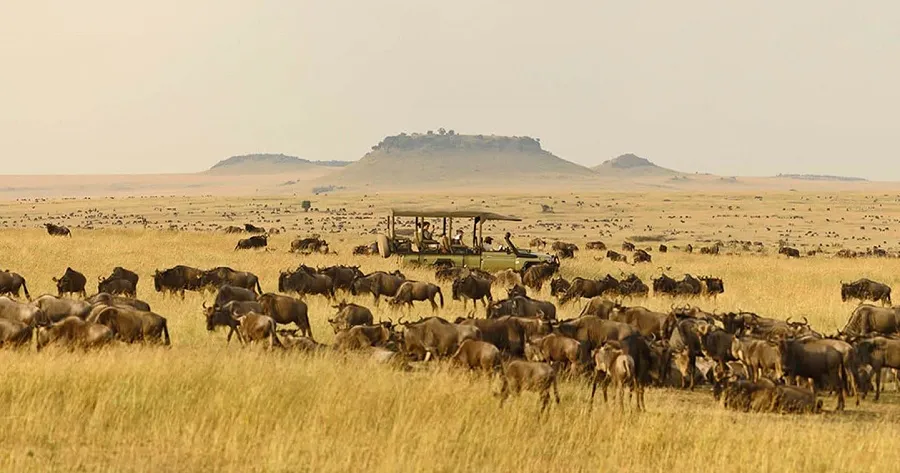
All four northern parks including Serengeti. One full migration day.
Serengeti included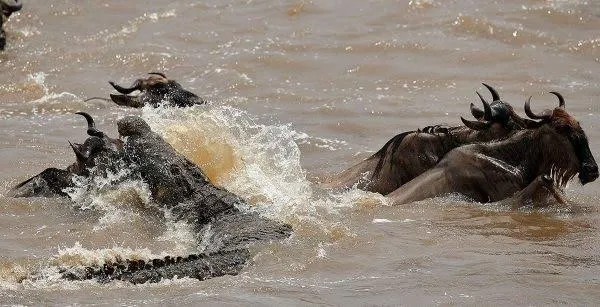
5-Day Tanzania Safari
All four parks with two consecutive Serengeti days. The most popular private circuit itinerary.
2 Serengeti Days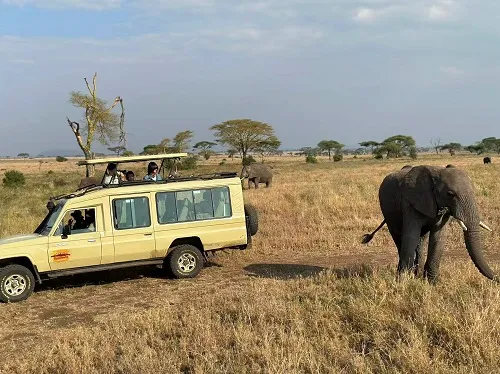
6-Day Tanzania Safari
All four parks with three Serengeti days. Deep zone access on Day 3.
3 Serengeti Days7-Day Tanzania Safari
The gold standard Tanzania circuit — all four parks and four consecutive Serengeti days with full migration and predator immersion.
4 Serengeti Days8-Day Tanzania Safari
Five Serengeti days — the pinnacle of the circuit format. Full migration immersion with maximum crossing point access.
5 Serengeti Days9-Day Tanzania Safari
Six Serengeti days — apex level migration access. The migration as a world you inhabit, not a spectacle you visit.
6 Serengeti Days10-Day Tanzania Safari
The ultimate Tanzania safari — seven consecutive Serengeti days. Maximum circuit immersion, the deepest migration intelligence available.
7 Serengeti DaysFull pricing overview
Tanzania Private Safari Pricing Table 2026
All prices per person based on two guests sharing a private vehicle. Solo travellers and larger groups receive custom quotes. All prices include the private 4x4 vehicle, licensed expert guide, all park fees, all accommodation, all meals from Day 1 dinner through final day lunch, and hotel pickups and drop-offs from Arusha and Moshi.
| Safari | Duration | Parks | Serengeti days | Nights | From (2 pax) |
|---|---|---|---|---|---|
| 2-Day Tanzania Safari | 2 days | Tarangire · Ngorongoro | None | 1 | $730 / person |
| 3-Day Tanzania Safari | 3 days | 3 parks | None | 2 | $1,100 / person |
| 4-Day Tanzania Safari | 4 days | All 4 parks | 1 day | 3 | $1,480 / person |
| 5-Day Tanzania Safari ★ | 5 days | All 4 parks | 2 days | 4 | $1,850 / person |
| 6-Day Tanzania Safari | 6 days | All 4 parks | 3 days | 5 | $2,250 / person |
| 7-Day Tanzania Safari | 7 days | All 4 parks | 4 days | 6 | $2,650 / person |
| 8-Day Tanzania Safari | 8 days | All 4 parks | 5 days | 7 | $3,100 / person |
| 9-Day Tanzania Safari | 9 days | All 4 parks | 6 days | 8 | $3,580 / person |
| 10-Day Tanzania Safari | 10 days | All 4 parks | 7 days | 9 | $4,050 / person |
Prices based on 2 guests per vehicle. Solo guests and groups of 3+ receive custom quotes. Contact us via WhatsApp for solo rates and group pricing.
The four essential northern parks
Tanzania's Four Northern Parks — The Expert Guide
Tanzania's northern safari circuit covers four parks in a 250-kilometre arc west and southwest of Arusha. Each park is distinct in character, ecosystem, and wildlife speciality. Understanding what each park delivers — and when — is the foundation of good itinerary design.
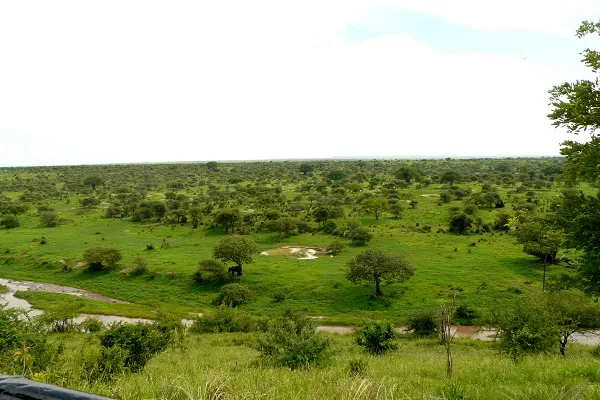
Tarangire National Park
Tanzania's Elephant Capital · 2,850 km²Tarangire is Tanzania's finest elephant park and one of East Africa's most photogenic landscapes — thousands of elephants in the dry season congregating on the Tarangire River against a backdrop of ancient baobab trees that can live for 3,000 years. The park receives a fraction of Serengeti visitor numbers, making encounters more intimate. Beyond elephants: resident lion, leopard, and cheetah prides in the riverine woodland; the largest eland herds in East Africa; lesser kudu — found nowhere else in northern Tanzania; gerenuk; and ground hornbill. The ancient baobab woodland is among the most photogenic landscapes in Africa and reaches peak beauty in the dry season afternoon golden light. Best time: July–October for the densest elephant concentration. Excellent year-round.
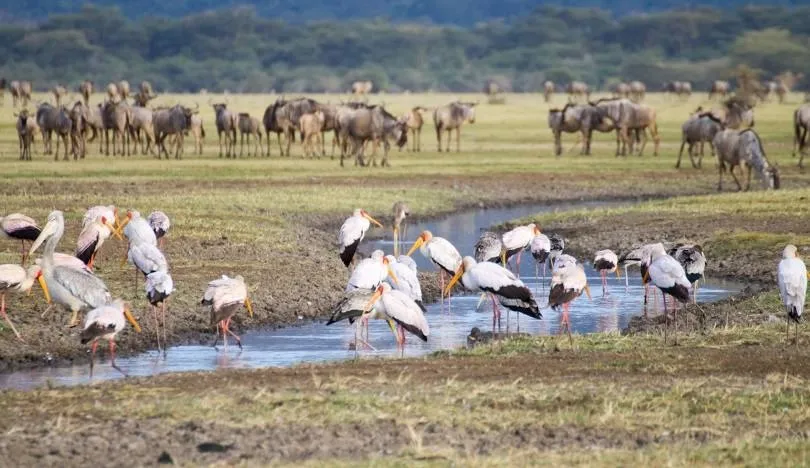
Lake Manyara National Park
East Africa's Most Distinctive Park · 325 km²Lake Manyara is the most distinctive short-drive safari experience in East Africa — home to East Africa's only tree-climbing lion population, a phenomenon unique in the world among savanna lions. The park compresses extraordinary habitat diversity into 50 km of length: the groundwater forest at the base of the Rift Valley escarpment (blue monkey, olive baboon, 400+ bird species, fig trees); the open floodplain; the alkaline soda lake with flamingo flocks, great white pelican, and spoonbill; and the hippo pools at the forest edge. It is a morning drive park — tree-climbing lion probability is highest in the first three hours before the heat of the day. The Rift Valley escarpment rising 600 metres behind the lake is one of the most dramatic visual backdrops in African wildlife photography. Best time: year-round for tree-climbing lions. Flamingo in largest numbers during the wetter months.
Ngorongoro Conservation Area
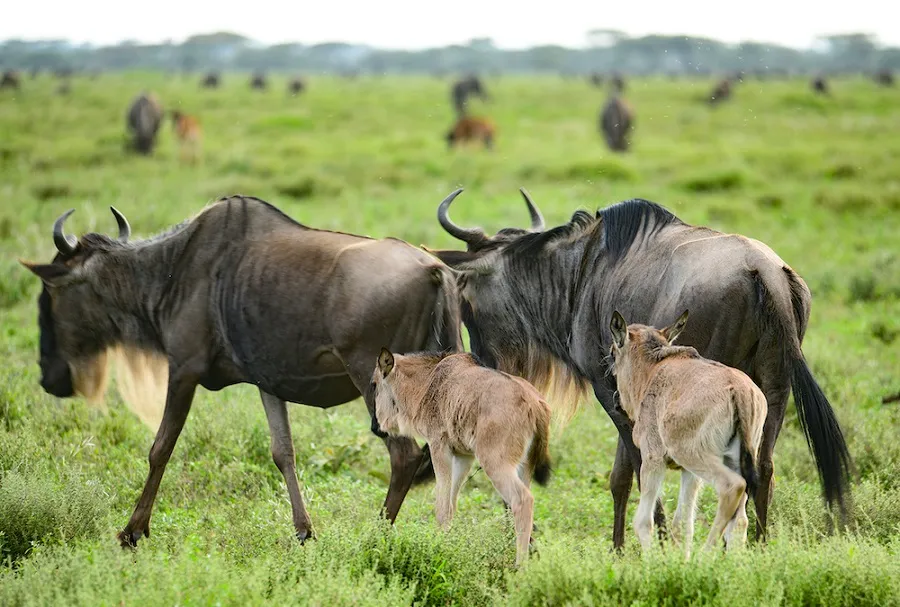
Africa's Most Wildlife-Dense Location · Crater 260 km²The Ngorongoro Crater is the most wildlife-dense location in Africa 25,000 large mammals in a single 260 km² ancient caldera, enclosed by 600-metre crater walls that have made the caldera a self-contained ecosystem since the volcano collapsed approximately three million years ago. Unlike the Serengeti, no large-scale animal movement occurs in or out of the crater the resident population is permanent, stable, and extraordinarily dense. The crater delivers: the finest black rhino encounter probability in Africa (approximately 30 individuals, the highest density anywhere on Earth); the famous thick-maned crater lion prides, genetically distinct from Serengeti lions and among the most studied individuals in wildlife science; 5,000+ buffalo on the open caldera floor; 4,000 zebra; leopard in the Lerai Forest; the hippo pool; and flamingo on the Magadi crater lake. The guide descends at first light to maximise black rhino positioning using overnight network intelligence. Best time: year-round. All crater wildlife is resident — no migration dependency.
Serengeti National Park
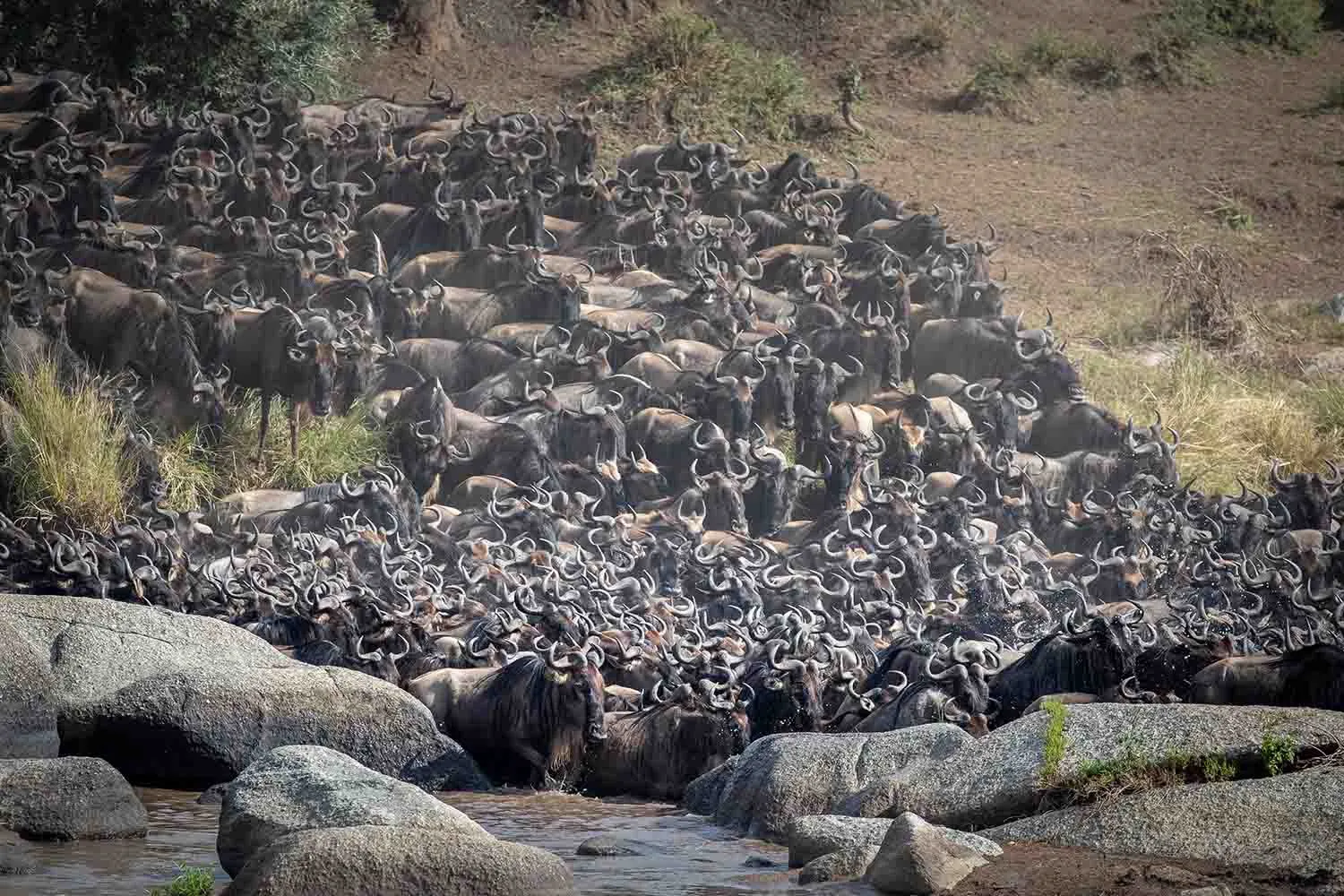
The World's Greatest Wildlife Spectacle · 14,750 km²The Serengeti is the finest wildlife destination in the world and the stage of the Great Migration — the largest terrestrial animal movement on Earth. 1.5 million wildebeest, 300,000 zebra, and 500,000 gazelle complete a 1,200-kilometre annual circuit through the Serengeti-Mara ecosystem, driven by grass growth following the rainfall pattern. The Serengeti also supports: the highest density of predators in Africa (lion, leopard, cheetah, wild dog, spotted hyena, serval, caracal); crocodile in the Mara River during crossing season; and the widest, most dramatic sky anywhere in Africa. The park is 14,750 km² — larger than Northern Ireland — and requires a minimum of two consecutive days to begin to understand. Three or more days allows the guide's accumulated intelligence to reach a level of precision that makes encounters in specific micro-zones possible. Best time: July–October for Mara River crossings; January–February for calving in Ndutu; year-round for predators and resident herds.
Tanzania wildlife guide
The Big Five in Tanzania — Where to Find Each Species
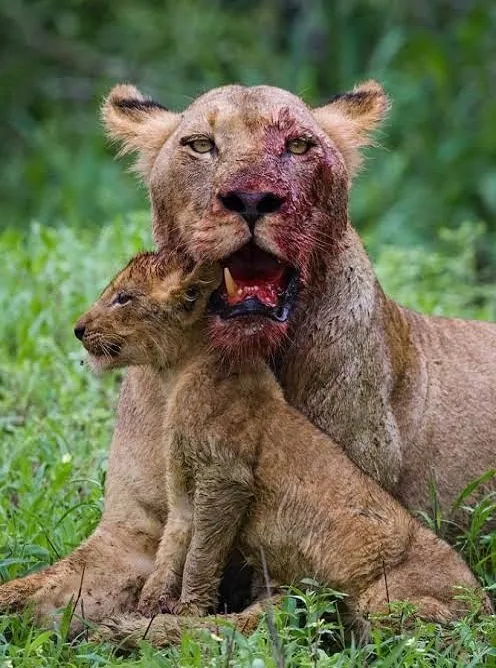
Tanzania is one of only a few destinations in the world where all five members of the Big Five — lion, leopard, elephant, buffalo, and black rhino — can be seen in a single safari circuit. The Big Five concept originated from hunting terminology for the five most dangerous animals to hunt on foot, but has become shorthand for the five most sought-after African wildlife encounters. On a well-guided Tanzania private safari covering the four northern parks, all five are genuinely accessible. Here is where and when each species is most reliably encountered.
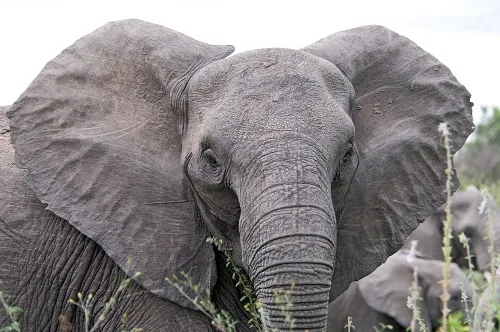
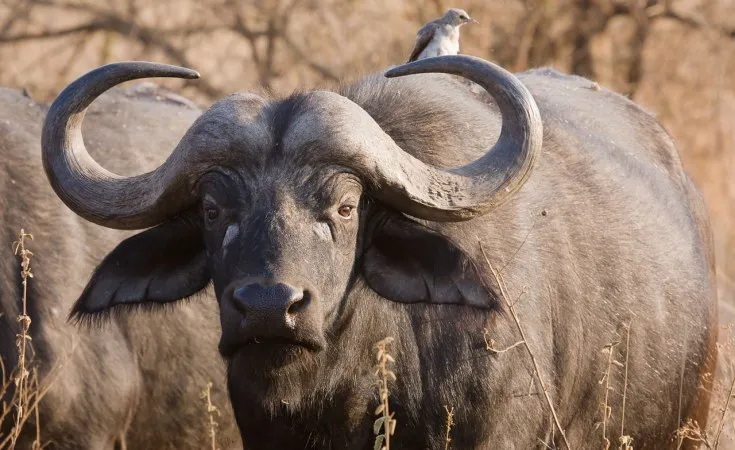
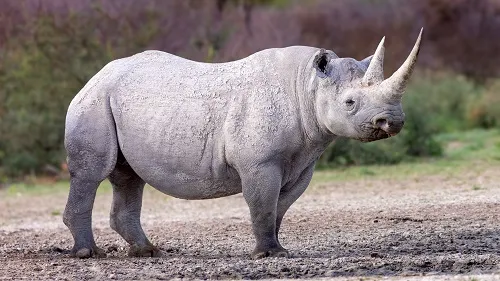
Beyond the Big Five — Tanzania's Exceptional Wildlife
Tanzania's wildlife extends far beyond the Big Five framework. The cheetah — fastest land animal, present in Serengeti and Ngorongoro — is more regularly encountered in Tanzania than almost anywhere else in Africa. The African wild dog, one of the world's most endangered large predators, hunts in packs in the Serengeti and Ngorongoro. The Serengeti and Ngorongoro also host Nile crocodile (in the Mara River and Ngorongoro hippo pools), spotted hyena (the most abundant large predator in the Serengeti), serval, caracal, African wild cat, and honey badger. Lake Manyara and Tarangire are world-class birding destinations with 400+ species each. The tree-climbing lions of Lake Manyara are completely unique to that park among all savanna lion populations. Tanzania is also home to the largest population of giraffe of any country in Africa.
The world's greatest wildlife event
The Great Wildebeest Migration — The Complete Tanzania Guide
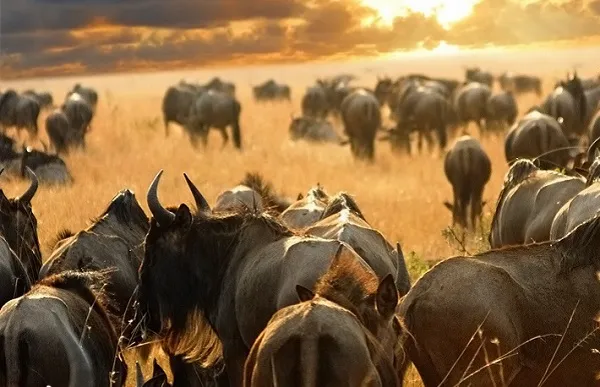
The Great Migration of the Serengeti-Mara ecosystem is the largest terrestrial animal movement on Earth — 1.5 million wildebeest, 300,000 zebra, and 500,000 Thomson's and Grant's gazelle completing a 1,200-kilometre annual circuit driven by rainfall and grass growth. The migration is continuous and year-round: the herds are always moving somewhere in the ecosystem. Understanding where the migration is each month is the most important planning decision for a Tanzania safari.
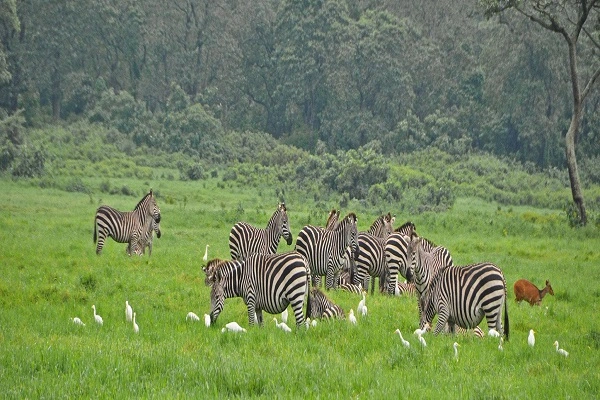
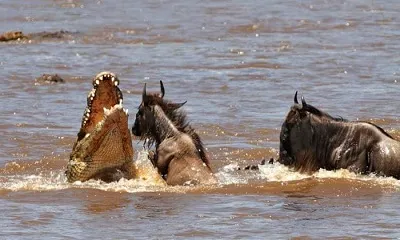
The Mara River crossing is the migration's most dramatic event — thousands of wildebeest launching into crocodile-filled water in panicked cascades. Crossings are not guaranteed on any single day and require two to three consecutive days at the crossing points to see a committed crossing. This is the primary reason the 7-day circuit (four Serengeti days) is considered the gold standard for crossing season safaris — four days gives the guide the best possible crossing probability. Crossings typically occur at the main Mara River crossing points in the Serengeti's northern zone between July and October.
The calving season in the short-grass plains of Ndutu (southern Serengeti) is one of Africa's most extraordinary wildlife events — 8,000 wildebeest calves born per day at the peak of the season. The concentration of predators (cheetah, lion, wild dog, hyena) around the calving grounds makes January–February the most intense predator-prey action of the migration cycle. This is an excellent time for the 5-day and longer private safari itineraries with multiple Serengeti days in the Ndutu zone.
Monthly Migration Calendar
| Month | Location | Event | Best safari option |
|---|---|---|---|
| December–January | Short-grass plains · Ndutu | Pre-calving movement south | 5-day+ for calving |
| February | Ndutu · Southern Serengeti | Peak calving — 8,000 calves/day | 5-day+ calving season |
| March–May | Central and Western Serengeti | Northward movement begins; Grumeti approaches | 4-day+ value season |
| June | Western Corridor · Grumeti River | Grumeti River crossings — crocodile season | 5-day+ Grumeti focus |
| July–August | Northern Serengeti · Mara River | Peak Mara crossings — most dramatic events | 7-day crossing season |
| September–October | Northern Serengeti · Mara River | Sustained crossing season — best probability | 7-day+ gold standard |
| November | Moving south — central Serengeti | Short rains — herds dispersing south | 5-day good season |
Planning your safari dates
Tanzania Safari Seasons — When to Go for What
Tanzania offers exceptional wildlife in every calendar month. The concept of a "bad season" for Tanzania safari does not apply to the northern circuit — all four parks deliver outstanding wildlife year-round. What seasonality determines is the specific nature of the Serengeti wildlife experience, the density of other visitors, and the price level.
January – February
Calving Season
High seasonThe wildebeest calving season in Ndutu is one of Africa's most extraordinary events — 8,000 calves per day at peak. Extraordinary predator-prey action. Excellent visibility in the southern short-grass plains. Warm days, light short rains possible.
March – May
Long Rains — Value
Best valueLowest prices, fewest tourists, most dramatic green landscapes. Tarangire and Ngorongoro are excellent. Serengeti drives are rewarding but visibility may be lower in the long grass. The best budget window for a quality private safari experience.
June – October
Dry Season — Crossings
Peak seasonThe finest conditions across all four parks simultaneously. Tarangire elephant herds at maximum concentration. Ngorongoro at its most dramatic. Serengeti Mara River crossings from July to October — the world's most spectacular wildlife event. Book 6+ months ahead for this window.
November – December
Short Rains — Good Season
Good seasonLight rains bring the landscape back to vivid green. Good wildlife in all four parks. Migration herds moving south toward the calving grounds. Lower visitor numbers than peak season. Excellent photography — dramatic skies and lush landscapes.
Itinerary planning guide
How to Choose Your Safari Duration — The Expert Framework
Duration is the single most impactful decision in Tanzania safari planning. More days means more Serengeti — and more Serengeti means accumulated intelligence, deeper access, and finer encounters. Here is the expert framework for choosing the right duration.
2–3 Days — The Short Circuit
The 2-day safari (Tarangire and Ngorongoro Crater) is the ideal option for guests with limited time who want to experience Tanzania's two finest non-Serengeti parks — Tanzania's elephant capital and Africa's most wildlife-dense sanctuary — in an intensive two-day private circuit. The 3-day adds Lake Manyara's tree-climbing lions to the circuit for the definitive three-park introduction. Neither the 2-day nor the 3-day includes the Serengeti — but both deliver genuinely extraordinary wildlife including the entire Ngorongoro Big Five in one full crater day.
4 Days — The Complete Circuit, One Serengeti Day
The 4-day safari is the shortest itinerary that covers all four northern parks including the Serengeti. One Serengeti day is excellent — the guide positions with overnight network intelligence and covers a complete day of migration and predator drives. A single Serengeti day is a rewarding and complete experience; it is simply not the same as two or more consecutive days, where accumulated intelligence begins to transform the precision of positioning.
5 Days — The Most Popular Private Circuit (Two Serengeti Days)
The 5-day Tanzania safari is the most popular private circuit itinerary we operate, and for good reason. Two consecutive Serengeti days is the point at which intelligence accumulation between days begins to produce qualitatively better encounters on Day 2 than on Day 1. The guide maps the ecosystem on Day 4 and applies that complete map on Day 5 with direct precision positioning. For guests who want the complete Tanzania circuit and a genuine Serengeti experience without the premium of 6+ days, the 5-day safari represents the optimal balance of parks covered, Serengeti depth, and price.
6–7 Days — The Gold Standard (Three to Four Serengeti Days)
The 7-day Tanzania safari is widely considered the gold standard Tanzania circuit — all four parks with four consecutive Serengeti days. Four Serengeti days builds the deepest available intelligence picture within a standard circuit format: Day 1 explores, Day 2 applies precision, Day 3 accesses deeper zones, Day 4 deploys three prior days of intelligence in the finest position available. The 7-day safari is the most popular option for crossing season guests (July–October) who want maximum Mara River crossing probability. The 6-day safari (three Serengeti days) is the next step down and still delivers extraordinary deep access on Day 3.
8–10 Days — Maximum Immersion
The 8-day through 10-day Tanzania safaris are the maximum immersion format — five, six, and seven consecutive Serengeti days respectively. Each additional Serengeti day adds another layer of intelligence, deeper zone access, and more time with specific individual wildlife families that a shorter visit cannot sustain. The 10-day safari with seven Serengeti days is the most comprehensive Tanzania circuit available — the migration as a world you inhabit across an entire week, not a spectacle you visit for a day.
For most first-time Tanzania guests, the 5-day private safari is the optimal starting point — all four parks covered, two Serengeti days with Day 2 precision positioning, and a complete Big Five opportunity in the Ngorongoro Crater on Day 3. Guests who specifically want Mara River crossing season experiences and maximum crossing probability should consider the 7-day option for four Serengeti days. For calving season, the 5-day with the Ndutu zone focus delivers excellent value. Contact us via WhatsApp with your dates and we will advise on the optimal itinerary for your specific timing.
Where you stay on safari
Tanzania Safari Accommodation — Three Tiers Explained
Every private Tanzania safari includes accommodation — the tier is selected at booking based on your budget and preference. The same itinerary and guide quality applies across all tiers. What changes is the comfort level, the facilities, and the closeness of the overnight location to the next morning's wildlife zone.
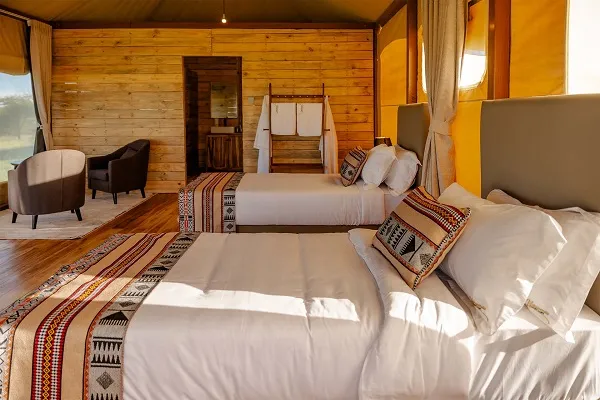
Mid-Range · Included in standard rate
Comfortable Lodge and Tented Camp
Included in our standard private safari pricing
Comfortable en-suite rooms or permanent tented chalets with private bathrooms. Good food and cold beer. Positioned close to each park for early morning gate entry. The standard used in our published pricing. Examples: Tarangire River Camp, Ngorongoro Rhino Lodge, Serengeti Kati Kati or Ikoma.
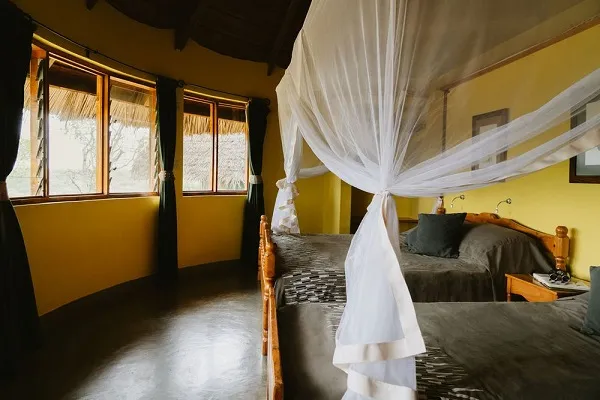
Upmarket · From +$90–$250 per person per night
Upmarket Tented Camps and Boutique Lodges
Upgrade available — contact us for current quotes
Larger tents or chalets with private veranda or plunge pool views. Often in more exclusive wildlife-dense locations within or adjacent to the parks. Higher service levels, curated dining. Examples: Lemala Ngorongoro, Sanctuary Kichakani, Mbugani.
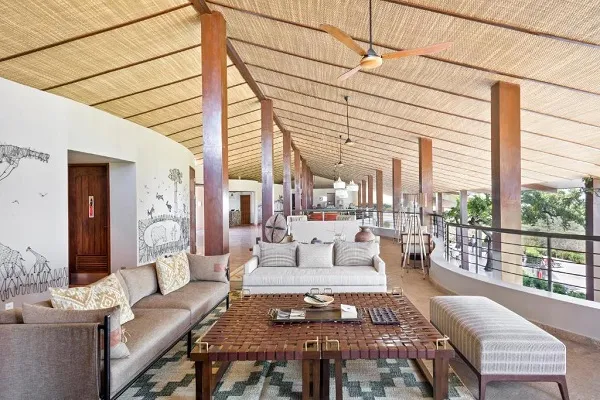
Luxury · From +$300–$900+ per person per night
Luxury Private Camps and Ultra-Premium Lodges
Full luxury upgrade packages available — WhatsApp for pricing
The finest camps in the ecosystem — private butler service, gourmet dining, heated pool, and locations so exclusive that some camps operate entirely within private concessions with no other vehicles. Examples: Singita Grumeti, &Beyond Klein's Camp, Four Seasons Serengeti.
What your safari covers
Included in Every Private Safari — No Hidden Costs
Every private Tanzania safari includes a fully comprehensive package. The price you pay covers all of the following — there are no hidden fees, no add-on surprises, and no items to negotiate at the gate.
| Item | Included | Notes |
|---|---|---|
| Private 4x4 safari vehicle (Land Cruiser or equivalent) | Yes | Pop-up roof hatches, charging points, cooler box |
| Licensed expert naturalist guide | Yes | Same quality regardless of accommodation tier |
| All national park and reserve entry fees | Yes | All parks on the itinerary |
| Ngorongoro Crater descent fee | Yes | All 2-day+ itineraries including Ngorongoro |
| All accommodation | Yes | Mid-range standard; upgrades available |
| All meals (Day 1 dinner → final day lunch) | Yes | Bush lunches and full board at lodges |
| Bottled water in vehicle throughout | Yes | Soft drinks additional |
| Hotel pickups and drop-offs — Arusha and Moshi | Yes | Named hotels; airport transfers additional |
| Tanzania tourist visa | No | Approximately $50 USD online; obtain before departure |
| Alcoholic beverages | No | Available for purchase at lodges |
| Personal travel and medical insurance | No | Medical evacuation insurance strongly recommended |
| Guide gratuity | No | $15–$25 per day recommended; entirely discretionary |
Practical Tanzania safari preparation
Tanzania Safari Packing Guide — What to Bring
Tanzania's northern parks cover altitudes from 1,200 metres (Tarangire) to 2,400 metres (Ngorongoro crater rim). Temperatures vary significantly between parks and between dawn and midday. Here is the expert packing guide for a Tanzania private safari in any season.
Clothing
- Neutral-coloured clothing (khaki, olive, grey — avoid white and bright colours which disturb wildlife)
- Lightweight long-sleeve shirts for sun protection in the vehicle
- Warm layer or fleece — Ngorongoro crater rim reaches 8–12°C at dawn
- Light waterproof jacket (all seasons — afternoon showers possible)
- Closed-toe walking shoes or lightweight boots for nature walks
- Sandals or flip-flops for camp evenings
- Sun hat with brim (critical for pop-up roof game drives)
- Light scarf or buff for dust in the dry season
Photography
- Camera with telephoto lens (minimum 200mm; 400–600mm ideal for Serengeti)
- Extra batteries and memory cards — charging available at lodges but not always reliable
- Beanbag or window mount for vehicle-based photography
- Dust-proof bag or cover for camera equipment
- Binoculars — minimum 8×42 recommended
- Phone with good camera for candid shots and journal
- Power bank for charging in the vehicle
Health and sun protection
- High-SPF sunscreen (SPF 50+ recommended)
- Quality insect repellent with DEET for evening use
- Antimalarials — consult your doctor at least 4 weeks before departure
- Antihistamines (dust and pollen exposure)
- Quality sunglasses — UV protection essential at altitude
- Personal prescription medications with extra supply
- Hand sanitiser and wet wipes for bush lunches
Documents and essentials
- Passport with 6+ months validity from safari start date
- Tanzania tourist visa confirmation (apply online at evisa.immigration.go.tz)
- Travel and medical evacuation insurance documents
- Yellow fever certificate (required if travelling from certain countries)
- Credit card for lodge purchases and tips
- USD cash in small denominations for tips and small purchases
- Emergency contact numbers including Resilience Safaris WhatsApp
Guest experiences
Private Safari Reviews — What Our Guests Say

"Seven days, four parks, four Serengeti days. On Day 6 — the third Serengeti day — the guide drove before dawn to a position he had been staging toward for two consecutive prior days. We watched a complete lion cooperative hunt on a wildebeest herd in the first light of morning. Nobody in the vehicle spoke for 40 minutes. That encounter is not possible without the intelligence accumulated across three prior days. The private vehicle format is the only way to experience Tanzania at this level."
7-day private safari · September
"The 5-day private safari was everything I hoped Tanzania would be. The black rhino before 7 am in the Ngorongoro Crater, a leopard with a kill in the Lerai Forest, and two days in the Serengeti where the guide positioned us for our specific wildlife priority — the cheetah. On Day 5 he found a cheetah coalition hunting at a location he had identified as their morning territory the previous day. We watched the hunt from 80 metres. Private guide access makes all of this possible."
5-day private safari · February (calving season)"We did the 10-day private safari with seven Serengeti days. By Day 9 the guide knew every lion pride in his zone by individual. He would drive directly to where specific individuals were sleeping — and they were there. A cheetah mother with three cubs that we had first found on Day 4 we found again on Day 8 and watched her teach the cubs to stalk. Seven days in the Serengeti is a different kind of experience from any shorter trip. We have now done seven Tanzania safaris. The 10-day is the finest."
10-day private safari · AugustExpert answers
Tanzania Private Safari — Complete FAQ
-
Private Tanzania safaris start from $730 per person based on two guests sharing for a 2-day circuit (Tarangire and Ngorongoro Crater). The most popular 5-day complete circuit (all four parks, two Serengeti days) starts from $1,850 per person. The 7-day gold standard (four Serengeti days) starts from $2,650 per person. All prices are based on two guests sharing and include the private vehicle, expert guide, all park fees, all accommodation at mid-range standard, and all meals. Solo traveller rates and larger group rates are available on request — contact us via WhatsApp with your group size and preferred duration for a custom quote. Accommodation upgrades to upmarket or luxury tier are available at additional cost.
-
Tanzania offers excellent wildlife in every month. The "best" month depends on what you specifically want to experience. July–October is peak season: the Mara River wildebeest crossing event, maximum elephant concentration in Tarangire, and the highest-density predator activity in the Serengeti. January–February is the calving season in Ndutu — 8,000 wildebeest calves per day at peak, with extraordinary cheetah, lion, and wild dog predator activity. June is the Grumeti River crossing season in the Western Corridor. The green season (March–May) offers the lowest prices, fewest visitors, and the most dramatically beautiful landscapes but the Serengeti grass is long and wildlife is dispersed. November–December is a pleasant shoulder season with reasonable prices and good wildlife. For Ngorongoro Crater and Tarangire, wildlife is consistently excellent in every month.
-
The minimum meaningful Tanzania safari is 4 days — the minimum to cover all four essential northern parks including the Serengeti. However, the 5-day safari is strongly recommended as the minimum for a genuinely complete experience because two consecutive Serengeti days allows the guide's accumulated intelligence to produce qualitatively better encounters on Day 2. For guests specifically wanting Mara River crossing experiences, 7 days with four Serengeti days is considered the gold standard. For first-time Tanzania visitors with a standard budget, the 5-day safari represents the best balance of parks covered, Serengeti depth, and price. If in doubt, always add a day — the incremental improvement per additional Serengeti day is consistently significant.
-
Tanzania is one of Africa's most stable and visitor-friendly safari destinations. The northern circuit parks are safe, well-patrolled, and visited by tens of thousands of international guests annually. For health, a Tanzania safari requires: antimalarials (consult your doctor 4–6 weeks before departure; Malarone is the most commonly prescribed); yellow fever vaccination certificate (required if entering from a country with yellow fever risk — check current requirements for your country of departure); routine vaccinations (hepatitis A, typhoid); and comprehensive travel and medical evacuation insurance. Medical evacuation insurance is strongly recommended — the nearest major hospital to the Serengeti is 300 km away. The parks themselves are free of malaria during the dry season but antimalarials are recommended year-round for the full circuit.
-
Yes — the Great Migration is a continuous, year-round event. The wildebeest herds are always somewhere in the Serengeti-Mara ecosystem. The specific nature of the migration experience changes by season: July–October delivers the Mara River crossing events; January–February delivers the calving season with 8,000 calves born per day; June delivers the Grumeti River crossings. Outside these specific events, the migration herds are distributed across the Serengeti's different zones and are accessible with good guide positioning. The only season when the Serengeti herds are more dispersed and harder to concentrate in one location is March–May (long rains) when the grass is long and animals spread across a wider area. A good guide with network intelligence can locate the herds in every season.
-
All private safaris use custom-outfitted Toyota Land Cruiser 4x4 vehicles with pop-up roof hatches that allow full 360-degree visibility and standing photography from all seats. The vehicles are right-hand drive, configured for maximum window access for every passenger, and equipped with a cooler box for cold water and snacks, a first aid kit, and charging points for cameras and phones. Safari vehicles used in Tanzania national parks must be registered and approved by TANAPA (Tanzania National Parks Authority) — all our vehicles are fully compliant. The Land Cruiser is the industry-standard safari vehicle in Tanzania and is purpose-built for the terrain of the northern circuit.
-
Yes — Tanzania's three flagship experiences (Kilimanjaro, safari, and Zanzibar) are naturally combined and we operate all three from our Moshi base. The most popular combinations are: Kilimanjaro then private safari (the climb ends in Moshi, the safari departs from Moshi or Arusha — no airport transfer needed); safari then Zanzibar beach (Arusha to Zanzibar is a 1-hour Precision Air flight or a short domestic connection — perfect rest after intensive wildlife days). Full combination packages covering Kilimanjaro, northern circuit safari, and Zanzibar beach are available as custom-designed itineraries. Contact us via WhatsApp with your total available days and we will design the optimal combination package.
-
For peak season (July–October and January–February), booking 6–12 months in advance is strongly recommended — accommodation at popular lodges fills fast, especially in the northern Serengeti during crossing season and in Ndutu during calving season. For shoulder season (November–December and March–June), 2–4 months advance booking is typically sufficient. Private vehicle availability with a licensed guide can often be arranged within 2–4 weeks for non-peak dates. We accept bookings with a deposit and hold confirmed safari packages against a reservation. Contact us via WhatsApp at any time to check current availability for your dates — we respond within 6 hours in all cases.