The world's finest wildlife destination — explained
Why the Serengeti is the Greatest Safari Destination on Earth
The Serengeti National Park covers 14,750 km² of ancient savanna in northern Tanzania — larger than Northern Ireland, larger than Connecticut, larger than any other national park in the East African safari circuit. It is the stage of the Great Migration, the largest terrestrial animal movement on Earth. It supports Africa's highest density of predators per unit area. It contains the most photographed wildlife landscape in the world. It delivers encounters — a cheetah coalition hunt, a Mara River crossing, a lion pride in the first light of dawn on a kopje — that no other destination can replicate at the frequency the Serengeti delivers them. The Serengeti is not the finest safari destination in Africa. It is the finest safari destination on Earth.
The Serengeti's case for this superlative is statistical. 3,000 lion individuals across the ecosystem — the largest single-ecosystem lion population on the planet. 1.5 million wildebeest in a continuous annual migration covering 1,200 kilometres. 1,000 cheetah — Tanzania holds 10% of the world's remaining cheetah population. 500 African wild dog, one of the world's most endangered large predators. 14,750 km² of continuous savanna habitat uninterrupted by human settlement. A park road network that places a well-guided vehicle at the centre of wildlife activity in every zone in every season. No other safari destination on Earth offers this statistical combination.
This guide is the most comprehensive Serengeti safari resource available for 2026 and 2027 — every package, every zone, every season, and the expert planning intelligence to design the finest possible Serengeti experience for your specific dates, budget, and wildlife priorities.

The Serengeti is 14,750 km² of complex, dynamic ecosystem. No single day — even a perfect one — can deliver the wildlife access that consecutive days of accumulated intelligence provides. Day 1 maps the ecosystem: herd positions, predator territories, crossing point build-up, individual animal identification. Day 2 applies that map with precision — the guide drives to specific positions, not general zones. Day 3 goes deeper: zones accessible only through two prior days of staging, individuals tracked for a third time from established positions. Every additional consecutive Serengeti day produces encounters impossible on the previous one. This is the fundamental reason that 3, 4, and 7 Serengeti days are categorically different experiences from 1 or 2 — not merely more of the same.
Understanding the Serengeti's geography
The Five Serengeti Zones — Where to Be and When in 2026
The Serengeti is not a single homogeneous landscape — it is five distinct ecological zones, each with its own character, wildlife concentration, and seasonal migration patterns. Understanding the zones is the foundation of intelligent Serengeti safari planning for 2026 and 2027. Your guide will position in the correct zone for your travel dates — but understanding the zones helps you choose the right package duration and timing.

Best: December–March
Southern Serengeti — Ndutu and Short-Grass Plains
The calving season zone. The short-grass plains of Ndutu receive the migration herds from December through March, with peak calving in January–February. The flat, open terrain provides extraordinary photography — predators hunting calves are visible from great distances with no obstructions. Home to wild dog packs, cheetah families, and the most intense predator-prey interaction of the migration year.
Best: Year-round
Central Serengeti — Seronera and Kopjes
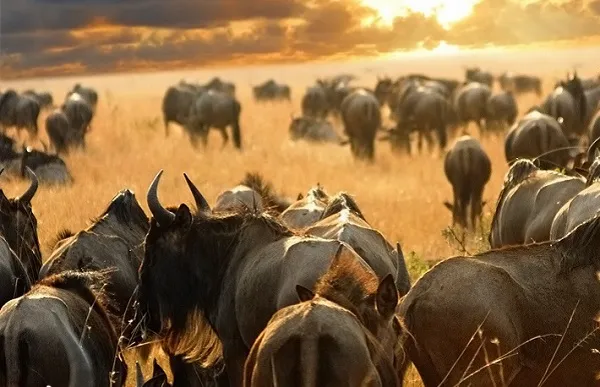
The park's year-round wildlife hub — centred on the Seronera Valley and its granite kopje outcrops. The Seronera River provides permanent water attracting resident wildlife throughout the year. Leopard on kopjes is most reliably encountered here. Lion prides use the rock outcrops as resting points. Resident buffalo, giraffe, and zebra herds. The default zone when the migration is elsewhere.

Best: May–July
Western Corridor — Grumeti River
The first crossing season zone. The migration herds move through the Western Corridor May–July, reaching the Grumeti River where the world's largest Nile crocodile population awaits. Grumeti crossings are less dramatic than the Mara but more exclusive — fewer visitors, more intimate encounters. The Singita Grumeti private concession dominates this zone.
Best: July–October
Northern Serengeti — Mara River and Lamai
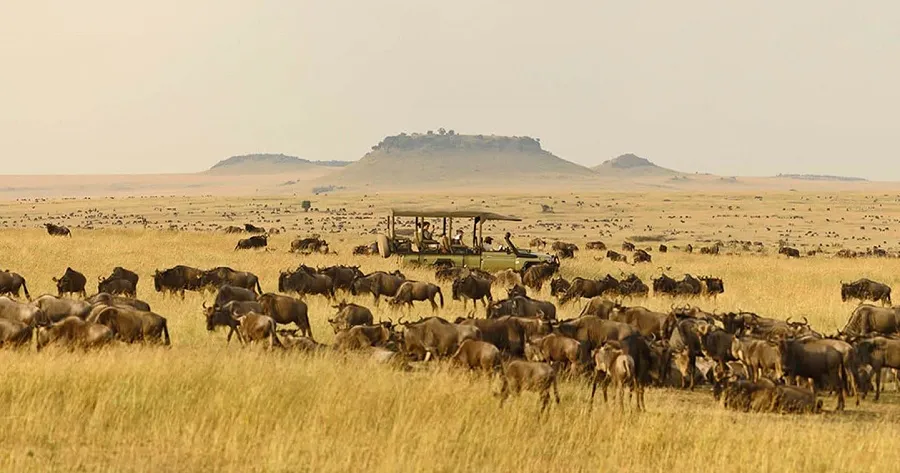
The crossing season zone and the Serengeti's most dramatic landscape. The Mara River crossings (July–October) are the world's most spectacular wildlife event. The Lamai Wedge, Lobo Valley, and Mara River crossing points concentrate the migration at maximum density. The guide network for crossing intelligence is most refined in this zone.
Best: October–November
Eastern Serengeti — Lobo Valley
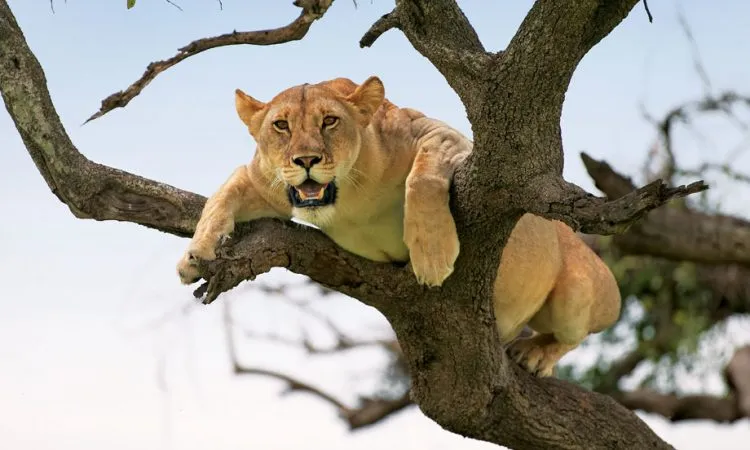
The most underutilised zone and one of the finest resident wildlife areas in the ecosystem. The Lobo Valley has year-round lion, leopard, elephant, and buffalo populations that are significantly less visited than the central or northern zones. Particularly good in October–November when the southern migration begins and this zone bridges the northern and central corridors.
Complete 2026–2027 Serengeti package collection
Serengeti Safari Packages — Every Duration and Budget 2026
Every Serengeti package that includes time in the Serengeti National Park, from a single migration day to a complete 10-day immersion. All private packages include a dedicated 4x4 vehicle, licensed expert guide, Serengeti park entry fee ($82/person/day 2026), all accommodation, and all meals. Group joining packages share the vehicle at lower per-person rates.

4-Day Joining — All 4 Parks
Budget entry to the Serengeti. All four northern parks, one full migration day in the Serengeti. Expert guide uses overnight network intelligence for positioning.
1 Serengeti Day
4-Day Private Tanzania Safari
Private vehicle. All four parks, one full Serengeti day with complete schedule flexibility. Day 1 in the ecosystem with full guide intelligence.
1 Serengeti Day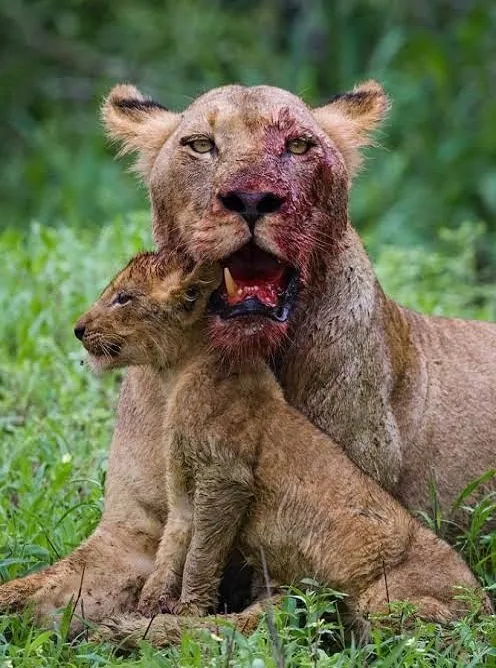
5-Day Private Tanzania Safari
The most popular private circuit. Two consecutive Serengeti days — Day 1 ecosystem mapping, Day 2 precision intelligence applied. The breakthrough in Serengeti encounter quality.
2 Serengeti Days
5-Day Joining Flagship Circuit
Budget flagship with two Serengeti days. Day 2 intelligence applied from Day 1 mapping. The finest budget Serengeti experience available.
2 Serengeti Days
6-Day Private Tanzania Safari
Three consecutive Serengeti days. Day 3 deep access from two days of prior intelligence. Genuinely different category of encounter from 2-day itineraries.
3 Serengeti Days
7-Day Private Tanzania Safari
The gold standard for crossing season. Four consecutive Serengeti days — maximum Mara River crossing probability. Three prior days of intelligence on Day 4.
4 Serengeti Days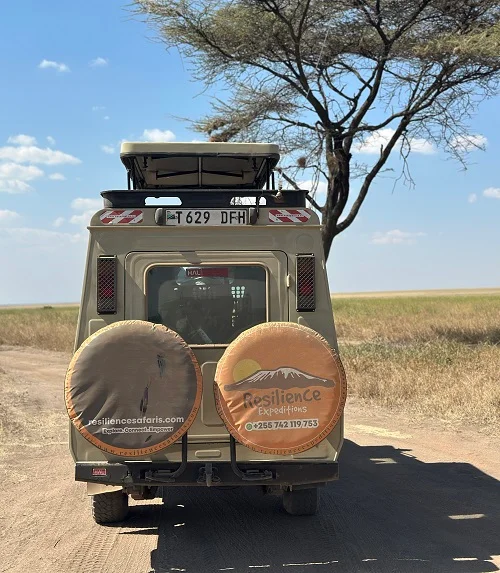
8-Day Private Tanzania Safari
Five consecutive Serengeti days — the pinnacle of the circuit format. Maximum crossing point access. Complete migration immersion with full ecosystem mastery by Day 5.
5 Serengeti Days
9-Day Private Tanzania Safari
Six Serengeti days — apex level migration access. The Serengeti as a world you inhabit, not a spectacle you visit. Individual predators known by Day 3, individual territory cycles mapped by Day 5.
6 Serengeti Days
10-Day Private Tanzania Safari
The ultimate Tanzania circuit — seven consecutive Serengeti days. Maximum intelligence accumulation across the full ecosystem. The Serengeti at its most deeply known.
7 Serengeti DaysThe most important concept in Serengeti safari planning
Intelligence Accumulation — Why Every Additional Serengeti Day Matters
The intelligence accumulation concept is the single most important idea in Serengeti safari planning — and the primary reason that 4, 5, 6, and 7 consecutive Serengeti days are not simply "more of the same" but categorically different experiences from 1 or 2 days. Here is how the intelligence builds across consecutive Serengeti days and what it delivers at each stage.
Exploration
Day 1 — Ecosystem Mapping
The guide begins building the intelligence picture from first light. Herd positions across multiple zones documented. Predator individuals identified by coat pattern, ear notch, and mane. Crossing point build-up assessed at the Mara River. Tomorrow's precision positioning plan established by evening. Day 1 is excellent; it is also the foundation for every day that follows.
Precision applied
Day 2 — Day 1 Intelligence Applied
The guide drives directly to the highest-probability positions from Day 1's mapping — no exploratory driving. Known predator individuals tracked from their identified morning positions. Known crossing points monitored with Day 1 build-up data banked. Day 2 consistently delivers finer encounters than Day 1 because the guide's starting knowledge is a complete ecosystem map rather than general zone intelligence.
Deep access
Day 3 — Zones Requiring Two Prior Days
Deep zone access — remote areas and specific micro-habitats that required two days of approach and staging to reach effectively. Individual predators encountered for a third time with two sessions of territory observation, producing the finest close encounter probability available. Crossing point at its highest probability with two full days of build-up. Day 3 is consistently described by experienced safari guests as the finest wildlife day of any circuit.
Mastery
Day 4+ — Complete Ecosystem Mastery
By Day 4, the guide knows the current state of the ecosystem with a level of precision impossible without three prior days of continuous observation. Individual predator family movements mapped across three days. Crossing commitment predicted from multi-day build-up patterns. Remote zones fully accessible. The Serengeti encountered as a genuinely known landscape rather than a vast, dynamic unknown. Days 4–7 represent the finest wildlife encounters available anywhere on Earth.
Month by month — 2026 and 2027
The Great Migration — The Complete 2026 Monthly Serengeti Guide
The Great Migration is the largest terrestrial animal movement on Earth — 1.5 million wildebeest, 300,000 zebra, and 500,000 gazelle completing a 1,200-kilometre annual circuit through the Serengeti-Mara ecosystem. The migration never stops — the herds are always somewhere in the ecosystem, always moving, always providing extraordinary wildlife encounters. Here is the complete monthly guide for 2026 and 2027.
| Month | Primary Serengeti Zone | Key Wildlife Event | Best Package for This Period | Season |
|---|---|---|---|---|
| December | Short-grass plains · Heading to Ndutu | Herds massing in south ahead of calving | 5-day circuit (Ndutu orientation) | Good season |
| January 2026 | Ndutu · Southern short-grass plains | Pre-calving movement; herds massing; 8,000 calves/day begin | 5-day or 7-day (Ndutu focus) | High season |
| February 2026 | Ndutu · Peak calving zone | PEAK CALVING — 8,000 calves/day. Predator-prey spectacular. | 5–7 day (calving season special) | Peak wildlife |
| March 2026 | Central Serengeti · Post-calving north movement | Post-calving herds beginning northward march | 4–5 day circuit | Value season |
| April–May 2026 | Central and Western Serengeti | Long-grass northward movement; pre-Grumeti build-up | Any; value season savings | Best value |
| June 2026 | Western Corridor · Grumeti River | GRUMETI RIVER CROSSINGS — giant crocodile encounters | 5-day or 7-day (Grumeti zone) | High season |
| July–Aug 2026 | Northern Serengeti · Mara River | MARA RIVER CROSSINGS PEAK — world's most dramatic event | 7-day gold standard | Peak season |
| September–Oct 2026 | Northern Serengeti · Sustained Mara | SUSTAINED MARA CROSSINGS — best probability window | 7-day or 10-day | Peak season |
| November 2026 | Central and Southern Serengeti | Short rains; herds dispersing south; excellent green season | 5-day good season | Good shoulder |
The Mara River Crossing — The World's Most Dramatic Wildlife Event
The Mara River crossing is the migration's most celebrated event — thousands of wildebeest launching into crocodile-filled water in panicked cascades, forced by instinct and survival pressure across one of the most dangerous wildlife obstacles in Africa. Crossings occur at the Mara River from approximately July through October, with peak activity in August and September. The crossing dynamic is complex and requires consecutive days to understand and predict.
Primary crossing · July–October
Main Mara River Crossing Points
The main Mara River crossings occur at several established points along the river in the northern Serengeti. The guide's overnight network intelligence identifies which crossing points have active build-up — herds approaching over several days before committing to the crossing. Multiple consecutive days maximise the probability of being at the correct point at the moment of commitment. The crossing is never guaranteed on any single day; three or four consecutive days gives the highest probability available.
3–4 days recommended for crossing probabilitySecondary crossing · June–July
Grumeti River Crossings — Western Corridor
The Grumeti River crossings (June–July) are less visited and less publicised than the Mara crossings but feature the world's largest Nile crocodile population — enormous individuals that have evolved in isolation in the Grumeti's permanent pools. Grumeti crossings are more intimate, more exclusive, and in some ways more visually dramatic than the Mara crossings because of the crocodile size. Best experienced from the Singita Grumeti concession or via the Western Corridor road network.
June–July primary windowTanzania's most underrated wildlife event
Calving Season in the Serengeti — January and February 2026 Deep Dive
Tanzania's calving season (January–February) is the most underrated major wildlife event in Africa — extraordinary in its scale and intensity, and in many ways producing more consistently rewarding wildlife encounters than the famous Mara River crossings. Understanding what the calving season delivers and why it is exceptional helps you decide whether January–February 2026 or 2027 is the right time for your Serengeti safari.
At peak calving (late January–February), approximately 8,000 wildebeest calves are born per day in the Ndutu and short-grass plains area of the southern Serengeti. The concentration of newborns — clumsy, slow, and profoundly vulnerable — attracts every predator in the vicinity to a dense area of open, flat terrain where photography is exceptional. Cheetah families hunt calves in the open plain at close range with clear sightlines. Lion prides coordinate calf hunts that are faster, more energetic, and more frequently successful than adult wildebeest hunts. Wild dog packs target calves with extraordinary chase success rates. Spotted hyena clans patrol the calving grounds continuously. The predator-prey action during calving season is the most intense, most frequent, and most visible of any period in the migration cycle.
The Ndutu and southern Serengeti landscape in January–February is also at its most beautiful — the short rains have ended, the short-grass plains are vivid green, the sky is dramatic, and the light at dawn and sunset is extraordinary for photography. For photographers, calving season is the finest photography window of the entire Serengeti year — open terrain, dramatic light, continuous wildlife action, and subjects (cheetah, wild dog, lion) that are frequently engaged in hunting, nursing, and teaching behaviours unique to the calving period.
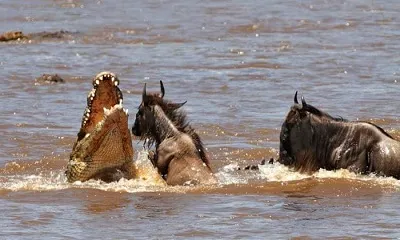
The Mara River crossing is a more dramatic single event — nothing in Africa compares to a full crossing in terms of scale and intensity. But crossings are not guaranteed on any single day, require multiple consecutive days for meaningful probability, and the viewing position is fixed at the crossing bank. Calving season wildlife activity is distributed across the entire short-grass plain, continuous throughout the day, and involves every predator species simultaneously. A well-guided calving season day in Ndutu produces cheetah, lion, wild dog, and spotted hyena encounters more reliably than most crossing season days at the Mara. For guests choosing between seasons, calving season (January–February) is consistently the more reliably rewarding overall safari experience. Crossing season (July–October) delivers the more dramatic single event.
Serengeti species expert guide
Serengeti Wildlife Guide — Every Species You Can Expect to See
The Serengeti supports the world's most diverse and abundant predator community alongside the world's largest terrestrial animal migration. Here is the definitive species guide for the Serengeti's most sought-after wildlife in 2026 and 2027.
African Lion
Very high probability · Year-roundThe Serengeti ecosystem supports approximately 3,000 lion individuals — the world's largest single-ecosystem lion population. The famous thick-maned Serengeti males and the large Seronera prides are the most photographed individuals in wildlife science. Lion is encountered daily in every Serengeti zone. The guide's network intelligence places you at the known morning resting positions by dawn — lion encounters in the Serengeti are rarely a matter of chance.
Best at dawn — guides position using overnight intelligence
Cheetah
High probability · Year-round · Calving season peakTanzania holds approximately 10% of the world's remaining cheetah population. The Serengeti's cheetah density is the highest in the world — approximately 1,000 individuals in the ecosystem. Cheetah families (mother with cubs) are the most reliably located and most behaviorally rewarding encounters. The guide tracks known cheetah families by territory across consecutive days. Calving season delivers the most frequent hunting encounters as calves provide accessible prey.
Hunt probability highest 6–10 am · Calving season peak
Leopard
High probability · Central Serengeti and kopjesLeopard is reliably encountered in the central Serengeti's kopje granite outcrops — particularly the Seronera Valley kopjes where known individuals have been studied for decades. Leopard with a kill hoisted in a sausage tree or acacia is one of the most spectacular photographic encounters in the Serengeti. Morning drives at the kopjes consistently produce leopard sightings. The guide's network intelligence for known individuals makes leopard encounters repeatable rather than random.
Kopje morning drives most productive · Known individuals tracked
Wildebeest — Great Migration
Year-round (zone-dependent)1.5 million wildebeest are present somewhere in the Serengeti-Mara ecosystem in every month of the year. The specific character of the encounter changes by zone and season — from the dramatic Mara River crossings of July–October to the calving season chaos of January–February to the massive columns of northward-moving herds in May–June. The guide positions in the correct zone for maximum current density based on daily network migration tracking.
Zone choice critical — guide positions based on current movement data
African Wild Dog
Moderate–high probability · Best early morningThe African wild dog is one of the world's most endangered large predators — Tanzania holds one of the largest remaining populations. The Serengeti's wild dog packs hunt in coordinated relays across open plains, frequently reaching 60 km/h in full pursuit. Encounters are less predictable than lion or cheetah but the guide's radio network for known pack territories gives the best positioning intelligence. Calving season and early morning hours deliver the highest encounter probability.
Early morning hunting runs · Network intelligence for known pack territories
Nile Crocodile
Year-round in rivers · Crossing season peakThe Mara River and Grumeti River host the world's largest Nile crocodile populations. Grumeti's crocodiles are record-sized due to the permanent pool isolation — individuals exceeding 5 metres have been documented. During the crossing season, crocodile encounters are among the most dramatic available anywhere in wildlife — multiple individuals hunting simultaneously in the chaos of a crossing event. Crocodile encounters at the river banks occur year-round for smaller prey.
Mara River July–Oct crossing · Grumeti River June–JulyWhen to visit — 2026 and 2027
Serengeti Safari Seasonal Guide — Month-by-Month 2026–2027
The Serengeti is the only major safari destination that is genuinely excellent in every calendar month — the wildlife is always present, always active, and always extraordinary. What changes by season is the specific character of the experience and the price level. Here is the expert seasonal guide for 2026 and 2027.
January–February
Calving Season
Peak wildlifeThe finest predator-prey wildlife. 8,000 wildebeest calves born daily at peak. Extraordinary cheetah, lion, wild dog, and hyena activity. Open plains, dramatic light, excellent photography. High season accommodation rates. Highly recommended for wildlife enthusiasts and photographers.
March–May
Green Season
Best value25–40% lower accommodation rates. Resident predators and wildlife excellent year-round. Migration herds moving north through central and western Serengeti. Dramatic green landscapes, excellent skies, fewer tourists. The budget traveller's secret season — same resident wildlife at significantly lower cost.
July–October
Crossing Season
Peak seasonMara River crossings — the world's most dramatic wildlife event. Maximum visitor numbers and accommodation rates. Book 6–12 months ahead. The 7-day package (4 Serengeti days) is the gold standard for this period. Northern Serengeti zone is the primary location — camps at Lamai and Klein's are optimal.
November–December
Short Rains
Good value15–25% below peak rates. Good resident wildlife across all Serengeti zones. Herds moving south toward calving grounds. Lush green landscapes and dramatic photography conditions. An excellent and underrated window for any Serengeti package, with good availability and fair pricing.
Getting to the Serengeti
Drive-In vs Fly-In Serengeti — The Complete 2026 Guide
The Serengeti is approximately 330 kilometres from Arusha via road — a 6–8 hour drive on partly unpaved roads through the Ngorongoro highlands. Most private safari guests choose the road drive on the way in or out as part of the circuit, as the scenery through the Ngorongoro Conservation Area and the Maasai landscape is genuinely beautiful and includes game viewing en route. However, for shorter itineraries or for luxury guests wanting to maximise time in the ecosystem, flying is the better option.
The Road Drive — Included in All Standard Packages
All our standard private and group joining circuit packages include road transport between Arusha, Moshi, and all parks. The road drive to the Serengeti passes through the Ngorongoro Conservation Area (often with Maasai cattle herds and occasional wildlife visible from the road), the Olduvai Gorge area (cradle of human evolution, viewable en route), and the western edge of the Ngorongoro crater highlands before descending onto the Serengeti plains. The first view of the Serengeti plain from the road — endless savanna stretching to the horizon — is one of Tanzania's most memorable moments. Drive-in packages are the correct choice for guests who want the complete Tanzania circuit experience including the Ngorongoro scenery.
The Fly-In Option — For Shorter Itineraries and Maximum Wildlife Time
Charter flights from Kilimanjaro Airport (KIA) reach Seronera airstrip (central Serengeti) in approximately 70 minutes, and the northern Serengeti airstrips in approximately 80 minutes. For a 4-night or shorter Serengeti-focused itinerary, fly-in recovers 1–2 full game drive days that would otherwise be spent in the vehicle on the road. Charter operators including Coastal Aviation and Auric Air operate scheduled light aircraft services between all northern circuit airstrips. The typical fly-in Serengeti package: arrive KIA → fly directly to Seronera or northern Serengeti airstrip → 3–5 nights in camp → fly to Ngorongoro rim for a crater day → fly back to KIA. Cost of charter: approximately $300–$600 per person per flight segment. For luxury guests whose primary goal is maximum Serengeti time, fly-in is the strongly recommended option.
During crossing season (July–October), fly-in provides a flexibility advantage that drive-in cannot offer — the ability to reposition between northern Serengeti airstrips in response to real-time crossing intelligence. A crossing event can begin and end in 90 minutes. A fly-in guest with a flexible charter arrangement can receive morning crossing network intelligence, be airborne within 45 minutes, and arrive at the active crossing point while it is still in progress. A drive-in guest is fixed at their camp location and may be 2–3 hours from the active crossing point by road. For guests whose primary goal is the Mara crossing, fly-in with a flexible charter plan is the most effective investment available in the Serengeti during July–October.
The world's finest wildlife photography destination
Serengeti Photography Guide — Expert Tips for 2026
The Serengeti is the world's finest wildlife photography destination — open terrain, extraordinary light, abundant subjects, and a guide network that consistently places photographers in the correct position for the finest encounters. Here are the expert photography tips for a Serengeti safari in 2026.
The most productive single action a wildlife photographer can take before the safari begins is to tell the guide exactly what they want to photograph: hunting cheetah, a crossing event, leopard with kill, dawn lion on kopje. The guide then structures the entire day's drive around the photographer's specific goals rather than generalist wildlife viewing. Experienced Serengeti guides have worked with professional wildlife photographers and understand the difference between a 3-minute sighting and a 2-hour committed position for the perfect sequence.
The Serengeti's open terrain means most predator encounters are at 50–300 metre distances. A 200mm lens is insufficient for most serious photography at these distances. A 400mm f/5.6 is a solid minimum; a 500mm or 600mm prime or zoom delivers the finest results. Many professional wildlife photographers use a 500mm f/4 or a 100–500mm zoom. If you are hiring camera equipment, this is available at Arusha rental shops — book in advance. The open vehicle with a beanbag window rest is the ideal photography platform for long telephoto work.
The Serengeti's finest photography light occurs in the first 90 minutes after sunrise and the last 90 minutes before sunset. The warm, low-angle light of the golden hours transforms wildlife photography — the golden grass, the warm tone on the animals, and the dramatic shadow play are simply unavailable at midday. Arrange early gate entry (6:00 am) with your guide for every day of the safari. The first 90 minutes in the Serengeti are consistently the most productive for both wildlife encounters and photography quality.
The Serengeti in the dry season (June–October) generates significant dust from vehicle movement on unpaved tracks. Camera equipment must be protected: a dust-proof bag or LowePro case for the camera body when not in use, lens caps kept on between sightings, and a dust cloth or sensor cleaning kit for the final day. Dust inside the camera body is the most common photography equipment issue on Serengeti safaris. A UV filter on every lens provides additional element protection at negligible cost.
A standard tripod is not practical inside a pop-up roof safari vehicle. The standard alternative is a beanbag window rest — a filled beanbag laid over the vehicle window edge providing a stable, vibration-damping platform for long telephoto work. Many Serengeti guides carry beanbags for guests who request them. A dedicated telephoto window mount (Wimberley Sidekick or equivalent) provides additional stability for 500–600mm lenses. Pack a beanbag or arrange one with your guide before departure.
The intelligence accumulation principle applies directly to wildlife photography. On Day 1, the guide identifies the predator families and locations that will produce the finest photographic encounters. On Day 2, the vehicle is positioned at those locations from first light. The second consecutive Serengeti day consistently produces the finest wildlife photography of any safari because the guide arrives at the established position before the action begins rather than searching for it. For photographers, the minimum Serengeti duration is 2 consecutive days; 3 or 4 days delivers the full photographic potential of the ecosystem.
What to bring to the Serengeti
Serengeti Safari Packing Guide — Expert 2026 Edition
The Serengeti has specific packing requirements that differ from standard game parks — the altitude (central Serengeti is at 1,500 metres), the extreme temperature range (from cold pre-dawn at dawn to 34°C at midday), and the extraordinary dust of the dry season all inform a specific packing strategy. Here is the expert Serengeti packing guide for 2026.
Clothing — layers are essential
- Lightweight neutral-colour long-sleeve shirt (khaki, olive, grey) — sun protection in the pop-up roof
- Fleece or light down jacket — Serengeti pre-dawn in July–October can be 10–15°C before the sun rises
- Light waterproof jacket — afternoon showers possible in most seasons
- Wide-brim sun hat — non-negotiable for pop-up roof drives at equatorial altitude
- Buff or light scarf — dry season dust control in the vehicle
- Quality sunglasses — UV protection at 1,500 metres altitude
- Camp clothes — comfortable, light evening wear for lodge dinner
- Avoid white and bright colours — they disturb wildlife and reflect in windows
Photography equipment
- Telephoto lens — minimum 400mm, ideally 500–600mm for serious photography
- Camera body — full-frame or crop sensor both work; crop sensor extends effective focal length
- Extra batteries — charge nightly at lodge, not always available in the vehicle
- Large memory cards (64–256GB) — download nightly where possible
- Beanbag window rest — essential for long telephoto stability
- Dust-proof bag for camera when not in use — dry season dust is significant
- Sensor cleaning kit — dust inside body is common on extended Serengeti safaris
- Power bank — for charging phone and smaller devices in the vehicle
Health, sun, and medical
- Antimalarials — Malarone or Doxycycline most commonly prescribed; consult doctor 4 weeks before
- High-SPF sunscreen (SPF 50+) — buy at home, expensive in Tanzania
- DEET insect repellent — essential for evening camp use
- Rehydration salts — hot Serengeti midday drives are dehydrating
- Antihistamines — pollen and dust exposure significant in dry season
- Prescription medications plus extra 3-day supply
- Travel and medical evacuation insurance documents — essential, not optional
Documents, money, and electronics
- Passport (6+ months validity from departure date)
- Tanzania e-Visa confirmation — apply at evisa.immigration.go.tz ($50)
- Travel insurance documents — print and save digitally
- USD cash in small bills for tips, souvenirs, and small purchases
- Credit card for lodge purchases
- Offline maps downloaded before departure (no cellular in parks)
- Kindle or book — lodges have limited library selection
- Universal travel adaptor — Tanzania uses Type D and Type G plugs
Serengeti safari guest experiences
Serengeti Safari Reviews — Real Guests, Real Encounters

"Seven days in the Serengeti on the 10-day circuit. By Day 6 the guide knew every lion pride in his operating zone by individual. He could say 'Notch is resting on the western kopje with the Seronera pride' and drive directly there without searching. On Day 7 he positioned us at a location where a cheetah family had been hunting every morning for six days. They hunted at 6:45 am, 70 metres from the vehicle. Seven consecutive days is a completely different experience from any shorter itinerary. It is the Serengeti fully known."
10-day circuit · 7 Serengeti days · August"Calving season in February. We drove into the Ndutu plains at 6:30 am on Day 4 and within 20 minutes found a cheetah mother with three 8-month-old cubs teaching them to hunt in a group of newly born wildebeest calves. We watched for two hours. The cubs practised approaches. The mother called them in. One made a successful hunt — the first of its life. The guide told us quietly that he had been tracking this family for four years. Calving season in the Serengeti is the most extraordinary wildlife experience I have had in 14 years of safari travel."
5-day circuit · 2 Serengeti days · February calving season"7-day circuit in September — four Serengeti days. On Day 3, the guide told us at dawn that the crossing point at Crossing 4 had been building for two days and the herd on the north bank was at the critical threshold. We drove there. The herd committed at 8:15 am. 4,000 wildebeest in the water simultaneously. It lasted 22 minutes. Three crocodiles. It was beyond any description I can give. On Day 4 the same crossing happened again at a different point. The guide knew it would from Day 3's observation. Four consecutive days at the Mara is the correct answer. Never fewer."
7-day circuit · 4 Serengeti days · September crossing seasonEvery Serengeti question answered
Serengeti Safari FAQ — Complete Expert Guide 2026
-
The Serengeti is excellent in every month, but the specific experience changes significantly by season. July–October is the Mara River crossing season — the most dramatic wildlife event on Earth. January–February is the calving season in Ndutu — the most consistently rewarding predator-prey action of the migration year. June is the Grumeti River crossing season in the Western Corridor. The green season (March–May) offers the lowest prices and most dramatic landscapes, with excellent resident predator wildlife. For first-time visitors who want maximum encounter probability without the higher costs and crowds of peak crossing season, February (calving season) is the single best month for the Serengeti in 2026 — extraordinary wildlife, beautiful landscapes, and lower accommodation rates than July–September.
-
A minimum of 2 consecutive Serengeti days is recommended for any meaningful experience. One day delivers good wildlife but no intelligence accumulation — Day 2 always produces better encounters because the guide's complete ecosystem map from Day 1 enables direct precision positioning. For crossing season (July–October), 3–4 consecutive Serengeti days is strongly recommended for meaningful Mara River crossing probability — the 7-day Tanzania circuit (4 Serengeti days) is the gold standard. For wildlife enthusiasts, photographers, and guests who want the most rewarding possible Serengeti experience, 5–7 days is the ideal range. Seven consecutive Serengeti days (10-day circuit) represents the complete Serengeti experience at the deepest available intelligence level. If forced to choose a single recommendation: 4 consecutive Serengeti days — it is the minimum at which the full intelligence accumulation cycle delivers the level of encounter quality for which the Serengeti is internationally renowned.
-
Serengeti safari package costs in 2026 range from $960 per person for a 4-day group joining circuit including one Serengeti day to $4,050+ per person for a 10-day private circuit with seven Serengeti days. The most popular packages: 5-day private circuit at $1,850 per person (2 guests, 2 Serengeti days); 7-day private gold standard at $2,650 per person (2 guests, 4 Serengeti days); 5-day group joining flagship at $1250 per person (2 Serengeti days). All prices include the private or shared vehicle, licensed expert guide, Serengeti park entry fee ($82/person/day in 2026), all accommodation, and all meals. Luxury private concession options (Singita, andBeyond, Nomad Tanzania) run from $2100–$6,000 per person per night all-inclusive.
-
No Serengeti operator can guarantee a Mara River crossing on any specific day — the crossing is a wildlife event driven entirely by the instincts and behaviour of the wildebeest herd. However, with four consecutive Serengeti days at the crossing season, the probability of witnessing at least one committed crossing is very high — historically over 90% for guests who spend 4+ days at the northern Mara crossing points during peak season (August–September 2026). The guide's network intelligence for crossing build-up assessment is the most important factor — an experienced guide who knows the current build-up state at each crossing point from overnight intelligence significantly outperforms a guide operating without this network. Our guides are -licensed with Serengeti-specific guide networks built over 15+ years of operation.
-
Yes — the 4-day group joining safari ($960 per person) includes one full Serengeti migration day and is the cheapest way to experience the Great Migration. The migration herds are accessible at this price point in any season — the guide positions in the zone of highest current herd density based on daily network migration tracking. For guests on a budget who want more than one Serengeti day, the 5-day group joining flagship ($1250 per person) delivers two consecutive Serengeti days with Day 2 precision intelligence at a very competitive price point. The 6-day group joining maximum ($1450 per person) delivers three consecutive Serengeti days — the maximum available in the group joining format and genuinely competitive with the private alternative on a per-experience basis.
-
The Serengeti National Park entry fee for non-resident adults in 2026 is $82 per person per day. Vehicle fees are additional at $40 per vehicle per entry. These fees are set by TANAPA (Tanzania National Parks Authority) and apply identically to every operator, guest, and vehicle. They cannot be discounted, negotiated, or avoided by legitimate licensed operators. The $82 per person per day park fee is included in all our published safari package prices — it is not an add-on. Tanzania government reserves the right to adjust fees annually — the $82 figure reflects the most current publicly available rate; we will confirm any changes that come into effect before your travel dates.
-
The Serengeti and the Masai Mara are part of the same continuous ecosystem — the Serengeti-Mara ecosystem spans the Tanzania-Kenya border, with the Mara occupying the northern extension of the same plains. The crossing season is shared: the wildebeest migrate from the Serengeti into the Mara (July–August) and back (October). The key differences: the Serengeti is 14,750 km² vs the Mara's 1,510 km² — nearly ten times larger. The Serengeti has significantly lower vehicle density than the Mara during crossing season, producing more intimate encounters. The Serengeti's calving season (January–February in Ndutu) has no Mara equivalent. The Mara's crossing points are more concentrated and produce more reliable single-event crossings. For wildlife diversity, scale, and year-round excellence, the Serengeti is the stronger destination. For the most dramatic crossing-only experience with the shortest visit, the Mara has advantages in the peak crossing month (August).
-
Absolutely — the Serengeti is the world's finest wildlife destination in every month, not only crossing season. January–February calving season often produces more consistent and rewarding daily wildlife encounters than the crossing season because predator-prey action is continuous across the entire plains rather than concentrated at crossing points. The green season (March–May) delivers excellent resident predators, dramatic landscapes, and 25–40% lower accommodation rates. October–November delivers good migration movement combined with excellent resident wildlife and lower prices than peak season. The resident predator and wildlife community — 3,000 lion, 1,000 cheetah, the kopje leopards, wild dog packs, spotted hyena — is extraordinary year-round regardless of the migration position. The crossing season is the most dramatic single event, but it is not the only reason to visit the Serengeti and experienced safari guests often prefer the less crowded, less expensive, and equally rewarding non-crossing season windows.
-
For most first-time Tanzania visitors, the complete northern circuit is the stronger choice — it covers the Serengeti plus the Ngorongoro Crater (Africa's most wildlife-dense location, with guaranteed black rhino, crater lions, and extraordinary Big Five probability), Tarangire (Tanzania's finest elephant park), and Lake Manyara (tree-climbing lions). The complete circuit delivers more wildlife diversity in the same number of days than a Serengeti-only itinerary. For repeat visitors who have done the complete circuit and want maximum Serengeti immersion, a Serengeti-focused package (dropping Manyara and reducing Tarangire) that concentrates 4–5 days in the Serengeti is the stronger choice. The intelligence accumulation principle makes additional Serengeti days more rewarding than dividing time between multiple parks for guests whose primary wildlife priority is the migration and its predators.
-
A typical Serengeti day begins before dawn — the guide wakes guests at approximately 5:30 am for a quick breakfast before the vehicle enters the park at gate-opening (approximately 6:00 am). The pre-dawn departure is essential: dawn is when predators are most active, the light is most beautiful, and the intelligence from the overnight network is most precisely actionable. Morning drives run from 6:00 am to approximately 12:30 pm — six continuous hours of the finest wildlife activity period. A picnic lunch is eaten in the field, often at a scenic location with wildlife visible. Afternoon drives run from approximately 3:30 pm (when the heat drops and wildlife activity resumes) to gate closure at sunset (approximately 6:30–7:00 pm). The guide is communicating with the network throughout the day, updating wildlife positions and adjusting the route to the current highest-probability zones. Lodge dinners are at approximately 8:00–9:00 pm, followed by the guide's planning briefing for tomorrow's drive based on today's observations.