The world's greatest wildlife destination — why Tanzania
Why Tanzania is the World's Greatest Safari Destination
Tanzania is not the world's greatest safari destination because it has the most parks, the most wildlife species, or the most famous single landmark. It is the world's greatest safari destination because it has the Serengeti ecosystem — 30,000 km² of protected wilderness that encompasses the largest terrestrial animal migration on Earth, the highest lion density in Africa, and a biological continuity unbroken for 1.5 million years. No other wildlife destination on Earth offers the combination of scale, accessibility, wildlife density, and ecological significance that the Tanzanian northern circuit delivers consistently year-round.
Tanzania's four northern circuit parks — the Serengeti, Ngorongoro Crater, Tarangire, and Lake Manyara — form an interconnected ecosystem of extraordinary diversity. The Serengeti's open grass plains give way to Ngorongoro's enclosed volcanic caldera, Tarangire's baobab woodland elephant country, and Manyara's forest-floor biodiversity — four completely different habitats within a single circuit that can be driven in 4–7 days. The result is a safari experience with more ecological variety per day driven than any comparable circuit in Africa.
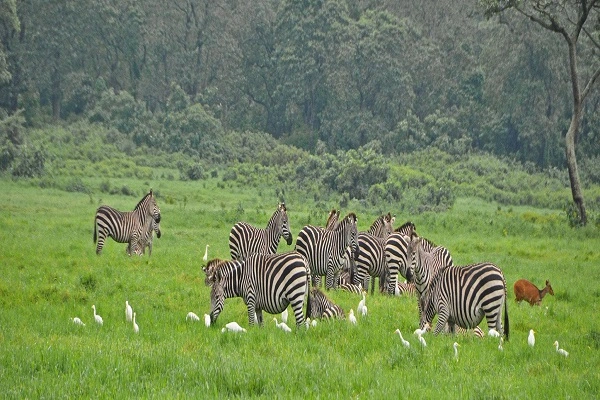
Serengeti National Park: 14,750 km² — Africa's largest and oldest national park. Ngorongoro Crater: 260 km² caldera floor holding 25,000 large mammals — the world's highest wildlife density in an enclosed ecosystem. The Great Migration: 1.5 million wildebeest, 300,000 Burchell's zebra, and 500,000 Thomson's gazelle in a continuous 1,200 km annual circuit — the largest terrestrial animal movement on Earth. Tanzania's total protected area: 38% of the country's total land area — more than any other country in the world. Tanzania's bird count: 1,100 species — approximately one-eighth of all bird species on Earth. These numbers are the foundation of every claim Tanzania's safari industry makes.
The complete northern circuit — four parks in depth
Tanzania's Four Northern Safari Parks — The Complete Expert Guide
The northern Tanzania safari circuit encompasses four parks and conservation areas that together constitute the world's greatest wildlife destination. Each delivers a fundamentally different ecosystem, a different landscape, and a different character — which is why the 4–5 day northern circuit consistently rates as the world's finest wildlife travel experience per day invested. Here is the definitive guide to each park.

The World's Greatest Wildlife Park
Serengeti National Park
The Serengeti is Africa's most celebrated national park and the ecological engine of the Great Migration. 14,750 km² of open savanna, acacia woodland, kopje granite outcrops, and riverine forest support a wildlife community of extraordinary density — lion (the world's densest population), cheetah, leopard, wild dog, serval, caracal, hyena, and the full ungulate spectrum from wildebeest and zebra to eland, topi, kongoni, and Thomson's gazelle. The park's five distinct zones (Ndutu/southern short-grass; central/Seronera long-grass; western/Grumeti corridor; northern/Lamai; eastern/Lobo) each have a different ecological character and different seasonal wildlife emphasis. Year-round excellent with different emphases: calving season (Jan–Feb, southern zone), Grumeti crossings (June, western zone), Mara crossings (Jul–Oct, northern zone), long-grass predator hunting (Mar–May, central).

The World's Finest Wildlife Density
Ngorongoro Conservation Area
The Ngorongoro Crater is a 3-million-year-old volcanic caldera whose walls enclose a complete, self-sustaining ecosystem of 25,000 large mammals in 260 km² — the world's highest wildlife density in an enclosed natural environment. The crater floor contains permanent water (hippo pool and soda lake), permanent grazing, and a resident wildlife community that never needs to migrate — giving it the most reliable wildlife encounter rate of any African park year-round. The black rhino population (approximately 30 individuals) is the world's most concentrated and consistently visible. The crater lion prides (approximately 60–80 individuals in the main crater) are the most photographed in Africa. Flamingo on the Magadi soda lake, leopard in the Lerai Forest, and the famous black-maned Ngorongoro bulls complete the picture.

Tanzania's Finest Elephant Park
Tarangire National Park
Tarangire National Park is Tanzania's most visually distinctive safari landscape — ancient baobab trees up to 3,000 years old and 15 metres in circumference towering over the Tarangire River floodplain, with Tanzania's largest elephant herds (300+ animals) converging on the permanent river during the dry season. The park's unique combination of ancient baobabs and massive elephant herds produces the most consistently dramatic and photogenic landscape on the northern circuit. Beyond elephants: resident lion prides in the riverine woodland, cheetah on the open floodplain, eland herds (the largest in East Africa), lesser kudu (found virtually nowhere else on the northern circuit), ground hornbill, and the characteristic dry-country birds of the Tarangire woodland. Dry season (June–October) is peak elephant season; green season delivers vivid landscape photography.

The Compact Wildlife Jewel
Lake Manyara National Park
Lake Manyara National Park is Tanzania's most diverse compact park — a 50 km strip between the alkaline soda lake and the Rift Valley escarpment that compresses groundwater forest, open floodplain, alkaline lake, and rocky escarpment habitat into a continuous wildlife experience. The park's tree-climbing lion population is globally unique — lions habitually rest in the branches of acacia and sausage trees, an adaptation found at Manyara and nowhere else among savanna lion populations. The park's groundwater forest produces the finest colobus monkey encounters on the northern circuit — troops of 20–40 individuals frequently visible directly above the vehicle in the fig canopy. Flamingo (up to 5,000 individuals) on the soda lake, great white pelican, hippo pools, and the dramatic Rift Valley escarpment rising 600 metres behind the lake complete the distinctive Manyara character.
The world's greatest wildlife event — overview guide
The Great Wildebeest Migration — Complete Overview
The Great Wildebeest Migration is the world's largest terrestrial animal movement — 1.5 million wildebeest, 300,000 Burchell's zebra, and 500,000 gazelle completing a 1,200 km circular route through the Serengeti-Mara ecosystem in a continuous, year-round cycle driven by rainfall and grass growth. The migration is always happening, always impressive, and always accessible — but at different locations and in different forms depending on the month.
| Month | Migration location | Primary event | Best safari format |
|---|---|---|---|
| January | Southern Serengeti · Ndutu plains | Pre-calving herd assembly | Calving season safari |
| February | Ndutu short-grass plains | PEAK CALVING — 8,000 calves/day | Calving season safari |
| March–May | Central Serengeti northward march | Long-grass migration column | Green season safari |
| June | Western Corridor · Grumeti River | Grumeti River crossings | Migration safari |
| July–October | Northern Serengeti · Mara River | MARA RIVER CROSSINGS | Northern Serengeti crossing safari |
| November–December | Central and Southern Serengeti | Southward return | Serengeti safari |

The overview table above gives you the migration's monthly location and primary event. For complete, deeply expert guides to each migration season and zone: Complete Migration Guide (year-round) · Northern Serengeti Crossing Guide (Jul–Oct) · Southern Serengeti Calving Season Guide (Jan–Feb). These guides contain the science, the month-by-month intelligence, the crossing point deep dives, and the camp positioning that separates extraordinary migration encounters from ordinary ones.
When to go — the definitive timing guide
Best Time to Visit Tanzania — Complete Month-by-Month Guide 2026–2027
There is no bad time for a Tanzania safari — every month delivers extraordinary wildlife. The difference between seasons is not good versus bad wildlife but different versus different wildlife. Understanding what each season delivers allows you to match your travel dates to the specific experience you want.
June–October
Dry Season — Peak Safari
Peak seasonTanzania's main tourist season and the finest all-round safari window. The dry season concentrates wildlife at permanent water sources (Tarangire River, Ngorongoro hippo pool, Serengeti seasonal waterholes), making large animal encounters more reliable. The Mara River crossings (July–October) are the most famous safari event in the world. Clear skies, dry roads, maximum wildlife visibility. Accommodation rates at peak; book 6–12 months ahead for peak August–September.
January–February
Calving Season — Expert Favourite
High seasonThe calving season in the southern Serengeti (Ndutu) is the most consistently rewarding wildlife window of the year for daily predator-prey encounter quality. 8,000 wildebeest calves born daily attract every predator species to the same 50 km² of open plains. Experienced safari guides consistently rate calving season as their preferred window. Accommodation rates lower than peak crossing season. Warm, dry, and clear.
April–May
Green Season — Best Value
Best valueLong rains (April–May) produce Tanzania's lowest accommodation prices — 25–40% below peak — at the same park access and guide quality. The landscape is vividly green, dramatically photogenic, and largely uncrowded. Ngorongoro, Tarangire, and central Serengeti resident wildlife is excellent year-round. Some roads and camps are affected by heavy rain, but the quality safari circuit remains excellent and the savings are significant.
November–December
Short Rains — Good Value
Good valueThe short rains (November–December) bring afternoon showers and lush green landscapes at 10–20% below peak rates. Migration herds flowing south toward the calving grounds. Resident wildlife excellent across all parks. The Christmas-New Year window (December 20 – January 5) commands a premium due to demand. Outside Christmas, November–December is one of the finest value safari windows available.
Choose the right format for your trip
Tanzania Safari Types — Every Format Explained
Tanzania offers safari experiences in multiple formats — from the budget group joining vehicle to the ultra-luxury private concession fly-in. Here is every format with its defining characteristics, price range, and the type of traveller it best suits.
Group Joining Safari
From $210/day · All-inclusive
Shared vehicle (max 7), licensed guide, same parks and same guide quality as private. The most affordable legitimate Tanzania safari format. Best for solo travellers, budget-conscious guests, and those comfortable with a fixed schedule.
Complete guide + prices →Private Safari
From $730/pp · All-inclusive
Your own dedicated 4x4, personal expert guide, full schedule flexibility, private pace at every sighting. The most popular format for couples, small groups, and families. Best value: 4–6 guests sharing one vehicle.
Complete private safari guide →Luxury Safari
From $500/pp/day · All-inclusive
Private vehicle plus ultra-luxury accommodation, private concession access, off-road driving, night drives, bush dinners, and the finest food in Tanzania. The complete luxury wilderness experience.
Complete luxury safari guide →Migration Safari
From $1,100/pp · Private
Specifically positioned for the Great Migration's seasonal events — calving season (Jan–Feb), Mara crossings (Jul–Oct), or Grumeti crossings (Jun). Guide intelligence applied for maximum migration encounter quality.
Complete migration safari guide →Family Safari
From $1,480/adult · Custom
Private vehicle with child-engaging guide, family-flexible schedule, family room accommodation, and age-appropriate wildlife education. Tanzania is the world's finest family safari destination at every age.
Complete family safari guide →Honeymoon Safari
From $2,500/pp · Luxury
Private vehicle, romantic luxury accommodation, bush dinners under the stars, sundowner positions, and the Tanzania sunrise moments that redefine what two people can share. The world's finest honeymoon destination.
Honeymoon safari guide →Safari packages — choose your circuit
Tanzania Safari Packages 2026 — Every Duration at a Glance
All private vehicle packages include dedicated guide, park fees, accommodation, and meals. Prices per person based on 2 guests sharing one private vehicle. More guests = lower per-person price.
Group joining safaris (shared vehicle) deliver the same guide quality, same park access, and same wildlife at significantly lower per-person cost: 4-Day Joining $960/pp · 5-Day Joining $1250/pp · 6-Day Joining $1450/pp. All fully all-inclusive. See the complete budget safari guide for the full budget safari playbook.
The animals of Tanzania's northern circuit
Tanzania Safari Wildlife Guide — The Animals You Will See
Tanzania's northern circuit delivers Africa's most diverse and consistently visible large mammal community. Here are the flagship species — the encounters that define the Tanzania safari experience for every visitor.

Big Five · Most Iconic
African Elephant
Tanzania holds the world's largest savanna elephant population — approximately 60,000 individuals
Virtually guaranteed on any Tarangire day. Herds of 300+ in dry season. The matriarch remembers waterhole locations across 50 years of drought cycles. Calves observable at every age. Tanzania's elephant encounter is the world's finest.

Big Five · Apex Predator
African Lion
Serengeti holds Africa's densest lion population — approximately 3,000 individuals in the ecosystem
Virtually certain on any Serengeti visit. Ngorongoro crater lion prides are the most photographed in Africa. Cubs visible in family prides. Dawn drives and Ngorongoro mornings deliver the finest close-range lion encounters.
Big Five · Most Elusive
African Leopard
Serengeti's kopje habitat supports approximately 1,000 leopards — Africa's highest kopje leopard density
The most difficult Big Five animal to see — but the Serengeti's kopje leopards and the Ngorongoro crater leopards (Lerai Forest) give Tanzania the finest leopard encounter rates in East Africa. A tree-resting leopard at the Seronera kopjes is one of African wildlife photography's finest subjects.
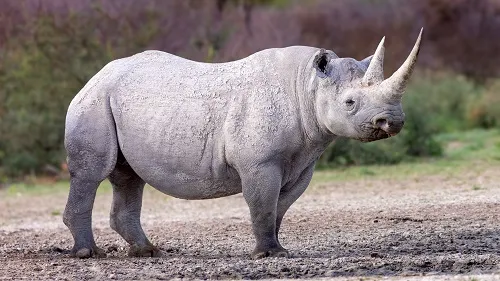
Big Five · Most Endangered
Black Rhinoceros
Ngorongoro Crater holds 30 black rhinos — the world's densest concentration and most consistently visible population
The Ngorongoro Crater is Africa's finest black rhino viewing location. The crater's enclosed geometry makes rhino concealment impossible — regular encounters at 30–200 metres. Children and wildlife enthusiasts who understand rhino's conservation status are consistently profoundly moved by the Ngorongoro encounter.
Tanzania Specialty
Cheetah
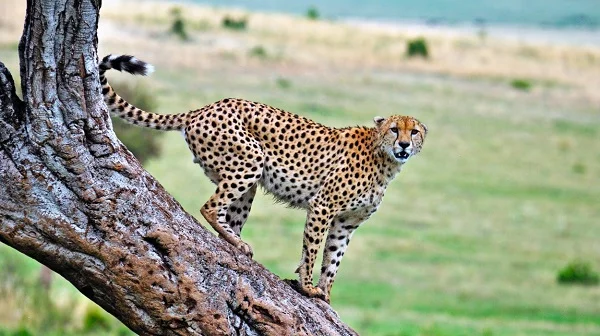
Serengeti holds approximately 1,000 cheetah — the world's single largest population
Tanzania is the global capital of cheetah viewing. The Serengeti's open grasslands provide the flat, unobstructed sightlines that cheetah hunting requires and wildlife photography rewards. Calving season (Jan–Feb) and the short-grass Ndutu plains are the prime cheetah viewing window in the world.

The Migration's Heart
Blue Wildebeest
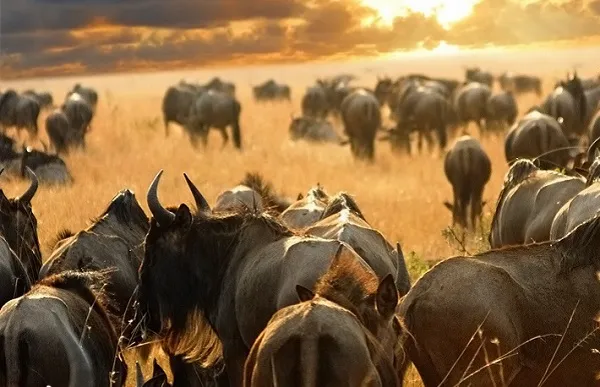
1.5 million wildebeest complete a 1,200 km circular migration annually — the world's largest terrestrial animal movement
The wildebeest is Tanzania's most numerous large mammal and the engine of the Great Migration. Herds of 200,000+ visible simultaneously in the Serengeti. Calving season (Jan–Feb) and the Mara crossings (Jul–Oct) are the migration's two most dramatic expressions — each extraordinary in a completely different way.
What to bring — the definitive packing guide
Tanzania Safari Packing List — Everything You Need for 2026
Tanzania safari packing is simpler than most first-time visitors expect — and easier to overpack for. Here is the essential packing list, organised by category.
👕 Clothing
Neutral colours only — khaki, olive, brown, beige, cream. No white (dust) or bright colours (disturb wildlife)
Light long-sleeve shirts (2–3) — sun protection and mosquito barrier
Lightweight long trousers (2 pairs) — morning game drives are cool
Fleece or warm layer — Ngorongoro Crater rim reaches 5°C at night
Swimwear — camps with pools are important for midday recovery
Comfortable walking shoes — trainers or light hiking boots
Sandals for camp evening
Wide-brim sun hat with chin cord (blows off in vehicle)
📷 Camera and Optics
Camera body with clean sensor
Telephoto zoom 100–400mm minimum (400–600mm ideal)
Beanbag window rest — essential for telephoto stability
Memory cards — 256GB minimum (burst photography fills cards)
3× battery supply — 6-hour game drives drain standard batteries
Dust bag for camera in the vehicle
Binoculars 8×42 minimum — for locating distant subjects
Portable charger — vehicle 12V socket usually available
🌿 Health and Sun
SPF 50+ sunscreen — multiple bottles, apply every 90 mins
DEET-based insect repellent (at least 30% DEET)
Antimalarial medication — prescribed by travel health doctor
UV sunglasses — polarised for glare on open plains
Lip balm with SPF
Antihistamine — for insect bites and dust reactions
Paracetamol and ibuprofen
Oral rehydration sachets
Hand sanitiser
🎒 Practical Essentials
Tanzania e-visa confirmation ($50 — apply at evisa.immigration.go.tz)
Yellow fever vaccination certificate
Travel insurance with emergency evacuation ($30,000+ cover)
Copies of passport and insurance documents (digital + paper)
USD cash — crisp, post-2004 bills ($200–$500 in small denominations)
Headlamp or torch — for night walks at camp
Small daypack for the vehicle
Dust cloth for camera lens
📚 Wildlife Reference
Field Guide to the Larger Mammals of Africa (Stuart and Stuart)
Birds of East Africa (Stevenson and Fanshawe)
Wildlife journal / notebook for sightings record
Mammal species checklist — Tanzania northern circuit
Download offline maps (what3words or Maps.me) for Serengeti
Kindle or downloaded books — limited phone signal in parks
❌ Leave at Home
Camouflage clothing — illegal in Tanzania (military associations)
Drone — illegal in all national parks without permit
Plastic bags — banned in Tanzania
Excessive hard-side luggage — bush planes have 15kg soft bag limit
Spray perfume or strong scent — disturbs wildlife
Black or dark grey clothing — absorbs heat and is less visible to wildlife
Staying healthy in Tanzania
Tanzania Safari Health Guide — Vaccinations, Malaria, and Medical Preparation 2026
Required Vaccinations for Tanzania 2026
Yellow fever vaccination is required for entry into Tanzania if arriving from a yellow fever endemic country (most of sub-Saharan Africa and parts of South America) and is strongly recommended for all visitors. Present your yellow fever certificate (the official yellow booklet or digital equivalent) at the point of entry. All other vaccinations below are recommended but not mandatory for entry.
| Vaccination | Status | Notes |
|---|---|---|
| Yellow Fever | Required (certain origins) | Required if arriving from endemic country. Certificate must be at least 10 days old. Strongly recommended for all visitors. |
| Hepatitis A | Strongly recommended | Via contaminated food and water. Standard travel vaccine for Africa. |
| Hepatitis B | Recommended | Via blood and body fluids. Ensure routine childhood vaccines are up to date. |
| Typhoid | Recommended | Via contaminated food and water. Oral or injected, 2 weeks before travel. |
| Tetanus / Diphtheria / Polio | Up to date required | Ensure routine immunisation is current before travel. |
| Meningitis ACWY | Recommended | Particularly for extended travel or remote areas. |
| Rabies | Consider for remote travel | Pre-exposure recommended for extended stays or adventure activities. |
Malaria Prevention
Tanzania is a malaria-endemic country year-round. Malaria prevention is the most critical health preparation for a Tanzania safari. Three layers of protection: antimalarial medication (Malarone, Doxycycline, or Mefloquine as prescribed by a travel health doctor at least 2–4 weeks before departure); DEET-based insect repellent applied at dusk and dawn when Anopheles mosquitoes feed; and physical barriers (long sleeves and trousers at evening, mosquito net at night — provided at all quality safari camps). Consult a travel medicine specialist, not a general GP, for current antimalarial advice — resistance patterns and medication recommendations change.
Travel Insurance
Travel insurance with emergency medical evacuation coverage is non-negotiable for Tanzania safari travel. Emergency medical evacuation from the Serengeti to Nairobi or Arusha can cost $15,000–$30,000 without insurance. AMREF Flying Doctors (the primary East Africa air ambulance service) strongly recommends comprehensive evacuation coverage for all Tanzania safari visitors. Ensure your policy explicitly covers emergency evacuation from remote locations and adventure activities (safari is typically classified as a standard activity requiring no special rider, but confirm before purchase).
Getting to Tanzania — the complete logistics guide
Getting to Tanzania — Flights, Visa, and Arrival 2026
The Right Airport — Kilimanjaro International (JRO)
Kilimanjaro International Airport (JRO) is the primary gateway for northern Tanzania safaris and Kilimanjaro climbs. It is located between Arusha (50 km west) and Moshi (30 km east) and receives international flights from Amsterdam (KLM), Dubai (Emirates, flydubai), Doha (Qatar Airways), Addis Ababa (Ethiopian Airlines), Istanbul (Turkish Airlines), Johannesburg (South African Airways and Kenya Airways via Nairobi), and Nairobi (Kenya Airways, Jambojet). Flying into JRO eliminates the Nairobi-to-Arusha overland transfer that characterises Jomo Kenyatta Airport (NBO) connections, saving a half-day of travel time on each end of the trip.
Tanzania e-Visa — Apply Before You Travel
Tanzania's e-visa system allows all nationalities to apply online at evisa.immigration.go.tz before travel. The fee is $50 USD for most nationalities (US, UK, EU, Australia, Canada). Processing takes 3–10 business days. Apply at least 2 weeks before travel. Print or save the approval letter to present on arrival. East African Community passport holders (Kenya, Uganda, Rwanda, Burundi, South Sudan) do not require a visa. The e-visa is valid for 90 days single entry.
All Resilience Safaris safaris include a named driver and vehicle meeting guests at Kilimanjaro International Airport arrivals hall with a name board. The transfer from JRO to your Arusha or Moshi hotel is included in all safari and Kilimanjaro packages. We monitor flight arrivals in real time — delays do not require communication from the guest's end. The vehicle waits for the actual arrival time. Contact us at least 7 days before travel with your flight details and we handle everything from the arrivals hall door.
The perfect Tanzania completion
Tanzania Safari and Zanzibar — Africa's Best Travel Combination
Tanzania's safari circuit combined with a Zanzibar beach extension is Africa's finest single-country travel combination — and one of the great travel experiences anywhere in the world. The transition from the dust, drama, and intensity of the Serengeti to the turquoise Indian Ocean, white coral sand, and Swahili island culture of Zanzibar produces a contrast of sensory environments that resets the entire body in two days. The flight from a Serengeti airstrip directly to Zanzibar International Airport takes approximately 2 hours by charter — making the same-day transition from wildebeest to Indian Ocean a genuine possibility.
The standard Tanzania combination is 5–7 safari days followed by 3–5 Zanzibar nights — a 10–12 day total itinerary that delivers both the world's finest wildlife experience and Africa's most beautiful island destination in a single trip. Zanzibar's Stone Town (the ancient Swahili merchant city, UNESCO World Heritage site) adds a cultural dimension; the spice tours reveal the island's colonial and trade history; the sea turtle sanctuary at Mnarani is a family highlight; and the northern beaches (Nungwi, Kendwa) and eastern beaches (Paje, Jambiani) offer completely different Indian Ocean beach experiences for different preferences. Contact us to design your complete Tanzania safari and Zanzibar combination itinerary.
When to book your Tanzania safari
Tanzania Safari Planning Timeline — How Far Ahead to Book
| Travel period | Book accommodation by | Book guide / vehicle by | Notes |
|---|---|---|---|
| August 2026 (peak) | Now — October 2025 | Now — October 2025 | Fully booked at most sought camps already |
| July 2026 | November 2025 – January 2026 | January 2026 | Northern Serengeti camps filling rapidly |
| September 2026 | November 2025 – February 2026 | February 2026 | Experts' preferred crossing month — fills early |
| February 2027 (calving) | April–June 2026 | June 2026 | Ndutu and calving zone camps fill 9 months ahead |
| Christmas 2026 | April–June 2026 | June 2026 | Premium holiday surcharges apply Dec 20–Jan 5 |
| April–May 2026 | Any time | 2 months ahead | Green season — best availability and value |
| November 2026 | 2–4 months ahead | 4–6 weeks ahead | Shoulder season — good availability |
Deep dives for every aspect of Tanzania safari planning
Complete Tanzania Safari Guide Library — Every Topic in Depth
This ultimate guide gives you the overview. Each link below goes to a complete, expert-written guide for that specific topic — containing 5,000–15,000 words of specialist knowledge for the guest who wants to go deeper.
Serengeti Safari Guide
All zones, all seasons, all packages 3–10 day
From $1,100
Serengeti Migration Safari Guide
Year-round migration, all packages, seasonal guide
From $1,100
Northern Serengeti Crossing Guide
Mara crossings Jul–Oct, Lamai Wedge, crossing points
From $1,480
Southern Serengeti Calving Season Guide
Jan–Feb, 8,000 calves/day, predator deep dive
From $1,100
Tanzania Private Safari Guide
Private vehicle packages 2–10 days, all-inclusive
From $730
Tanzania Group Joining Safari Guide
Budget shared safaris, 2–6 day circuits
From $210
Tanzania Luxury Safari Guide
Private concessions, top camps, fly-in safaris
From $3,500
Tanzania Budget Safari Guide
Complete budget playbook, 12 money-saving tips
From $210
Tanzania Family Safari Guide
Age guide, best parks, packing list, family camps
From $1,480/adult
Tanzania Safari Cost Guide 2026
Complete pricing, park fees, red flags, value tips
$210–$8,000+
Tanzania Day Trips and Cultural Tours
Hadzabe, Lake Natron, Materuni, Arusha NP
From $210
Karatu Travel Guide
Iraqw culture, Gibbs Farm, Ngorongoro gateway
From $20
Things to Do in Arusha
Safari capital, Shanga, Tanzanite, food guide
Free – $115
Kilimanjaro Climb Guide
All routes, all durations, summit strategy
From $1,890
What our guests experience
Tanzania Safari Reviews — Real Experiences from 2025–2026

"We did a 7-day circuit in September. The guide's intelligence network produced a Mara crossing on Day 5 — he had been tracking the build-up since Day 2 and positioned us at the primary crossing point before 7 am on the commitment morning. The crossing lasted 28 minutes. 6,000 wildebeest in the water simultaneously. On Day 3 we had watched a cheetah family hunt calves for 90 minutes on the Serengeti plains. On Day 4 the black rhino at Ngorongoro walked within 40 metres of the vehicle in the morning mist. If you ask me to rank wildlife experiences in 30 years of travel, all three of those encounters are in my top five. Tanzania is incomparable."
7-day private circuit · September 2025 · Germany"First safari — 5-day group joining circuit at $1250. I was prepared for it to be mediocre. My fellow passengers in the vehicle became friends within the first morning. The guide had 22 years in the Serengeti and remembered the territory the way a London cabbie remembers streets. By Day 3, he was taking us to specific lion individuals he had known for years. By Day 5, I had seen a lion kill, the Ngorongoro black rhino, a wild dog pack, and approximately 200,000 wildebeest in the Serengeti simultaneously. I came home and immediately started planning the return trip. The $1250 investment was the best I have made in 15 years of travel."
5-day group joining · $1250/pp · July 2025 · First safari"February calving season, 5-day private circuit. My previous Tanzania trip was October crossing season — I had seen one Mara crossing in 5 days (extraordinary) and excellent general wildlife. The February calving season was a completely different category of experience. Three major predator events before noon on Day 1. A wildebeest birth at 9:40 am — we watched from 30 metres as the calf took its first steps. A wild dog pack chase at 11 am. An afternoon lion family with four cubs asleep on a kopje. This for five consecutive days. Calving season is not a compromise for missing the crossing. It is a different and in some ways more consistently extraordinary season. Both are necessary."
5-day private calving season · February 2026 · NdutuEvery Tanzania safari question answered
Tanzania Safari FAQ 2026 — The Complete Planning Guide
-
There is no single best time for a Tanzania safari — there is a best time for each specific wildlife experience. For the Mara River crossing (the world's most dramatic wildlife event): July–October in the northern Serengeti, with September delivering the highest crossing probability. For the calving season (the most consistently rewarding daily predator-prey encounter window): late January through February in the southern Serengeti (Ndutu). For the best overall wildlife conditions and dry season visibility: June–October across all four parks. For the best value (lowest prices, same wildlife quality): April–May (long rains) delivers 25–40% lower accommodation rates with no meaningful reduction in park access or guide quality. For families with school holidays: July–August (UK/EU summer), December–January (Christmas), and October half-term are the primary family windows. The honest answer: Tanzania delivers extraordinary wildlife in every month of every year. The question is which specific event or experience you want to prioritise.
-
A minimum of 4 days is recommended for a meaningful Tanzania northern circuit safari covering all four parks (Tarangire, Lake Manyara, Ngorongoro, and the Serengeti). Five days is the most popular circuit format and the recommendation for first-time visitors. Seven days delivers more Serengeti time and a more relaxed pace. Ten days is the optimal format for combining the full safari circuit with a Zanzibar beach extension. Shorter 2–3 day trips are possible but limit the parks visited (typically only Tarangire + Ngorongoro without the Serengeti). The intelligence accumulation principle applies to longer trips: each additional day in the same park significantly improves the guide's ability to position for specific wildlife — a 5-day safari is not 25% better than a 4-day safari; it is often dramatically better because Day 5 applies four days of accumulated guide intelligence for the finest positioning available.
-
Tanzania and Kenya share the Serengeti-Mara ecosystem — the Serengeti is Tanzania's; the Masai Mara is Kenya's. Both deliver the Great Migration crossing season (July–October) and both have lion, cheetah, and the full Big Five. The key differences: Tanzania has significantly more protected land (38% vs Kenya's 12%), lower visitor volumes in most zones, a more intact and undeveloped wilderness feeling, the Ngorongoro Crater (which Kenya has no equivalent for), Tarangire's elephant herds, and generally lower accommodation prices at equivalent quality tiers. Kenya has more established luxury camp infrastructure, more brand-name accommodation options, the Masai Mara's specific crossing season (slightly different viewing positions from Tanzania's), and Nairobi's better international flight connections. Most experienced safari travellers who have done both consistently describe Tanzania as delivering a more genuinely remote, less commercially developed, and more consistently extraordinary wildlife experience. For first-time safari visitors choosing between the two, Tanzania is typically the recommended choice.
-
Most nationalities (including UK, USA, EU, Australia, Canada, and most other Western passports) require a Tanzania visa in 2026, but it can be obtained online in advance via Tanzania's e-visa system at evisa.immigration.go.tz. The fee is $50 USD for most nationalities; the process takes 3–10 business days; the visa is valid for 90 days single entry. Apply at least 2 weeks before travel and print or save the approval letter. East African Community passport holders (Kenya, Uganda, Rwanda, Burundi, South Sudan) do not need a visa. Check your specific nationality's requirements at the Tanzania Immigration Department website before travel, as visa requirements can change. Note: visas are also available on arrival at Kilimanjaro International Airport, but the online e-visa is recommended to avoid queues on arrival after a long international flight.
-
Yes — the Tanzania northern circuit is one of only a small number of safari destinations globally where all five members of the Big Five (lion, leopard, elephant, black rhino, and Cape buffalo) can be reliably seen on a single circuit. Lion: virtually certain on any Serengeti or Ngorongoro visit. Leopard: good probability at the Serengeti kopjes and Ngorongoro Lerai Forest — the most difficult of the five but regularly encountered by experienced guides. Elephant: virtually certain on any Tarangire visit. Black rhino: Ngorongoro Crater is the world's best black rhino viewing location — approximately 70–80% of guests see rhino on a full crater day. Cape buffalo: Ngorongoro Crater and Tarangire both have large resident buffalo herds — virtually certain encounters. A 4-day circuit covering all four parks typically delivers 4 of the 5 with high confidence (lion, elephant, rhino, buffalo) and a meaningful probability of completing the set with leopard. The full Big Five in one circuit is achievable and regularly accomplished by guests on our 4-day and longer private circuits.
-
USD cash is the most practical currency for Tanzania safari travel. Safari packages, park fees, most lodge bills, guide tips, and craft market purchases all transact in USD or at USD-equivalent rates. Tanzania Shillings (TZS) are needed for local restaurants, dala-dala (local transport), small market purchases, and the daily transactions of Tanzanian town life. Bring USD in small denominations ($1, $5, $10, $20) — $100 bills are accepted everywhere but change is often unavailable for small purchases. Important: Tanzania accepts only crisp, clean, post-2004 USD bills. Older, torn, or marked USD bills are refused by banks and bureaux de change. ATMs (CRDB, NMB, NBC, Barclays) in Arusha and Moshi dispense TZS and accept Visa and Mastercard. Inside the national parks, there are no ATMs — carry sufficient cash for the full park circuit. Credit cards are accepted at most mid-range and luxury lodges; budget camps typically require cash.
-
Mobile network coverage in Tanzania's northern national parks is intermittent and unreliable. Arusha, Moshi, and the towns along the main highway have good Vodacom and Airtel coverage. Inside the parks: Ngorongoro Crater rim has basic coverage; Tarangire has partial coverage on the main tracks; Lake Manyara has reasonable coverage close to the gate; the Serengeti (particularly the central and northern zones) has very limited coverage — significant areas have no signal at all. Internet at safari camps: most mid-range and luxury camps offer Wi-Fi or satellite internet in the main lodge area, typically not in individual tents. Quality varies from reasonable (lodge area in the evening) to very slow (satellite connections). The practical recommendation: download offline maps and any content you want before entering the parks; communicate with family from camp in the evenings when Wi-Fi is available; and embrace the digital detox that the national parks naturally provide. The Serengeti's absence of phone signal is not a limitation — it is part of the wilderness experience that makes it irreplaceable.
-
Tanzania is considered one of the safest safari destinations in East Africa for international tourists in 2026. The country is politically stable with a consistent multi-decade record of peaceful governance. The tourist infrastructure — safari operators, national parks, accommodation, and transport — is professionally managed with a strong service culture. The primary safety considerations for Tanzania safari visitors: health risks (malaria — preventable, food and water safety — manageable at quality camps); petty theft in urban areas (Arusha and Dar es Salaam have the standard precautions of any city); and road safety on inter-city routes (use licensed safari vehicles rather than local transport). The national parks themselves are completely safe under guide supervision — wildlife encounters are managed by expert guides whose primary responsibility is guest safety. UK Foreign, Commonwealth and Development Office, US Department of State, and Australian DFAT all rate Tanzania as a standard travel destination with no exceptional advisory in 2026 (check current government advisories before travel, as these can change). For LGBTQ+ travellers: Tanzania has laws that criminalise same-sex relationships — discretion is strongly advised and public displays of affection between same-sex couples should be avoided.