Why Tanzania is the world's finest safari destination
Why Tanzania for Your Safari — The Definitive Case
Tanzania is not simply Africa's finest safari destination — it is the finest wildlife destination on Earth. No other country on the planet offers the concentration of wildlife, the diversity of ecosystems, the density of predators, and the scale of wildlife spectacle that Tanzania's northern circuit delivers. The Serengeti National Park stages the largest terrestrial animal migration on Earth. The Ngorongoro Crater is the most wildlife-dense location on the planet. Tarangire National Park's elephant herds — 300 or more animals in a single family group — are the largest reliably encountered elephant concentrations in Africa. Lake Manyara hosts the only tree-climbing lion population in East Africa. All four parks are within a 250-kilometre circuit from Arusha, accessible in 2 to 10 days at budgets from $210 per person.
Tanzania's 2026–2027 safari season continues to attract a growing number of international visitors who understand what the destination offers. The country has invested significantly in (Tanzania Association of Tour Operators) guide licensing, national park management, and anti-poaching infrastructure. Wildlife populations — particularly elephant, lion, wild dog, and cheetah — have grown or stabilised across the northern circuit. The infrastructure (accommodation, airstrips, park roads) has matured to the point where both budget and luxury travellers can access extraordinary wildlife experiences without logistical compromise.
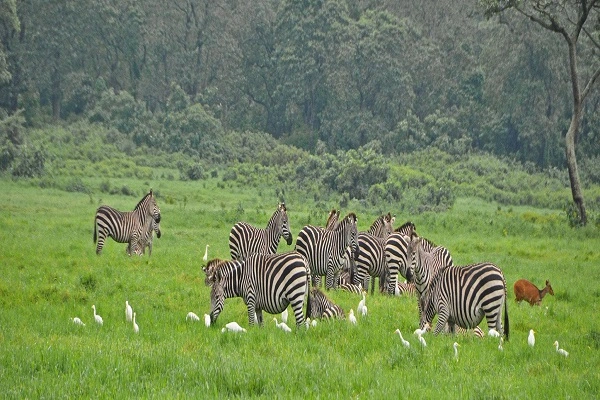
Tanzania hosts: 1.5 million wildebeest in a single migration (the largest terrestrial migration on Earth); 25,000 large mammals in the Ngorongoro Crater alone (the world's highest wildlife density per km²); approximately 4,000 elephants in Tarangire National Park; the world's largest remaining population of African wild dogs outside southern Africa; and Africa's highest density of predators per km² in the Serengeti. No other country concentrates this volume of wildlife in an accessible, well-managed circuit of this size. Tanzania is the correct answer to "where should I go for my first or finest safari."
Every tier explained
Tanzania Safari Package Tiers — Budget to Ultra-Luxury
Tanzania safari packages divide into three fundamental tiers: budget (group joining and camping), mid-range private, and luxury/ultra-luxury. Here is what each tier delivers — and how to choose the right one for your specific needs and budget in 2026 and 2027.

Budget Tier
Group Joining Safaris
Shared vehicle (max 7 guests), fixed schedule, same expert guide, identical park access. Comfortable mid-range accommodation. The most cost-effective way to experience Tanzania's northern circuit. Wildlife quality identical to private safaris.
View budget options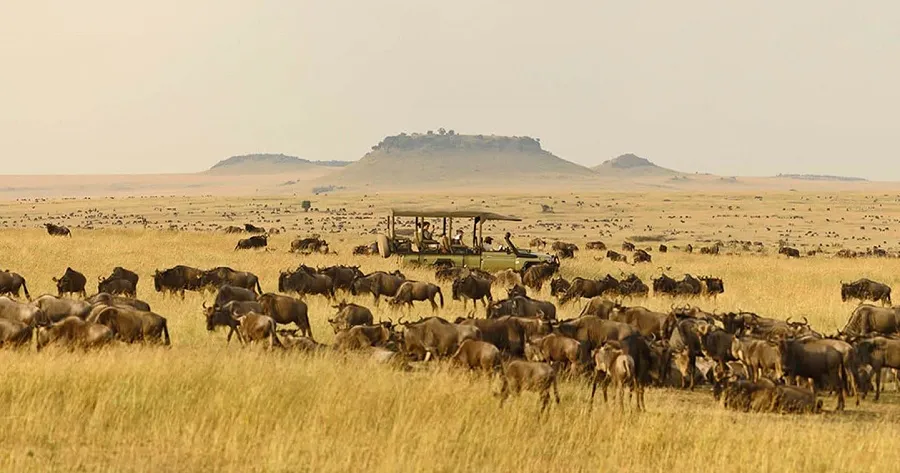
Mid-Range · Most Popular
Private Safari Packages
Your vehicle, your group, your schedule. The same expert guide with full flexibility on every game drive. Mid-range comfortable accommodation. The definitive Tanzania safari format for couples, families, and groups.
View private safaris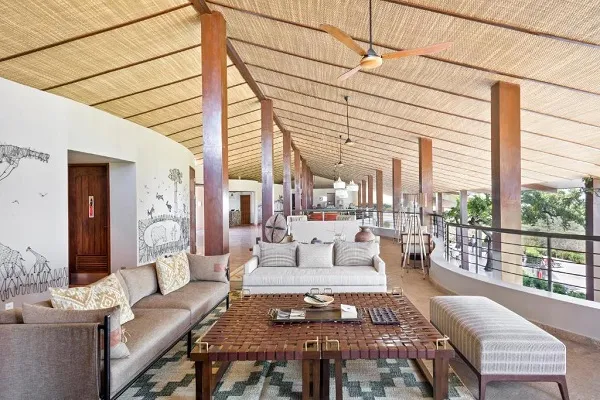
Luxury Tier
Luxury & Ultra-Luxury Safaris
Private concession camps, off-road and night drives, butler service, fly-in itineraries, exclusive-use properties. The finest wildlife experiences available in Tanzania — the complete expression of what the destination offers at the highest tier.
View luxury safarisComplete 2026–2027 safari package collection
All Tanzania Safari Packages — Every Duration and Budget
Every private safari package includes a fully private 4x4 vehicle, licensed expert guide, all park fees, mid-range accommodation, all meals, and hotel pickup/drop-off. Group joining packages (marked GJ) share the vehicle with up to 7 guests at significantly lower per-person rates.
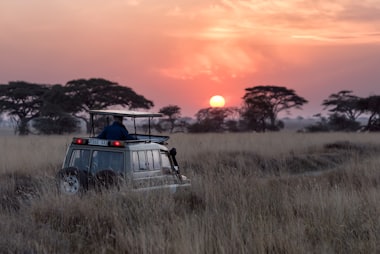
1-Day Group Joining — Arusha NP
Arusha National Park. Colobus monkey, giraffe, flamingo, zebra, buffalo. Daily departures. Post-Kilimanjaro favourite.

2-Day Joining — Tarangire + Ngorongoro
Elephant herds and the Ngorongoro Crater. 1 night. Black rhino, Big Five possible.
2-Day Private Tanzania Safari
Private vehicle. Tarangire + Ngorongoro Crater. Full schedule flexibility.
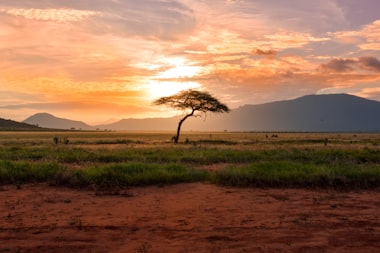
3-Day Joining — Classic Three-Park Circuit
Tarangire, Lake Manyara tree-climbing lions, Ngorongoro Crater. 2 nights.
3-Day Private Tanzania Safari
Private vehicle. Tarangire, Lake Manyara, Ngorongoro Crater. Fully flexible schedule.

4-Day Joining — Complete Four-Park Circuit
All four northern parks. First Serengeti day included. 3 nights.
Serengeti included4-Day Private Tanzania Safari
Private vehicle. All four parks. Full flexibility. One Serengeti day.
Serengeti included
5-Day Private Tanzania Safari
The most popular private circuit. All four parks with two consecutive Serengeti days. Intelligence accumulation — Day 2 is finer than Day 1.
2 Serengeti Days5-Day Joining — Flagship Circuit
Flagship group joining. All 4 parks, two Serengeti days, 4 nights. Day 2 precision intelligence applied.
2 Serengeti Days
7-Day Private Tanzania Safari
The gold standard private circuit. All four parks and four Serengeti days. The definitive crossing-season choice with maximum crossing probability.
4 Serengeti Days6-Day Joining — Maximum Circuit
The maximum group joining format. All 4 parks, three consecutive Serengeti days, 5 nights. Deep access on Day 3.
3 Serengeti Days10-Day Tanzania Ultimate Safari
The ultimate Tanzania circuit. All four parks and seven consecutive Serengeti days. The migration as a world you inhabit for a week.
7 Serengeti DaysTanzania's essential northern parks — deep guide
The Four Essential Northern Parks — Your Complete 2026 Guide
Tanzania's northern safari circuit covers four parks in a 250-kilometre arc from Arusha. Each park has a completely different character, ecosystem, and wildlife speciality. The four parks together form the most concentrated and diverse wildlife circuit on Earth. Here is the expert guide to each park for 2026 and 2027.
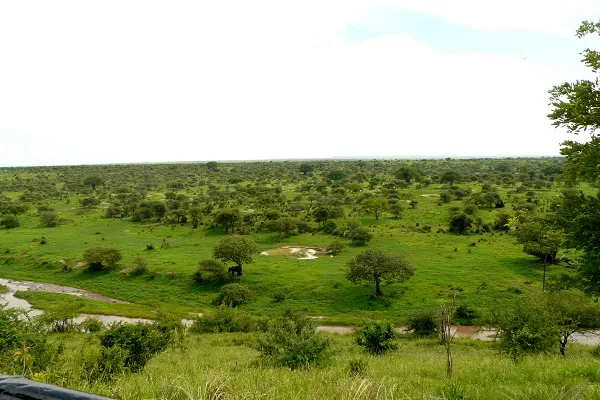
Tarangire National Park
Tanzania's Elephant Capital · 2,850 km² · Entry: $70.80/pp/day 2026Tarangire is Tanzania's foremost elephant park and one of East Africa's most photogenic landscapes. In the dry season (June–October), when the Tarangire River is the only water source for 200 kilometres, elephant herds of 300 or more animals converge on the riverbed in the most extraordinary concentration in Tanzania. The ancient baobab woodland — trees that can live for 3,000 years — creates a visual backdrop for wildlife photography unlike anywhere else in Africa. Beyond elephants: resident lion, leopard, and cheetah prides; the largest eland herds in East Africa; lesser kudu found nowhere else in northern Tanzania; gerenuk; and the endemic ground hornbill. Tarangire is included in circuits from Day 1 of every package. Year-round excellent; best July–October for elephant concentration.
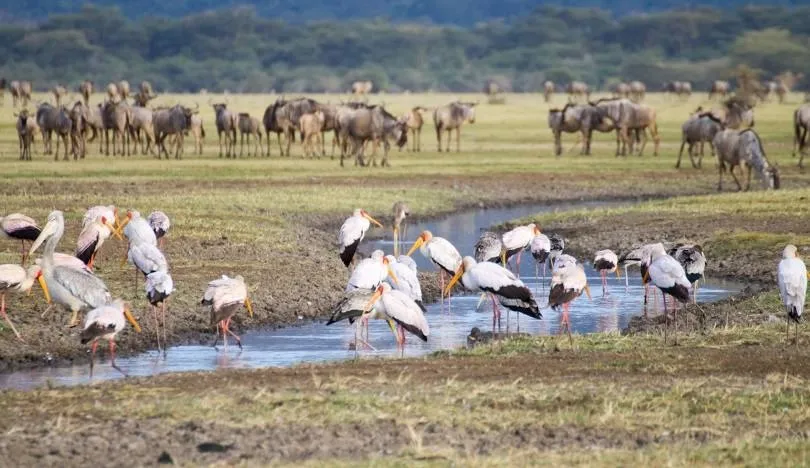
Lake Manyara National Park
East Africa's Most Distinctive Short Safari · 325 km² · Entry: $53.10/pp/day 2026Lake Manyara is the most distinctive short-circuit safari park in East Africa — home to East Africa's only tree-climbing lion population and a compressed diversity of habitats that delivers extraordinary wildlife and birding in 50 kilometres of length. The park transitions from dense groundwater forest (blue monkey, olive baboon, 400+ bird species) through open floodplain to the alkaline soda lake with flamingo flocks, great white pelican, and spoonbill — all against the dramatic backdrop of the Rift Valley escarpment rising 600 metres above the lake. Lake Manyara is a morning-drive park: tree-climbing lion probability is highest in the first three hours. Included in 3-day and longer circuits. Year-round excellent; flamingo most numerous in wetter months.
Ngorongoro Conservation Area
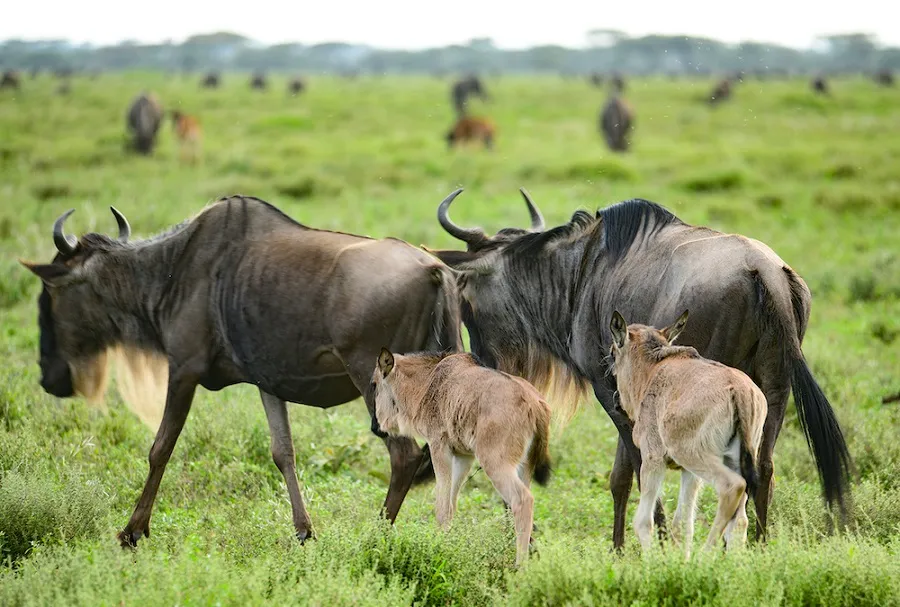
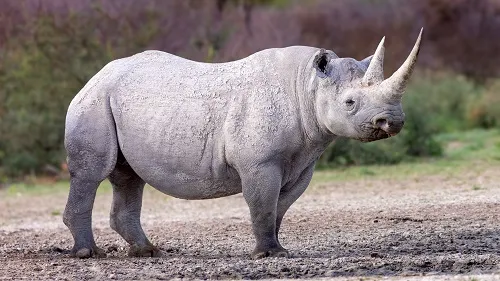
Africa's Most Wildlife-Dense Location · Crater 260 km² · Descent: $295.60/vehicle + $70.80/pp/day 2026The Ngorongoro Crater is the most wildlife-dense location in Africa — 25,000 large mammals in a single 260 km² ancient caldera, enclosed by 600-metre crater walls. The resident population is permanent, stable, and extraordinarily dense: the finest black rhino encounter probability in Africa (~30 individuals); the famous thick-maned crater lion prides, genetically distinct from Serengeti lions; 5,000+ buffalo; 4,000 zebra; 7,000 wildebeest; leopard in the Lerai Forest; the hippo pool; and flamingo on the Magadi crater lake. No migration dependency — all 25,000 animals are here in every month of every year. Ngorongoro is included in every circuit from the 2-day package onward. The most important single wildlife day in Tanzania for Big Five probability.
Serengeti National Park
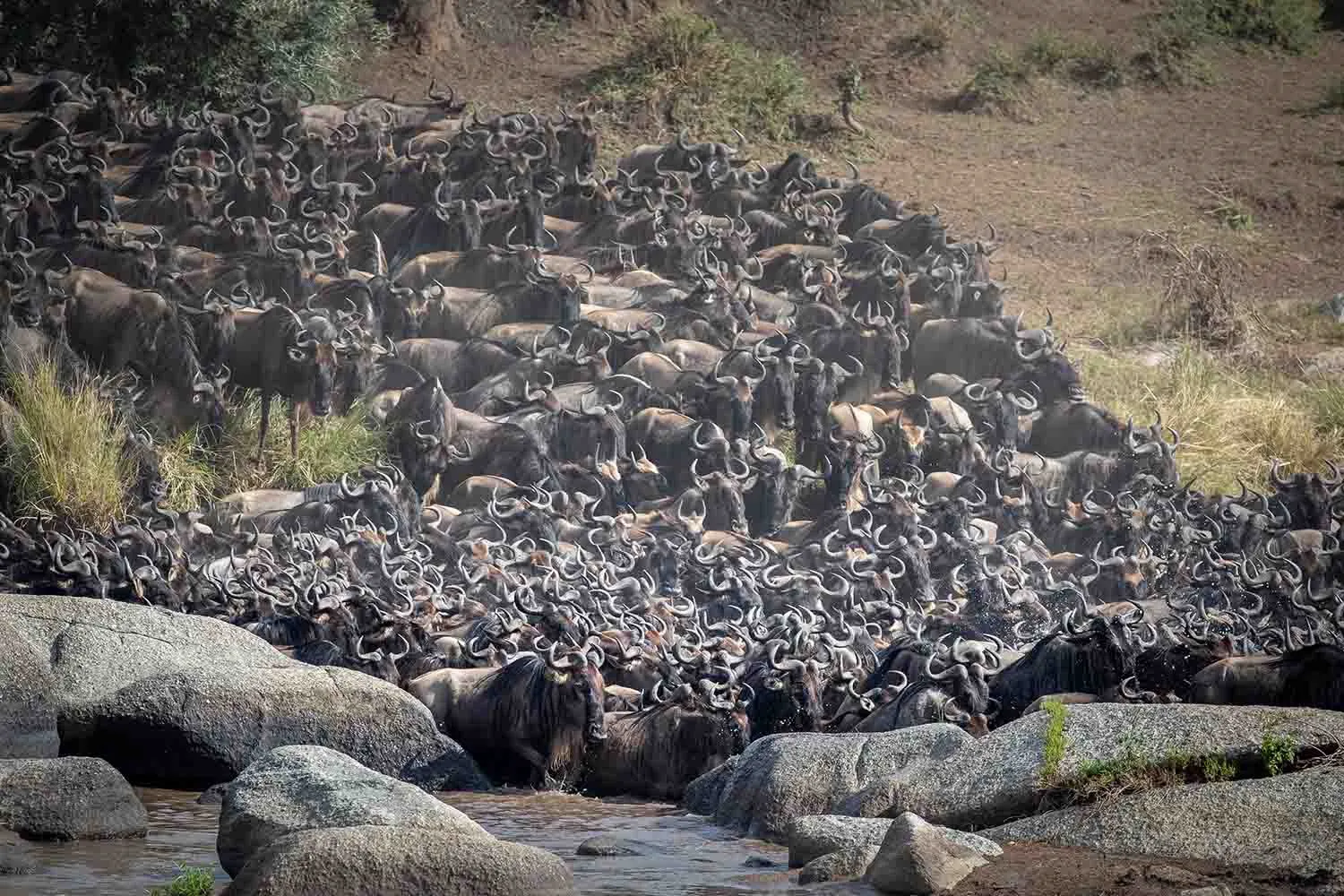
The World's Greatest Wildlife Spectacle · 14,750 km² · Entry: $82/pp/day 2026The Serengeti is the finest wildlife destination in the world and the stage of the Great Migration — 1.5 million wildebeest, 300,000 zebra, and 500,000 gazelle completing a 1,200-kilometre annual circuit. The Serengeti also supports Africa's highest density of predators: lion prides, hunting cheetah, leopard on kopje granite outcrops, wild dog packs, spotted hyena clans, serval, caracal, and bat-eared fox. The park covers 14,750 km² — larger than Northern Ireland — and rewards increasing time: each additional consecutive Serengeti day adds accumulated intelligence that makes the next day's encounters more precise and more rewarding. The Mara River crossing (July–October) is the world's most dramatic wildlife event. Calving season (January–February) is extraordinary for predator-prey encounters. Year-round excellent for residents.
The world's greatest wildlife event — month by month
The Great Wildebeest Migration 2026 — The Complete Monthly Guide
The Great Migration is a continuous, year-round event — the wildebeest herds are always somewhere in the Serengeti-Mara ecosystem. The specific nature of the migration experience changes dramatically month by month. Here is the complete monthly guide for planning your 2026 Tanzania safari package around the migration.
| Month 2026 | Migration location | Key event | Recommended package | Season type |
|---|---|---|---|---|
| January | Short-grass plains · Ndutu · Southern Serengeti | Pre-calving movement; herds massing in south | 4-day or 5-day circuit | High / approaching peak |
| February | Ndutu · Southern Serengeti | Peak calving — 8,000 calves/day. Predator-prey spectacular. | 5-day circuit (Ndutu focus) | Peak wildlife |
| March | Central Serengeti · Moving north | Post-calving movement north begins | 4-day or 5-day circuit | Value season starts |
| April–May | Central and Western Serengeti | Northward migration through central plains; long grass | Any budget; value season | Best value |
| June | Western Corridor · Grumeti River | Grumeti River crossings begin; crocodile season | 5-day or 7-day circuit | High season starts |
| July–August | Northern Serengeti · Mara River | Peak Mara River crossings — most dramatic event of the year | 7-day gold standard | Peak season |
| September–October | Northern Serengeti · Mara River | Sustained Mara crossings; best probability window | 7-day or 10-day | Peak season |
| November | Moving south — central Serengeti | Short rains begin; herds moving toward southern plains | Any circuit | Good shoulder |
| December | Southern Serengeti · Heading to Ndutu | Herds assembling in south ahead of calving | 5-day circuit | Shoulder / good value |
The Mara River crossing is the migration's most dramatic event — thousands of wildebeest launching into crocodile-filled water. Crossings are not guaranteed on any single day and require two to three consecutive days at the crossing points for a committed crossing to occur. The 7-day private safari (four consecutive Serengeti days) is the gold standard for crossing season because four days at the river gives the guide the best possible crossing probability. The 5-day package (two Serengeti days) is the minimum for a meaningful crossing probability. The 4-day package (one Serengeti day) is excellent but limited in crossing probability. Book your July–October crossing season package at least 6–9 months in advance — this is Tanzania's most in-demand travel window.
Complete Big Five encounter guide
Big Five Safari in Tanzania — Species Guide and Minimum Package Required
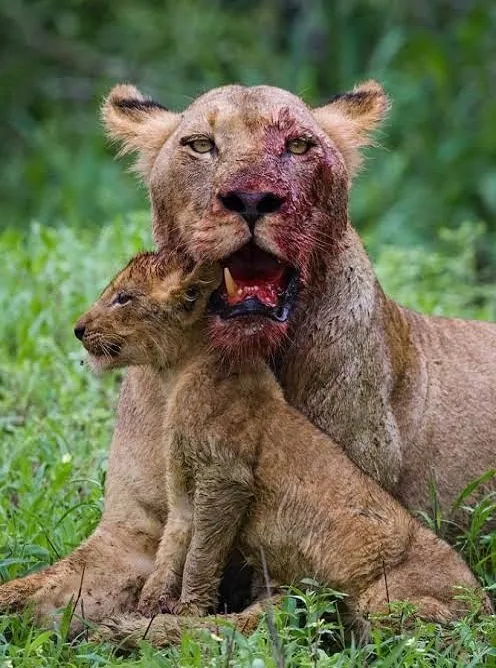
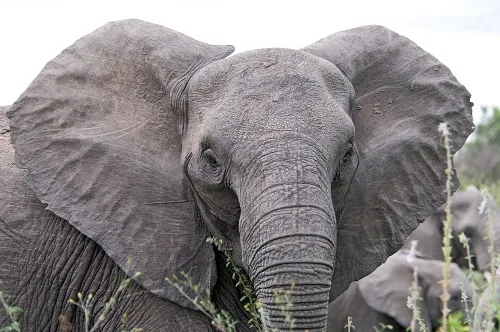
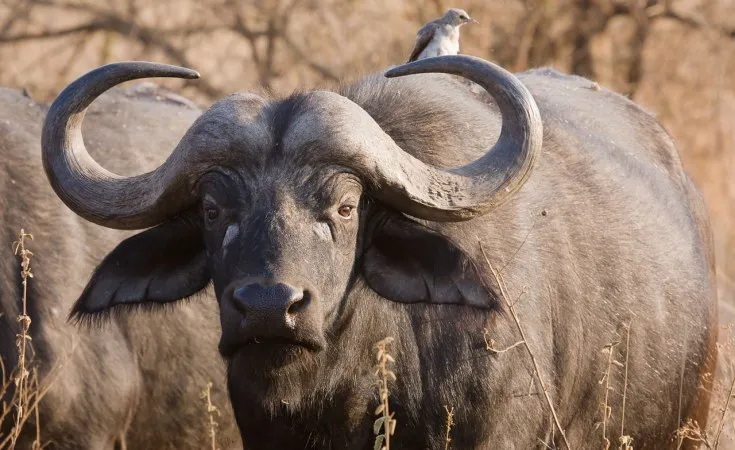
All five members of the Big Five are accessible on any Tanzania safari package from the 2-day joining upward. Here is the honest species-by-species encounter guide with minimum package requirements and expected probability for 2026.
Planning your 2026–2027 safari dates
Tanzania Safari Season Guide — When to Go for What in 2026–2027
Tanzania delivers exceptional wildlife in every calendar month. What changes by season: the specific nature of the Serengeti experience, the volume of visitors in the parks, and the accommodation price level. Here is the complete seasonal guide for 2026 and 2027 package planning.
Jan–Feb 2026
Calving Season
High seasonThe wildebeest calving season in Ndutu — 8,000 calves per day at peak. Extraordinary predator-prey action. Exceptional for 5-day and 7-day packages with Serengeti days in the calving zone.
Mar–May 2026
Green Season
Best value25–40% lower accommodation rates. Ngorongoro, Tarangire, and Lake Manyara all unaffected. Serengeti wildlife dispersed but excellent predators. Best budget window for all package tiers.
Jul–Oct 2026
Crossing Season
Peak seasonMara River crossings — the world's most dramatic wildlife event. Peak prices and visitor numbers. Book 7-day packages 6–12 months ahead. The 7-day gold standard is strongly recommended for this window.
Nov–Dec 2026
Short Rains
Good value15–25% below peak. Good wildlife across all four parks. Herds moving south. Beautiful lush landscapes. Fewer tourists than peak season. Excellent photography conditions. A consistently underrated window.
Which package suits your travel style?
Tanzania Safari Packages by Traveller Type — Expert Recommendations
Different travellers want different things from a Tanzania safari. Here are the expert package recommendations for the five most common traveller types, based on years of designing itineraries for guests from around the world.

Best for solo: Group Joining
From $210 (1-day) / $730 (3-day)Group joining is built for solo travellers — no single supplement, no minimum booking, no need to find travel companions. Choose the 3-day joining for the classic circuit introduction or the 4-day for all four parks including the Serengeti. The social experience of a shared vehicle is genuinely one of the highlights for most solo guests.

Best for couples: 5-Day Private
From $1,850 per person (2 pax)The 5-day private safari is the most popular choice for couples — all four parks, two Serengeti days, complete schedule flexibility, and a private vehicle for the intimacy of a dedicated guide. For honeymoon couples, we recommend upgrading to upmarket accommodation and adding a 5-night Zanzibar beach extension.
Best for families: 5–7 Day Private
From $1,850 per person (2 pax + kids)Families with children need a private vehicle — the fixed schedule of group joining does not suit the variable needs of children. The 5-day circuit is ideal for first-time family safaris: all four parks, manageable day lengths, and the Ngorongoro Crater's extraordinary wildlife density that keeps children engaged from the first moment of descent. Four Seasons Serengeti accommodates families particularly well at the luxury tier.
Best for wildlife enthusiasts: 7–10 Day Private
From $2,650 per person (2 pax)Serious wildlife enthusiasts and photographers should book the 7-day or 10-day private circuit — four or seven Serengeti days respectively. The accumulated intelligence the guide builds over multiple consecutive days produces encounters (specific predator individuals found at known positions, crossing point timing from multi-day build-up data) impossible on shorter visits. Request a guide who has worked with wildlife photographers — the best can structure entire drives around your photographic goals.
Official 2026 fee structure
Tanzania National Park Fees 2026 — Complete Official Guide
Tanzania national park fees are set by the Tanzania National Parks Authority (TANAPA) and the Ngorongoro Conservation Area Authority (NCAA). They apply identically to every operator, every vehicle, and every guest — they cannot be discounted or avoided by legitimate operators. Understanding the fee structure helps you evaluate safari package prices and identify below-cost offers. All fees below are per person per day unless otherwise noted.
| Park / Area | Non-resident adult (per day) | Vehicle fee | Notes |
|---|---|---|---|
| Arusha National Park | $53.10 / person | $40 / vehicle | Budget day safari base park |
| Tarangire National Park | $70.80 / person | $40 / vehicle | Included all 2-day+ circuits |
| Lake Manyara National Park | $53.10 / person | $40 / vehicle | Included 3-day+ circuits |
| Ngorongoro Crater descent (NCAA) | $70.80 / person | $295.60 / vehicle | Highest single-day fee — all 2-day+ circuits |
| Serengeti National Park | $82 / person | $40 / vehicle | Included 4-day+ circuits |
| Ngorongoro rim camping fee (per night) | $73.80 / person | N/A | Where applicable |
All fees in USD, 2026 rates. Tanzania government reserves the right to adjust fees annually — confirm current rates with your operator before booking. All fees are included in our published safari package prices.
The Ngorongoro Crater descent fee is the most significant single daily cost in the Tanzania northern circuit: $295.60 per vehicle plus $70.80 per person per day. For two people on a private vehicle, the Crater alone costs $437.20 per day in government fees before a single dollar of guide, vehicle, accommodation, or food costs. This is why the 2-day joining safari (Tarangire + Ngorongoro) legitimately costs $450 per person minimum — the Crater fees alone account for approximately $260 of that total. Any operator advertising a 2-day Ngorongoro safari for significantly below $450 is either excluding the crater or not paying the legally required fees.
Tanzania travel logistics 2026
Tanzania Safari Travel Guide — Visa, Health, Getting There, and Logistics 2026
Visa — Tanzania e-Visa 2026
Tanzania tourist visas for 2026 are available online via the Tanzania e-Visa portal at evisa.immigration.go.tz. The fee is $50 USD for most nationalities. Apply a minimum of 2 weeks before departure — processing takes 3–10 business days. The e-Visa is valid for 90 days from the date of entry and allows a single or multiple entry depending on the option selected at application. East African Community citizens (Kenya, Uganda, Rwanda, Burundi, South Sudan) travel visa-free. Visa on Arrival is available at KIA for some nationalities but the queue can add 1–2 hours — applying online is strongly recommended for all travellers in 2026.
Getting There — Kilimanjaro International Airport (KIA/JRO)
The gateway for northern Tanzania safari is Kilimanjaro International Airport (IATA: JRO), located 45 minutes east of Arusha and 50 minutes west of Moshi. Direct international services in 2026 include: Ethiopian Airlines (Addis Ababa hub, multiple weekly), Kenya Airways (Nairobi Jomo Kenyatta, multiple daily — useful for European and North American connections), Qatar Airways (Doha, multiple weekly), KLM (Amsterdam, seasonal), and Turkish Airlines (Istanbul, multiple weekly). From the United States, typical routing is via Doha (Qatar Airways, 16–19 hours total journey), Amsterdam (KLM, 16–18 hours), or Nairobi (16–18 hours). From the UK, typical routing is via Nairobi, Doha, or Addis Ababa (10–14 hours total). We arrange airport transfers as part of all safari packages — your guide meets you at the KIA arrivals hall.
Health Requirements for Tanzania 2026
Tanzania entry health requirements for 2026 include a Yellow Fever vaccination certificate if arriving from a country with yellow fever risk — check the current list for your country of departure before travel. Recommended vaccinations include hepatitis A, typhoid, and routine vaccinations (MMR, tetanus, polio). Antimalarials are recommended for the full northern circuit: consult your doctor or travel health clinic at least 4–6 weeks before departure. Malarone (atovaquone-proguanil), Doxycycline, and Lariam (mefloquine) are the most commonly prescribed options. Comprehensive travel and medical evacuation insurance is strongly recommended for all Tanzania safari travellers — a helicopter evacuation from the Serengeti can cost $15,000–$50,000 without insurance coverage. No COVID-19 restrictions or testing requirements are currently in place for Tanzania travel in 2026, but travellers should verify the latest government guidance at evisa.immigration.go.tz before departure.
Currency and Money in Tanzania
The Tanzanian Shilling (TZS) is the official currency but USD is widely accepted for major purchases (safari packages, accommodation, park fees). Bring USD cash in small denominations ($1, $5, $10, $20, $50, $100 bills) for tips, small purchases, and emergency situations. Major credit cards (Visa, Mastercard) are accepted at most upmarket lodges and in Arusha town. ATMs dispensing both USD and TZS are available in Arusha. Exchange rates at airport currency exchanges are poor — exchange only emergency funds on arrival and source the majority of your cash from home or from Arusha town bureau de change offices. For 2026, the exchange rate is approximately 2,600–2,700 TZS per USD.
Connectivity and Technology
Mobile network coverage (Vodacom, Airtel, TTCL) is available in Arusha, Moshi, and along major roads, but is absent in most national park areas and on the Ngorongoro crater floor. Download maps offline before your safari (Google Maps offline or Maps.me are useful for Arusha navigation). Most safari lodges have satellite Wi-Fi — speeds vary from excellent (Four Seasons Serengeti) to limited (remote tented camps). Plan for periods of full disconnection in the parks. Your guide's vehicle will typically have a satellite phone or satellite communicator for emergency use. Photography: mobile cameras are excellent for close wildlife encounters; bring a telephoto lens (200–600mm) for Serengeti and Tarangire distances.
Tanzania's complete travel portfolio
Tanzania Safari + Kilimanjaro + Zanzibar — The Complete Combination Guide 2026
Tanzania's three flagship experiences — Kilimanjaro, the northern safari circuit, and Zanzibar's Indian Ocean beaches — form one of the world's great multi-activity travel itineraries. All three depart from or connect through Moshi and Arusha, making combination trips logistically seamless. Here is the expert combination guide for 2026 and 2027.
Kilimanjaro + Safari — The Adventure Combination
The most natural combination in Tanzania — Kilimanjaro and the safari circuit both depart from Moshi. The sequence: climb Kilimanjaro first (7–9 days on the Lemosho or Rongai Route for the most comfortable summit experience), rest 1–2 days in Moshi post-descent, then join or start your safari package from Moshi. The guide picks you up from your Moshi hotel on the safari departure morning — no additional travel cost. Post-Kilimanjaro safari guests often choose the 1-day Arusha NP group joining ($210) as a rest-and-recovery wildlife day, or the 3-day or 4-day group joining circuit for a more comprehensive experience. Resilience Safaris operates both Kilimanjaro guiding and all safari packages as a unified package or separately.
Safari + Zanzibar — The Classic Tanzania Combination
Tanzania's most popular two-activity combination. The sequence: 4–7 day safari circuit from Arusha, then a short domestic Precision Air flight from Kilimanjaro Airport to Zanzibar (1.5 hours, approximately $90–$160 per person). Zanzibar beach options by budget: Stone Town guesthouses from $30/room/night; east coast (Paje, Jambiani, Bwejuu) mid-range from $50–$200/room/night; north coast (Nungwi, Kendwa) from $210–$200/room/night; luxury (Mnemba Island, The Residence) from $2100+/room/night. Add 4–7 Zanzibar nights to any safari package for the complete Tanzania experience — intense wildlife followed by total Indian Ocean rest. We arrange Zanzibar flight bookings, accommodation recommendations, and transfers as part of extended packages.
The Complete Tanzania — Kilimanjaro + Safari + Zanzibar
For travellers with 16–22 days available, the complete Tanzania combination — Kilimanjaro summit, northern safari circuit, and Zanzibar beach — is one of the world's finest extended travel experiences. Typical structure: 8 days Kilimanjaro (Lemosho Route); 2 days rest in Moshi; 5–7 days safari from Arusha; 5–6 days Zanzibar. Total: 20–23 days. At the budget tier, this combination is achievable for approximately $4,000–$6,000 per person all-inclusive excluding international flights. At the luxury tier, $15,000–$30,000 per person for the same duration including private guides, concession camps, and Mnemba Island for the beach extension. Contact us for a fully custom 2026 combination itinerary quote.
Real guests, real experiences
Tanzania Safari Package Reviews — Across Every Tier
"10 days. Four parks. Seven Serengeti days. By Day 9 the guide knew every significant lion pride in his zone by individual. On Day 10 he drove before dawn to a location where a cheetah coalition had been returning every morning for the past three days. They were there. We watched a complete hunt — start to finish. That kind of encounter is only possible with the accumulated intelligence of seven consecutive Serengeti days. Tanzania at this length is incomparable."
10-day private safari · September · 7 Serengeti days"5-day private safari with my 9-year-old daughter. She wanted to see a cheetah before anything else. The guide positioned us on Day 5 — using four days of prior ecosystem knowledge — at a location where a cheetah family with four cubs had been seen the previous morning. They were there at 7 am. My daughter watched the cubs play-stalking through binoculars for 40 minutes. She has talked about nothing else since. The private vehicle made this possible — we could have stayed forever."
5-day private family safari · February · Calving season"4-day group joining safari — all four parks for $960. I chose this over the private option because I was travelling alone and $960 seemed impossible for a complete four-park circuit. It was entirely real. Tarangire with 300 elephants on Day 1. Lake Manyara tree-climbing lions on Day 2 morning. Ngorongoro Crater and black rhino on Day 3. Serengeti migration herds on Day 4. The guide was extraordinary. Six strangers from five countries shared four extraordinary days. Group joining works perfectly."
4-day group joining · $960 · April (green season)Every Tanzania safari question answered
Tanzania Safari Packages — Complete FAQ 2026–2027
-
The best Tanzania safari package for 2026 depends on your budget, group size, and wildlife priorities. Budget travellers: the 4-day group joining safari at $960 per person covers all four parks including the Serengeti at the lowest all-inclusive price for a complete northern circuit. Mid-range: the 5-day private safari at $1,850 per person (2 guests) is the most popular package — all four parks, two Serengeti days, complete schedule flexibility. Best value for crossing season: the 7-day private safari at $2,650 per person (2 guests) with four Serengeti days and maximum Mara crossing probability. Luxury: any combination of Singita Grumeti or andBeyond camps for the finest private concession experience. All packages include the licensed expert guide, vehicle, park fees, accommodation, and meals.
-
Tanzania safari package costs in 2026 range from $210 per person for a 1-day group joining day safari to $4,050 per person for a 10-day private ultimate circuit. Group joining packages: $210–$1450 per person (1–6 days, all-inclusive). Private mid-range packages: $730–$4,050 per person based on 2 guests sharing (2–10 days, all-inclusive). Luxury packages: $2100–$6,000+ per person per night all-inclusive at the finest concession camps. All prices include the vehicle or shared vehicle, licensed expert guide, all national park fees, mid-range accommodation (or luxury for luxury tier), all meals, and hotel transfers. Not included: Tanzania tourist visa ($50), personal travel insurance, alcoholic beverages, and guide gratuity.
-
All our Tanzania safari packages include: the safari vehicle (private or shared depending on package tier); a licensed expert naturalist guide; all national park entry fees for every park on the itinerary; all accommodation (mid-range comfortable lodge or tented camp standard); all meals from Day 1 lunch or dinner through the final day lunch; bottled water in the vehicle throughout each day; and hotel pickup and drop-off in Arusha and Moshi. Not included in any package: Tanzania tourist visa ($50 online); personal travel and medical evacuation insurance; alcoholic beverages at lodges; guide gratuity ($10–$25 per day depending on format, entirely discretionary); personal spending money; and the hotel night before the safari starts or after it ends.
-
For families with children, the 5-day private safari package is the most recommended starting point — it covers all four parks including the Serengeti, offers complete schedule flexibility for children's varied energy levels, and includes the Ngorongoro Crater's extraordinary wildlife density which engages children of all ages immediately. A private vehicle is essential for family safaris — the fixed schedule of group joining does not accommodate the variable needs of children. For families who want the finest children's programme and a private-pool suite, Four Seasons Safari Lodge Serengeti is the most family-suitable luxury option. Minimum recommended age for a Tanzania safari is 5 years; most lodges accept children from 6 years. Some luxury camps and private concessions have minimum age restrictions of 12–16 years — verify before booking.
-
Yes — all five Big Five members are accessible on a budget Tanzania safari. The 2-day group joining safari at $450 per person (Tarangire + Ngorongoro Crater) gives a realistic chance of seeing all five Big Five in two days: elephant is virtually certain at Tarangire; lion is commonly encountered in both parks; leopard is reliably seen in the Ngorongoro Lerai Forest; buffalo is abundant (5,000+ in the crater); and black rhino — approximately 30 individuals — is accessible in the Ngorongoro Crater with early descent and an experienced guide. The Ngorongoro Crater is the finest single location for Big Five probability in Tanzania at any price point. All five in one crater day is genuinely achievable with a good guide and early descent.
-
The wildlife experience is identical — the same parks, the same guide quality, the same park access, and the same animals. The differences: on a group joining safari the vehicle holds up to 7 guests from different bookings; the daily schedule is fixed (you cannot stay longer at a specific sighting); overnight accommodation may be a shared twin room for solo travellers. On a private safari, the vehicle is exclusively yours; the guide adjusts timing around your preferences at every sighting; accommodation is a private room. Price difference: the 4-day group joining costs $960 per person; the 4-day private costs $1,480 per person (for 2 guests). Groups of 4 or more guests often find private vehicle costs comparable to or lower than group joining on a per-person basis.
-
For peak season 2026 (July–October crossing season, January–February calving season), book 6–12 months in advance. Budget mid-range lodge accommodation near the northern Serengeti fills 4–6 months ahead for July and August. For shoulder season (November–December 2026, March–May 2026), 3–6 months advance booking is sufficient. For green season (March–May 2026), 4–8 weeks is often adequate for group joining formats. We accept bookings with a deposit and can hold confirmed safari packages while you finalise dates. Contact us via WhatsApp with your preferred dates and we will check current availability and hold dates for you. There is no booking advantage in waiting — popular combinations and dates fill as they are reserved.
-
Yes — all our Tanzania safari packages include full board: typically from Day 1 dinner (if package starts in the afternoon) or Day 1 lunch (if package starts in the morning) through the final day lunch. For multi-day packages this means all breakfasts, lunches (often picnic boxes in the field), dinners at the lodge, and snacks in the vehicle throughout the day. Soft drinks are typically included; alcoholic beverages are not. Bottled water in the vehicle throughout each game drive is included in all packages. Special dietary requirements (vegetarian, vegan, gluten-free, halal, kosher) can almost always be accommodated with advance notice — please specify when booking and we will confirm with the relevant lodges.
-
All our Tanzania safari packages use Toyota Land Cruiser 4x4 vehicles (or equivalent) with pop-up roof hatches that allow full 360-degree standing visibility and photography from all seats. The vehicles are right-hand drive and configured to maximise window access for every passenger. All vehicles must be registered with TANAPA (Tanzania National Parks Authority) for national park access — all our vehicles are fully compliant. Group joining vehicles hold a maximum of 7 guests. Private vehicles hold your group only — typically 2–6 guests. All vehicles are equipped with a cooler box for cold water and snacks, a first aid kit, charging points for cameras and phones, and radio communication for guide network intelligence. The Land Cruiser is the industry-standard safari vehicle for the northern Tanzania circuit — purpose-built for the terrain and wildlife photography requirements.
-
Tanzania is one of Africa's safest and most politically stable countries for international tourism. The northern safari circuit (Arusha, Moshi, and the four national parks) has an excellent safety record and is visited by hundreds of thousands of international guests annually. The national parks are managed, patrolled, and safe for all ages. Exercise standard urban caution in Arusha markets and city areas — do not display expensive electronics or large amounts of cash. The primary health considerations are malaria (take antimalarials as prescribed), sun exposure (use high-SPF sunscreen and a wide-brim hat), and altitude (the Ngorongoro crater rim is at 2,400 metres — some guests experience mild altitude effects for the first 24 hours). The UK Foreign Office, US State Department, and Australian DFAT all rate Tanzania as a generally safe destination for tourists in the northern circuit areas for 2026.
-
Yes — and this combination (Kilimanjaro + safari + Zanzibar) is one of the world's great multi-activity travel itineraries. All three activities depart from or connect through Moshi and Arusha, making logistics seamless. The recommended sequence is Kilimanjaro first (7–9 days), then rest (1–2 days), then safari (4–7 days), then fly to Zanzibar for beach (4–6 days). Total: 16–24 days depending on safari duration and rest time. We design and operate all three components as a unified package — Kilimanjaro guiding, safari package, Zanzibar accommodation and flights. Contact us via WhatsApp with your total available days and budget and we will design the optimal combination for your specific travel window.
-
The primary decision factor is whether Mara River crossing is your priority. If you are travelling July–October and want maximum crossing probability, the 7-day package (four consecutive Serengeti days) is strongly recommended — four days at the crossing points gives the guide the time to build the full intelligence picture and be positioned when the herd commits. Two Serengeti days (5-day package) gives meaningful but limited crossing probability. For non-crossing season travel (November–June), the 5-day package is an excellent and complete circuit — two consecutive Serengeti days deliver a genuinely rewarding migration experience with accumulated intelligence improving Day 2 encounters significantly. The per-person price difference between the 5-day and 7-day is approximately $2100 for two guests. If the budget is flexible, always choose more Serengeti days — every additional consecutive day consistently improves encounter quality.