+255 742 119 753 tours@resiliencesafaris.com
Safari Experts ★ 5.0 Rating
Book Safari
Safari Navigator
Request Quote
Lake Manyara National Park · UNESCO Biosphere Reserve · Est. 1960 Day trip from Arusha & Moshi · 2026–2027

1-Day to
Lake Manyara Safari

Ernest Hemingway called Lake Manyara "the loveliest park he had seen in Africa." Tucked beneath the towering cliffs of the Great Rift Valley escarpment, this 330 km² park packs five completely different habitats into a single morning-to-afternoon circuit — dense groundwater forest hosting East Africa's tree-climbing lions, an alkaline lake turning pink with up to 1.9 million flamingos, vast hippo pools, open floodplains with elephant and buffalo, and a 370m treetop canopy walkway through the forest canopy. All in a single day from Arusha or Moshi.

1 Day / No overnight Tree-climbing lions Up to 1.9M flamingos 400+ bird species 1.5 hrs from Arusha Daily departures
★★★★★
5.0
412 verified safari guestsTripAdvisor · Google · Booking.com
From $120
Per person joining
1.9M
Flamingo at peak
400+
Bird species
1.5 hrs
From Arusha

Five Habitats · One Day · One Park — The Most Diverse Day Safari in Northern Tanzania

Why Lake Manyara is "The Loveliest Park in Africa"

Hemingway's words still hold in 2026. No park on Tanzania's Northern Circuit concentrates more ecological variety into a single day's circuit than Lake Manyara — groundwater forest, alkaline lake, open floodplain, acacia woodland, and Rift Valley escarpment cliffs, each supporting entirely different and extraordinary wildlife communities.

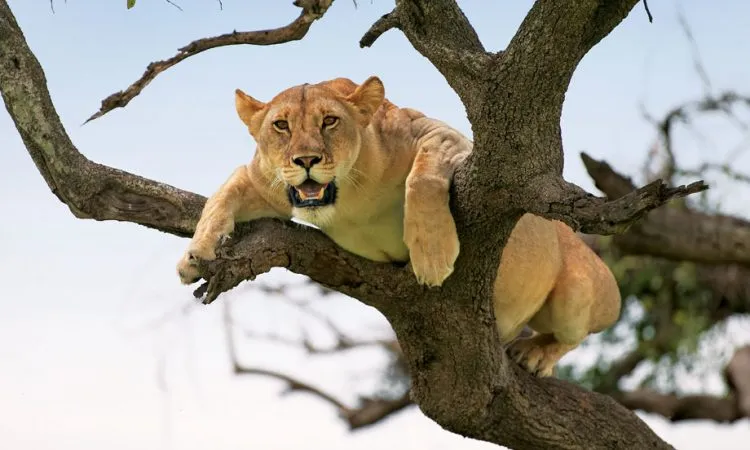
Tree-climbing lions in acacia canopy Lake Manyara
Tree-Climbing Lions

Groundwater Forest

The only regularly observed tree-climbing lions in East Africa. Morning is peak — guides position using overnight intelligence before the 09:00 window.

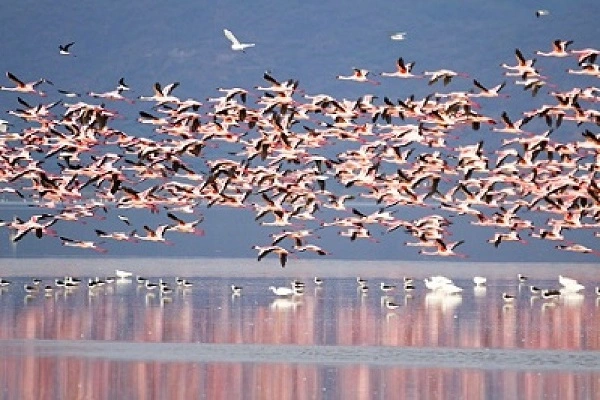
Flamingo on Lake Manyara alkaline shore
Up to 1.9M Flamingo

Alkaline Lake Shore

Lesser and greater flamingo turn the lake deep pink. Peak Nov–Apr. Also pelican, avocet, stork, sacred ibis — 400+ species total in the park.

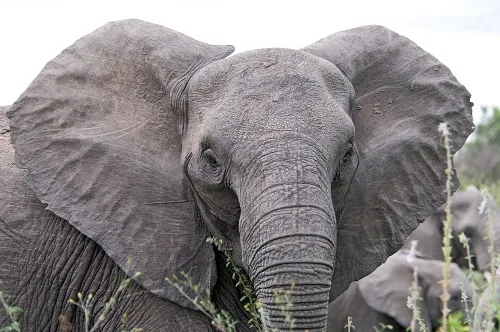
Elephant herd Lake Manyara floodplain
Elephants & Hippo

Open Floodplain

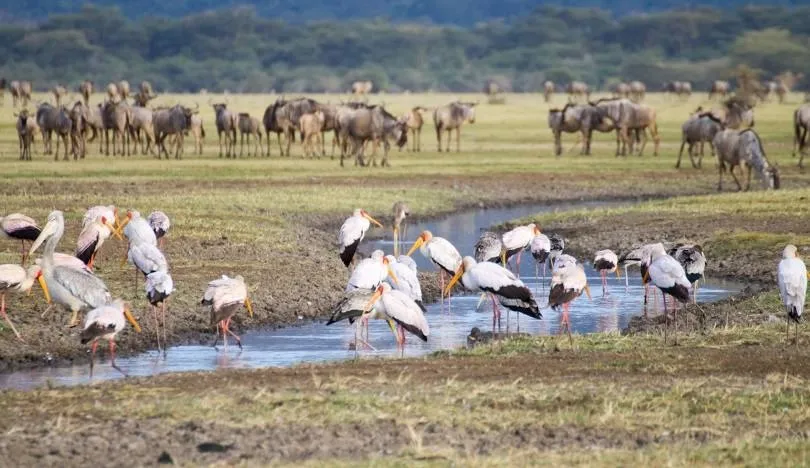
Large elephant herds — renowned for their calm, habituated behaviour. Hippo pools visible year-round. Buffalo herds 300+. Giraffe and zebra on open grassland.

Treetop canopy walkway Lake Manyara forest
370m Canopy Walk

Treetop Walkway

Tanzania's only treetop canopy walk — 370m of suspended bridges through ancient mahogany and fig forest. Blue monkey and colobus in the canopy above.

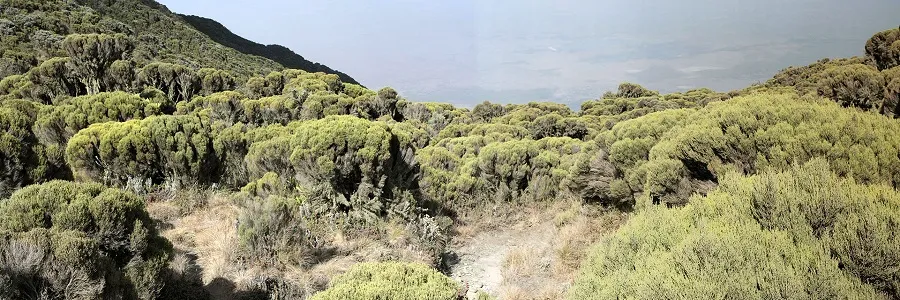
Rift Valley escarpment above Lake Manyara
Rift Valley Views

Escarpment Cliffs

The 600m Rift Valley wall forms the park's eastern boundary — one of Africa's most dramatic backdrops. Baobab-strewn cliffs and algae hot springs at the base.

Zone by Zone

Four Wildlife Zones — All in a Single Morning-to-Afternoon Circuit

Groundwater forest tree-climbing lions
Zone 1 — Forest

Groundwater Forest — Lions & Primates

Dense fig, mahogany and fever tree groundwater forest fed by underground springs from the escarpment. Tree-climbing lions in the canopy (morning peak). Blue monkey, yellow baboon, colobus, red-tailed monkey, and Africa's highest baboon density in this zone.

Flamingo lake shore
Zone 2 — Lakeshore

Lake Manyara — Flamingo & Water Birds

The shallow alkaline lake (up to 200 km² when full) supports extraordinary bird life: up to 1.9 million flamingo at peak, pelican, fish eagle, stork, avocet, Egyptian goose, and hundreds more. The pink lake visible from the Rift Valley rim 600m above.

Hippo pool floodplain elephant
Zone 3 — Floodplain

Open Floodplain — Elephant, Hippo & Buffalo

The open grassland and marshland between the forest and the lake. Famous for its approachable elephant herds — the Manyara elephants are among the most habituated in Tanzania. Permanent hippo pools. Buffalo herds 300+. Wildebeest, zebra, impala, giraffe, warthog, and waterbuck.

Acacia woodland leopard zone
Zone 4 — Woodland

Acacia Woodland — Leopard & Night Drive Zone

The acacia and baobab woodland at the base of the escarpment is prime leopard territory. Hyena, jackal, African wildcat, and civet also roam here. The same zone is the primary night drive circuit — spotlighting porcupine, genet, and mongoose after dark.

Flamingo
1.9M
Flamingos at peak
Birds
400+
Bird species recorded
Canopy walk
370m
Treetop canopy walk
Price
From $120
Per person joining

Safari Overview

Why Lake Manyara is Tanzania's Most Surprising Day Safari

Lake Manyara National Park is Tanzania's most underestimated safari destination. Most visitors treat it as an add-on to the Ngorongoro Crater or Tarangire — a morning stop en route to somewhere else. That undersells it completely. Lake Manyara is a full day's destination in its own right: a 330 km² park tucked between the alkaline lake and the 600-metre Great Rift Valley escarpment, holding five distinct and extraordinary ecosystems, four of the Big Five, 400+ bird species, and — uniquely in East Africa — a resident population of tree-climbing lions.

The park's most remarkable quality is the speed at which the landscape changes. Within a 10-minute drive from the gate, the vehicle passes from a cool, dense groundwater forest dripping with blue monkey and colobus troops into open grassland floodplain where elephant herds graze unhurriedly thirty metres from the road. Then the land opens further to the alkaline lake edge, where the pink fringe of flamingo stretches to the horizon. All three worlds are present within the park's relatively compact circuit, making Lake Manyara the single most visually varied single-day safari on Tanzania's Northern Circuit.

The 1-day Lake Manyara safari from Arusha is the closest full wildlife day trip available from the city — just 126 km and approximately 1.5 hours. A departure from Arusha at 06:30 delivers gate entry by 08:00 and a full morning in the tree-climbing lion zone. The afternoon covers the flamingo lakeshore, the hippo pool, the floodplain herds, and — for guests who request it — the 370m treetop canopy walkway through the mahogany forest canopy. Return to Arusha by 17:30 to 18:00.

Tree-climbing lions — the wildlife encounter found nowhere else in East Africa

The lions of Lake Manyara are globally famous for a behaviour found almost nowhere else: climbing and resting in trees. Theories range from escaping ground-level biting flies to catching a cooling breeze or gaining elevated vantage for hunting — but no single explanation has been confirmed. What is confirmed: watching a full-grown lion draped across an acacia branch five metres above the vehicle is one of the most extraordinary and unexpected wildlife encounters anywhere in Africa. The morning forest circuit (08:00–10:00) is the highest probability window. Our guides use overnight network intelligence to identify lion positions before the circuit begins. This encounter is specific to Lake Manyara, Tarangire (occasional), and Ishasha in Uganda — three places on Earth where it can be reliably sought.

Up to 1.9 million flamingos — Africa's most spectacular single-species bird gathering

The alkaline Lake Manyara sustains up to 1.9 million lesser and greater flamingo at peak season, along with a collective water bird population of approximately 2.5 million individuals — one of the largest single-site bird concentrations in Africa. The flamingo feed on blue-green algae that thrives in the alkaline water and can only be seen in this colour and density from within the park, at lake level. The pink is most intense from November through April when water levels are highest and algae production is at peak. But flamingo are present on the lake shore year-round in significant numbers — a good flamingo showing at Lake Manyara in any month is still one of East Africa's most photographed natural scenes.

Manyara elephants
The Manyara elephants — Africa's most approachable elephant population

Lake Manyara's elephant population is famous among wildlife photographers and researchers for a specific quality: they are among the most habituated and calm large elephants in Tanzania. Decades of low-threat park exposure have produced elephants that approach vehicles without alarm, feed calmly within ten metres, and occasionally surround vehicles entirely while grazing. For guests who have never been close to wild elephants, the Manyara floodplain elephants deliver one of the most intimate large-mammal encounters available on a Tanzania day trip.

Canopy walkway
The 370m treetop canopy walkway — Tanzania's only canopy walk

The Lake Manyara treetop canopy walk is a 370-metre suspended bridge system through the upper canopy of the groundwater forest — at tree-height above the forest floor, with blue monkey and colobus troops moving through the branches at eye level. The walkway is the only facility of its type in Tanzania and provides a completely different perspective on the forest wildlife to the standard vehicle game drive. The canopy walk is optional (separate park activity fee of approximately $20 per person) and must be requested at booking so the guide can schedule it within the day's circuit. Duration approximately 45 minutes to 1 hour.

Mto wa Mbu village
Mto wa Mbu — 120 tribes at the park gate

The village of Mto wa Mbu at Lake Manyara's main gate is one of Tanzania's most culturally unique communities — a settlement of 120+ ethnic groups including Maasai, Iraqw, Chagga, and Datoga, brought together by the junction's agricultural productivity and tourism trade. A brief community walk through Mto wa Mbu (optional, approx. 45 min) covers banana plantations, local crafts, traditional cooking, and the extraordinary ethnic diversity of this Rift Valley settlement. An excellent add-on for guests interested in Tanzanian cultural life alongside the wildlife circuit.

Tree-climbing lions Up to 1.9M flamingo Elephant herds Hippo pool 400+ bird species 370m canopy walkway Leopard — acacia woodland 4 of Big Five Day trip from Arusha Day trip from Moshi 1.5 hrs from Arusha UNESCO Biosphere Reserve Mto wa Mbu cultural visit Daily departures From $120 per person

Hour-by-Hour

Complete Day Schedule — Gate to Return

The Lake Manyara day trip is 10–11 hours door-to-door from Arusha. The morning window is critical for tree-climbing lions — the 06:30 departure ensures gate entry before 08:00 and two hours in the forest before the lion encounter probability drops.

06:30 Hotel pickup — Arusha

Pre-dawn pickup from your Arusha hotel or guesthouse. Moshi pickups depart 05:45. The early start ensures gate entry before 08:00, which is the opening of the tree-climbing lion probability window. The guide gathers overnight network intelligence from the park guide network en route — lion positions confirmed before the circuit begins.

07:45 Pass through Mto wa Mbu — arrive park gate

The vehicle passes through the junction town of Mto wa Mbu — 120+ ethnic tribes, banana plantations, and the extraordinary cultural mix of this Rift Valley settlement — before arriving at the Lake Manyara main gate. Permits processed. The Rift Valley escarpment towers above at 600 metres.

Rift Valley first viewsMto wa Mbu junction
08:00 Enter Lake Manyara — groundwater forest — tree-climbing lion zone begins

The gate opens onto the dense groundwater forest immediately — the canopy closes over the track and the temperature drops noticeably. Blue monkey in the fig trees. Yellow baboon on the road. The guide drives to the first confirmed lion tree from the morning's network intelligence — positioning in the forest canopy zone without delay.

Blue monkeyYellow baboonTree-climbing lions (morning peak)Red-tailed monkey
08:30 Tree-climbing lion encounter — the morning window

The guide uses overnight intelligence to position at the highest probability sighting tree. The lions — typically 2 to 6 individuals from a resident pride — rest in the horizontal branches of large fig, sausage, or acacia trees, sometimes at eye level with the open vehicle roof. This 08:00–10:00 window is the global peak for this encounter. The guide stays with the lions until the encounter is complete, then moves to the forest primates circuit and forest birds before emerging to the floodplain.

Tree-climbing lionsForest canopy birdsColobus monkeyLeopard possible — deep forest
10:00 Flamingo lakeshore — hippo pool — floodplain emergence

The forest opens to the open floodplain and the lake edge. The flamingo concentration on the lakeshore — visible from hundreds of metres as a pink haze above the water — resolves into individual birds at close range. Lesser flamingo feed from the surface in characteristically busy formation; greater flamingo wade in the slightly deeper margins. Pelican in formation overhead. Hippo at the permanent pool — 20 to 30 individuals visible from the vehicle.

Flamingo 1.9M peakPelican400+ Bird speciesHippo poolFish eagle
11:00 Open floodplain — elephant herds — buffalo — giraffe

The open grassland between the forest and the lake is where the Manyara elephant population grazes — famous for their calm, unhurried behaviour around vehicles. Herds of 10 to 40 individuals are common on the floodplain, and the guide positions the vehicle downwind and stationary for extended viewing. Buffalo herds 300+. Giraffe, zebra, impala, warthog, and waterbuck on the open plain.

Elephant herdsBuffalo 300+GiraffeZebraImpalaWarthog
11:30 Optional: 370m treetop canopy walkway

For guests who selected the canopy walk option at booking, this is the scheduled walkway window — midday when the forest primates are most active in the upper canopy. The 370m suspended bridge system through mahogany, fig, and strangler fig passes at canopy height through the tree-tops — blue monkey, colobus, and occasionally birds of prey at eye level. Approximately 45 minutes to 1 hour. Separate park activity fee (~$20 per person). Must be pre-booked.

370m canopy walk (optional)Blue monkeyColobusForest birds
13:00 Picnic lunch — lakeshore or designated park picnic site

Packed picnic lunch with the flamingo lakeshore in view — the pink-tinged horizon visible across the water as the midday light catches the lake surface. Flamingo and wading birds active along the shore throughout the lunch window. The guide continues taking network calls to refine the afternoon circuit.

Lakeshore lunchFlamingo backdrop
14:00 Afternoon circuit — acacia woodland — southern zone

The afternoon drive covers the acacia woodland and baobab-strewn southern zone of the park — the primary leopard territory and the night drive circuit. Hyena, jackal, African wildcat, and mongoose are active in the afternoon shade. The guide checks the Silale Swamp area for additional hippo and crocodile before the final northern loop through the forest edge to check for any returning tree-climbing lion activity in the later afternoon.

Leopard — acacia woodlandHyenaJackalMongooseSilale Swamp hippo
16:00 Exit park — optional Mto wa Mbu community walk (30 min)

Exit through the main gate. Optional community walk through Mto wa Mbu (pre-booked, approximately 30–45 minutes) — banana plantations, local crafts, the culturally diverse village of 120+ ethnic groups. Otherwise, direct return drive to Arusha begins.

17:30–18:00 Return to Arusha / Moshi — hotel drop-offs

Hotel and guesthouse drop-offs across Arusha and Moshi. Moshi arrives approximately 30–40 minutes later. A full day in one of Africa's most diverse parks — complete and returned in a single day from Arusha.


What To Do

Activities Available on the Lake Manyara Day Trip

🚙
Included
Morning Game Drive

Full vehicle circuit through all four habitat zones — forest, lakeshore, floodplain, and acacia woodland. Pop-up roof hatch for photography. Expert licensed guide throughout.

🦩
Included
Flamingo Lakeshore Circuit

Dedicated lakeshore drive along the flamingo shoreline. Guide identifies flamingo aggregation zones from overnight water level reports. Also pelican, avocet, stork, fish eagle.

🌳
+$20 optional
370m Canopy Walkway

Tanzania's only treetop canopy walk — 370m of suspended bridges through mahogany and fig at canopy height. Blue monkey and colobus at eye level. Must be pre-booked.

🌙
+Extra fee
Night Game Drive

Spotlight drive (19:00–23:00) through the acacia woodland zone. Porcupine, genet, civet, African wildcat, bat-eared fox, bush baby. Requires overnight stay or late return.

🛶
Seasonal
Canoe Safari

Paddle-level lake exploration when water levels allow. Hippo, water birds, flamingo from canoe height — a completely different perspective on the lake wildlife. Seasonal availability.

🏘️
+$15 optional
Mto wa Mbu Village Walk

45-minute cultural circuit through the 120+ tribe junction town at the park gate. Banana plantations, local crafts, traditional cooking, and ethnic diversity of the Rift Valley.


When to Visit

Best Time for a Lake Manyara Day Trip

Lake Manyara is one of Tanzania's most consistent year-round destinations — tree-climbing lions are present in all seasons, the elephant population is permanently resident, and the hippo pool is year-round. However, two experiences vary significantly by season: flamingo numbers peak dramatically in the wet season, and game viewing conditions are cleaner and clearer in the dry season.

Jan – Mar
Excellent Peak flamingo season. High water levels attract 1M+ birds. Lush green landscape. Excellent bird life overall.
Apr – May
Good Long rains. Flamingo still present. Some park tracks may be muddy. Fewer vehicles — authentic feeling.
Jun – Oct
Peak — dry season Best overall game viewing. Short grass. Animals at water. Clear photography. Tree-climbing lions year-round.
Nov – Dec
Very Good Short rains — brief, manageable. Flamingo numbers building. Fresh green landscape. Moderate visitors.
Tree-climbing lions: the one encounter that doesn't change by season

Unlike most wildlife encounters that peak in specific seasons, tree-climbing lions can be seen at Lake Manyara year-round. Whether you visit in January (flamingo peak, green forest) or September (dry season, short grass), the morning forest circuit with overnight guide network intelligence delivers consistent tree-climbing lion encounter probability. Any month is the right month to seek this experience at Lake Manyara — the only question is whether you also want peak flamingo (Nov–Apr) or peak general game viewing (Jun–Oct).


Booking Options

Group Joining or Private Vehicle

Same park, same wildlife, same guide quality. The group joining option shares the cost among up to 7 guests. The private vehicle is exclusively your group with full timing flexibility.

Best Value
Group Joining
Shared Vehicle
Join fellow travellers · Maximum 7 guests
$120 / person (shared vehicle)
  • Shared 4x4 safari vehicle (max 7 guests)
  • Lake Manyara National Park entry fee (~$59 per adult)
  • Expert licensed naturalist guide
  • Full morning tree-climbing lion forest circuit
  • Flamingo lakeshore and hippo pool circuit
  • Afternoon floodplain and woodland drive
  • Picnic lunch in the park
  • Bottled water throughout the day
  • Hotel pickups and drop-offs Arusha and Moshi
Private Vehicle
Exclusive Day Trip
Your group only · Full flexibility
$320 / person (2 pax, private)
  • Exclusive private 4x4 vehicle — your group only
  • Lake Manyara National Park entry fee included
  • Expert licensed naturalist guide — yours alone
  • Full flexibility to extend at any sighting
  • Option to add 370m canopy walk (+$20/person)
  • Option to add Mto wa Mbu village walk (+$15/person)
  • Picnic lunch in the park
  • Bottled water throughout
  • Hotel pickups and drop-offs Arusha and Moshi

What is Covered

Inclusions and Exclusions

Included in both options
  • Lake Manyara National Park entry fee (~$59 per adult 2026)
  • Expert licensed naturalist guide
  • 4x4 safari vehicle with pop-up roof hatch for photography
  • Tree-climbing lion morning circuit (network intelligence-guided)
  • Flamingo lakeshore and hippo pool circuit
  • Afternoon floodplain and woodland drive
  • Picnic lunch at park picnic site
  • Bottled water in vehicle throughout the day
  • Hotel pickup and drop-off — Arusha and Moshi
Not included
  • Tanzania tourist visa (~$50 USD — apply online at eservices.go.tz)
  • Personal travel and medical evacuation insurance
  • Alcoholic beverages
  • Guide gratuity ($10–$15 per day recommended)
  • 370m treetop canopy walk (~$20 per person — optional, pre-book)
  • Mto wa Mbu community walk (~$15 per person — optional)
  • Night game drive (separate arrangement and extra fee)
  • Personal items and souvenirs

How to Choose

Lake Manyara Day Trip vs Multi-Day Safari

Option Duration Manyara time Other parks From
1-Day Manyara Day Trip (this) 1 day Full day circuit Manyara only $120
3-Day Group Joining Safari 3 days Morning circuit + Tarangire + Ngorongoro $590
4-Day Group Joining (all 4 parks) 4 days Morning circuit + Tarangire + Crater + Serengeti $760
1-Day Ngorongoro Day Trip 1 day Not included Ngorongoro Crater only $195

What our Lake Manyara day trip guests say

James M.
★★★★★
James M. — Australia

"I did not expect much from a single day at Lake Manyara — I had added it as a stop on the way to Ngorongoro and thought it would be the lesser experience. It was the opposite. The guide stopped under a sausage tree at 08:40 and there were three lions draped across the branches four metres above the vehicle. One of them yawned and looked directly at me. I have been on eleven safaris across Africa. I have never seen anything like it. The lake with the flamingos was extraordinary. The elephants walked between the vehicles calmly at ten metres. A completely unexpected highlight of my Tanzania trip."

Private vehicle · July
Sophie R.
★★★★★
Sophie R. — France

"I am a birdwatcher and I specifically chose the Lake Manyara day trip for the birds. The guide knew the park as a birding guide, not just a mammal guide — he identified 73 species before lunch and named every one in English and Swahili without hesitation. The flamingo flock at 10:00 in the morning light was the most extraordinary thing I have ever photographed. We also did the canopy walkway and found a troop of colobus at eye level. For birdwatchers, this is one of the best single-day birding experiences in East Africa. Book it."

Group joining · February
Nadia B.
★★★★★
Nadia B. — Canada

"We had one free day between Kilimanjaro and Zanzibar and chose Lake Manyara because it was the closest option to Arusha. It turned out to be one of the most memorable days of our entire East Africa trip. By 09:15 we were watching a lioness drag herself up a large fig tree and settle across a branch directly above us. By noon the lake was completely pink with flamingos. The elephants surrounded the vehicle at 11:00 and just grazed around us for twenty minutes. Hemingway was right. I would do this park again before any other in Tanzania."

Group joining · November

Expert Answers

Lake Manyara Day Trip — Common Questions

  • Yes — one full day is the ideal format for Lake Manyara National Park. The park is specifically well-suited to a single day because its 330 km² (a large portion of which is the lake) contains a compact, navigable circuit that a well-guided full day covers completely. The tree-climbing lion zone, the flamingo lakeshore, the hippo pool, the floodplain elephant herds, and the acacia woodland are all within a single circuit. Unlike the Serengeti or Ngorongoro, where you need multiple days or overnight time for a complete experience, Lake Manyara's circuit design and concentrated wildlife density make one well-led day genuinely complete. The park is also specifically designed for half-day or full-day format — the TANAPA entry fee is priced per 24 hours, and the standard tour format is a full day's circuit from gate opening to late afternoon.
  • Tree-climbing lions are Lake Manyara's signature encounter and the reason the park is internationally famous. The tree-climbing behaviour is exhibited year-round — these lions climb regardless of season, with the morning hours (08:00–10:00) being the highest probability window before the heat of the day encourages the lions to descend to the shade. Our guides use overnight guide network intelligence from rangers and other guides inside the park to identify which trees the lions occupied the previous evening — and drive directly to those positions on entry. Sightings cannot be guaranteed for any wildlife, but Lake Manyara is the most reliable destination on Earth for this specific encounter. The majority of guests on a well-guided morning circuit encounter tree-climbing lions.
  • Flamingo are present at Lake Manyara year-round, but the peak concentration occurs from November through April — the wet season — when water levels on the alkaline lake are highest and blue-green algae production is at maximum. During this period, up to 1.9 million lesser and greater flamingo gather on the lake, turning the water a vivid deep pink visible from the Rift Valley rim 600 metres above. Outside this window, flamingo numbers are lower but still significant — tens of thousands of birds are typically present on the lakeshore throughout the year, producing good viewing and photography conditions in any season. The dry season (June–October) compensates with superior game viewing conditions overall — shorter grass, more concentrated elephant and buffalo herds, and cleaner photography light.
  • Resilience Safaris's Lake Manyara day trip starts from $120 per person on a group joining shared vehicle (maximum 7 guests). Private vehicle day trips start from $320 per person based on two people sharing. Both options include the Lake Manyara National Park entry fee (approximately $59 per adult in 2026), an expert licensed naturalist guide, a 4x4 safari vehicle with pop-up roof hatch, a picnic lunch in the park, bottled water throughout, and hotel pickups and drop-offs in Arusha and Moshi. The optional 370m treetop canopy walkway (~$20 per person) and Mto wa Mbu village walk (~$15 per person) are not included but can be added at booking. The Tanzania tourist visa (~$50 USD) and guide gratuity are not included.
  • Technically possible but strongly not recommended. The two parks are approximately 60 km apart, but combining both in a single day means a rushed morning at Lake Manyara (missing the tree-climbing lion window) and a rushed afternoon descent into the Ngorongoro Crater (missing the morning black rhino window — the most important encounter in the crater). Both parks deserve a full dedicated day. If combining both parks is the goal, a 3-day group joining safari (Tarangire + Manyara + Ngorongoro) is the correct format — it gives each park its proper time allocation with an overnight on the crater rim for the dawn descent. The Lake Manyara day trip works perfectly as a standalone experience from Arusha.
  • Lake Manyara holds four of the Big Five: lion (tree-climbing), elephant (large habituated herds), buffalo (300+ per herd), and leopard (acacia woodland zone). Rhino are not present. Other key species include hippo (permanent pools), giraffe, zebra, wildebeest, impala, waterbuck, warthog, baboon, blue monkey, colobus, vervet monkey, hyena, jackal, and mongoose. Birds: 400+ species recorded, including up to 1.9 million flamingo, pelican, fish eagle, martial eagle, ground hornbill, green pigeon, kingfisher species, bee-eater species, and a vast array of waterbirds, forest birds, and raptors. Lake Manyara holds Africa's highest concentration of baboons per unit area and is a world-class birding destination by any measure.
  • Lake Manyara and the Serengeti are not comparable destinations — they offer completely different wildlife experiences and are not alternatives to each other. The Serengeti is about scale, migration, and open savanna. Lake Manyara is about diversity, intimacy, and specific encounters — most notably tree-climbing lions, massive flamingo concentrations, and habituated close-range elephant and buffalo encounters — that simply do not exist in the Serengeti. Hemingway, who visited both, called Lake Manyara "the loveliest park he had seen in Africa." For guests with limited time in Tanzania, Lake Manyara's proximity to Arusha (1.5 hours) and its single-day self-contained circuit make it the most accessible extraordinary wildlife experience on the Northern Circuit. It is not a substitute for the Serengeti — it is a different and equally deserving experience.
Lake Manyara day trip from $120