Is Tanzania Safe for Tourists?
For the large majority of visitors who stay on the standard safari, Kilimanjaro, and Zanzibar circuit, yes — Tanzania remains a well-established, welcoming tourism destination. Over 2.1 million international visitors entered the country in 2024, and the great majority had trouble-free trips: wildlife viewing accidents are rare, violent crime against tourists on the main circuit is uncommon, and the tourism infrastructure (guides, lodges, parks) is experienced and well-regulated.
At the same time, several governments currently rate Tanzania at an elevated travel advisory level — the US rates it Level 3 of 4, "Reconsider Travel" — for specific, genuine reasons that we think you deserve to know about plainly rather than have glossed over: a disputed 2025 election and the unrest that followed it, an ongoing terrorism risk concentrated near the Mozambique border (hundreds of kilometres from any safari route), and a serious legal risk for LGBTQ+ travelers that predates the current advisory but has intensified.
The geography matters here. The issues driving the current advisory level — Dar es Salaam political unrest and Mtwara-region terrorism risk — are concentrated in places the standard safari and Zanzibar itinerary never goes near. That doesn't make the advisory irrelevant: read it, take it seriously, and make your own informed decision — particularly around the legal risk section for LGBTQ+ travelers further down this page, which applies everywhere in the country, not just specific regions. We'll help you plan around the real risks rather than pretend they don't exist.
Current Government Travel Advisories for Tanzania
Advisory levels change, sometimes with little notice. The summary below reflects what the major English-speaking advisories said as of early October 2026 — always check the current version from your own government shortly before you travel, since your travel insurance can be affected by travelling against official advice.
| Government | Overall rating | Specific regional warning | What it's responding to |
|---|---|---|---|
United States |
Level 3 of 4 — Reconsider travel | Raised Oct 2025, reissued Sept 2026 | Unrest, crime, terrorism risk, targeting of gay and lesbian individuals |
United Kingdom |
General caution + regional warning | Avoid all travel within 20km of the Mozambique border (Cabo Delgado) | Extremist group activity along the southern border |
Canada |
High degree of caution + regional warnings | Avoid all travel within 10km of the Mozambique border; avoid non-essential travel in southern Mtwara region | Armed groups, terrorism and kidnapping risk near the border |
Australia |
Exercise a high degree of caution | Higher levels near the Mozambique and DRC borders | Violent crime, civil unrest, and terrorism risk |
Every regional warning above names the same area: the Mtwara region on the far southern border with Mozambique. No standard safari, Kilimanjaro, or Zanzibar itinerary goes anywhere near this region — it sits roughly 600km from the Serengeti and is not served by the tourist circuit at all. The broader "exercise caution" ratings reflect crime and political risk more typical of a capital city than a national park or beach resort.
What's Behind the Current Advisory Level?
The October 2025 election and its aftermath. Tanzania held general elections on October 29, 2025, after disqualifying the two leading opposition candidates. The result was disputed, and violent protests broke out in Dar es Salaam and other cities, met with a heavy security response. Human rights organizations and international media reported significant casualties among protesters and bystanders in the weeks that followed, along with mass arrests, a period of internet restrictions, and flight disruptions at the height of the unrest. The Tanzanian government has disputed aspects of this reporting and maintains that the country remains safe and stable for visitors.
What that meant for tourists at the time: flight delays and cancellations, particularly around Dar es Salaam, during the most acute period in late 2025. Several international tour operators paused or adjusted departures and offered flexible rebooking. By most accounts, tourists already in the country on safari or in Zanzibar were not caught up in the unrest itself, which was concentrated in urban areas during a specific window around the election.
Terrorism risk near the Mozambique border. This is a separate, longer-running issue: extremist groups operating in Mozambique's Cabo Delgado province have occasionally carried out attacks just across the border in Tanzania's Mtwara region. This is why the UK, Canada, and others single out that specific area — it is roughly as far from the Serengeti as London is from Rome, and no tourist route passes through it.
Where things stand now. As of our October 2026 check, the acute unrest of late 2025 has not recurred, and the most recent updates to several advisories concern routine matters like health-screening rules rather than new unrest. The elevated advisory level itself, however, has not been reduced. We recommend treating "Level 3" as a real signal worth reading in full, not a reason to panic — and definitely not a reason to ignore.
Mandatory Travel Insurance — What Changed
From October 1, 2026, every foreign visitor entering mainland Tanzania by air, sea, or land must hold a valid inbound travel insurance policy, priced at approximately $44, issued or co-issued by Tanzania's National Insurance Corporation (NIC) or a registered partner insurer. This is checked as part of entry. Zanzibar has had its own separate local travel insurance requirement for entry since 2024 — the two are not the same policy, so check both if your trip includes the islands.
This replaces nothing you already had: your personal travel insurance, evacuation cover, and medical insurance from home are still strongly recommended on top of this mandatory local policy, since the mandatory product is a baseline entry requirement rather than a comprehensive travel insurance replacement.
Confirm the current mandatory insurance process with your airline or at immigration before you fly — rules like this can be refined in the weeks after launch. Separately, buy your own comprehensive travel insurance that explicitly covers emergency medical evacuation from a national park (a real cost that can run into tens of thousands of dollars if ever needed) and trip cancellation or interruption due to official travel advisories.
Crime & Petty Theft
Away from the specific political and border-region risks covered above, the crime risk most tourists actually encounter in Tanzania is opportunistic petty theft — phone and bag snatching, pickpocketing in crowded markets, and theft from parked vehicles or unlocked hotel rooms — concentrated in urban areas like Dar es Salaam, Arusha, and Stone Town rather than inside national parks or at safari lodges.
Official advisories do describe violent crime, including assault, robbery, and carjacking, as a regular occurrence nationally, and note that local police resources to respond can be limited. This risk is substantially higher in city settings after dark than in the controlled environment of an organised safari or beach holiday.
Health & Medical Care
Malaria is present across most of mainland Tanzania, including safari areas, though generally absent at altitude on Kilimanjaro above roughly 1,800m and lower-risk in parts of Zanzibar town. Discuss prophylaxis with a travel health clinic or doctor at least a few weeks before departure, and use repellent and a mosquito net regardless of whether you take medication.
Water: drink only bottled or properly treated water, including for brushing teeth, and be cautious with ice in budget establishments. Reputable lodges and hotels on the standard circuit handle this well, but it's worth being deliberate about it yourself, especially in towns.
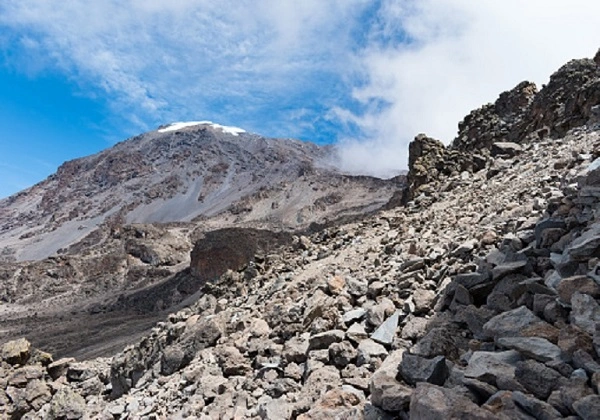
Altitude is a real medical consideration specifically for Kilimanjaro climbers (see our dedicated route guides for full detail) — not a concern for a standard safari or beach trip, which stay well below any altitude where sickness is a risk.
Medical facilities: private clinics in Arusha, Moshi, and Dar es Salaam, and on Zanzibar, can handle routine issues and stabilise serious ones, but Tanzania's healthcare system is not equivalent to what travelers from wealthier countries may be used to for anything major. Comprehensive travel insurance with medical evacuation cover (flying DAR or Nairobi, or home, if needed) is not optional — it is a genuine safety requirement, not just a formality.
See a travel health clinic 4–6 weeks before departure for Hepatitis A, Typhoid, and Yellow Fever vaccination guidance (Yellow Fever certification may be required if transiting certain other African countries), and a current malaria prevention recommendation. Pack a basic medical kit and any personal medication in carry-on luggage, not checked bags.
Wildlife & Safari Safety
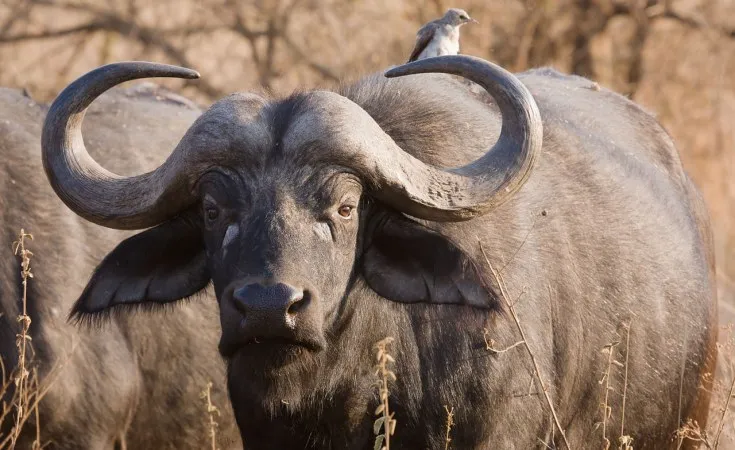
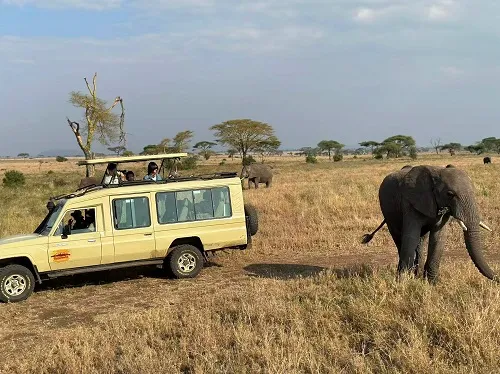
The real safety consideration on safari is wildlife, not crime — and it is very well managed through simple, consistently enforced rules. Serious incidents involving tourists and wild animals are rare precisely because the system around them (vehicle-based viewing, experienced guides, park rules) is designed to prevent them.
Stay in the vehicle during game drives except at designated, ranger-approved spots — animals generally read a vehicle as one large, uninteresting object rather than individual prey, which is the entire basis of safe safari viewing. At lodges and camps, especially unfenced ones, always follow staff guidance about walking after dark — a radio call or an escort to your room is standard practice, not an inconvenience. On a walking safari, you will be with an armed ranger or guide specifically trained for wildlife encounters — follow their instructions immediately and without debate if an animal is encountered at close range.
Your guide's judgement is the most important safety system on any safari — a good guide will keep appropriate distance from predators and elephants in musth, read animal behaviour continuously, and reposition the vehicle calmly rather than reactively.
Follow your guide's instructions, stay inside the vehicle unless told otherwise, don't feed or approach animals for a photo, and keep a reasonable noise level. Almost every wildlife-related safety issue on safari traces back to one of these being ignored.
Road Safety & Transport
Road travel is, honestly, one of the higher statistical risks for visitors to Tanzania — rural roads can be poorly lit, vehicle maintenance and driving standards vary, and long highway journeys between parks involve genuine distances. This is a standard, well-understood risk across East Africa generally, not something specific to Tanzania.
What reduces the risk meaningfully: travelling with a reputable operator whose drivers are experienced on these specific routes and whose vehicles are properly maintained; avoiding unnecessary night driving on rural roads, which we build into itinerary planning; wearing seatbelts at all times, including in safari vehicles with roof hatches open — stand only when the vehicle is stationary or moving slowly on a smooth track.
Domestic flights between safari airstrips and Zanzibar are a common, generally well-regarded alternative to long road transfers, and often worth the modest extra cost for both time and safety.
Common Scams & How to Avoid Them
Official advisories specifically flag financial scams as common in Tanzania — not uniquely, but worth naming plainly. Most are variations on a theme: creating urgency or a sense of personal connection to get you to pay for something that doesn't exist, or to pay far more than the going rate.
Solo & Female Travelers
Solo travel, including solo female travel, to Tanzania is common and generally manageable, particularly within an organised safari or climb where you join a group and crew regardless of how you booked. Tanzanian safari and tourism culture is accustomed to solo travelers of all backgrounds.
Official advisories do note sexual assault among the crime risks present nationally, consistent with general advice for solo travel anywhere. The practical precautions are the ones that apply broadly: use vetted transport and accommodation, particularly after dark; share your itinerary and check in with someone at home; dress with cultural awareness in towns and especially on Zanzibar, where the population is predominantly Muslim and modest dress is appreciated outside resort grounds; and trust your instincts about any situation or person that feels wrong.
Joining a small-group departure rather than travelling with a completely private, one-on-one guide arrangement is a reasonable extra layer of comfort for some solo travelers, and worth discussing with your operator if it would put you more at ease.
LGBTQ+ Travelers: Know the Legal Risk
Same-sex sexual conduct is a criminal offense under Tanzanian law. This is not a new development, but current official travel advisories have added specific language warning that gay and lesbian individuals have been arrested, targeted, and harassed, and that people detained on suspicion of same-sex conduct may face invasive physical examinations. We are stating this plainly because it is a genuine safety matter, not a comment on anyone's identity or relationships — you deserve accurate information to make your own decision.
This legal risk applies nationwide — it is not confined to any one city or region the way the political and border risks discussed earlier are. There is no part of a standard itinerary that is exempt from it.
Many LGBTQ+ travelers do visit Tanzania, including on safari and to climb Kilimanjaro, generally by exercising discretion about public displays of affection and conversations about relationships with people outside their travel group, the same approach commonly recommended for a number of destinations with similar laws. Whether that level of discretion is one you're comfortable maintaining for the length of your trip is a personal decision only you can make, and we would rather you make it with full information than find out partway through a trip that this wasn't communicated clearly.
We're glad to talk through specific concerns before you book — room configurations, group composition, and itinerary choices are all things we can discuss directly and discreetly. Organisations such as ILGA World and your own embassy's travel advice pages also maintain current, detailed guidance on LGBTQ+ travel risk by country, which is worth reading directly rather than relying solely on any tour operator's summary, including ours.
Safety Region by Region
Tanzania is roughly the size of Nigeria or twice the size of California. Blanket statements about "Tanzania" hide more than they reveal — the picture looks different depending on where you actually are.


Emergency Contacts & Insurance
Save these before you travel, and confirm your operator's own emergency contact and evacuation procedure as part of booking — a reputable safari or climbing company will have one and will share it without being asked twice.
| Need | Contact / Action |
|---|---|
| Police (national) | 112 or 999 |
| Ambulance / fire | 112 |
| Tourist Police, Zanzibar | Available in Stone Town — ask your hotel for the current station location and number |
| Your embassy or consulate | Register your trip with your home country's embassy before travel where that service exists |
| Medical evacuation | Confirm this is covered by your personal travel insurance, not just the mandatory entry policy |
| Your tour operator's 24/7 line | Save this on your phone and share it with someone at home before you depart |
Remember the distinction from earlier: the mandatory $44 entry policy (mainland, from October 2026) and Zanzibar's separate mandatory local policy are baseline entry requirements, not substitutes for your own comprehensive travel insurance with medical evacuation cover. Bring proof of both where applicable.
Is Tanzania Safe — Frequently Asked Questions
-
For most visitors on the standard safari, Kilimanjaro, and Zanzibar circuit, yes — day-to-day risk is comparable to other popular developing-world destinations. However, as of October 2026 the US State Department rates Tanzania Level 3, Reconsider Travel, citing unrest following the October 2025 election, crime, terrorism risk near the Mozambique border, and targeting of LGBTQ+ individuals. Read the current advisory from your own government before booking, and check again shortly before you travel.
-
As of our October 2026 check, Level 3 of 4, "Reconsider Travel" — raised from Level 2 on October 31, 2025, and reissued at the same level in September 2026. The advisory cites unrest, crime, terrorism risk concentrated in the Mtwara region near the Mozambique border, and targeting of gay and lesbian individuals. Advisory levels change, so confirm the current rating directly at travel.state.gov before you book.
-
Yes. Since October 1, 2026, every foreign visitor entering mainland Tanzania must hold a valid inbound travel insurance policy (around $44) issued or co-issued by Tanzania's National Insurance Corporation. Zanzibar has required a separate local travel insurance policy for entry since 2024. Neither replaces your own comprehensive travel insurance with medical evacuation cover, which we strongly recommend on top of these mandatory policies.
-
Yes. The Serengeti, Ngorongoro Crater, and Tarangire sit hundreds of kilometres from both the Dar es Salaam unrest and the Mtwara border risk named in current advisories, and the safari circuit continued operating normally through the 2025 election crisis. The genuine safety topic on safari is wildlife, not politics or crime, and it's well managed through vehicle-based viewing and your guide's instructions.
-
Generally, yes, and solo travel of all kinds is common on the standard circuit, where you typically join a group with a guide and crew regardless of how you booked. Standard precautions apply: vetted transport and accommodation after dark, culturally aware dress particularly on Zanzibar, and trusting your instincts about any person or situation that feels wrong. Discuss a small-group rather than fully private arrangement with your operator if that would put you more at ease.
-
Same-sex sexual conduct is a criminal offense in Tanzania, and current advisories note that gay and lesbian individuals have been arrested, targeted, and harassed, including a risk of invasive physical examinations if detained on suspicion of same-sex conduct. This applies nationwide, not just in specific regions. Many LGBTQ+ travelers do visit, generally by exercising public discretion, but this is a serious factor we'd rather you weigh with full information — see our dedicated section above, and consult your embassy's current guidance directly.
-
Tanzania held disputed general elections on October 29, 2025, after the two leading opposition candidates were disqualified. Violent protests followed in Dar es Salaam and other cities, met with a heavy security response; human rights organizations and international media reported significant casualties and mass arrests in the weeks after. This drove the US advisory from Level 2 to Level 3. The Tanzanian government disputes aspects of this reporting and maintains the country is safe for visitors. The acute unrest was concentrated in a specific window and in specific cities, and has not recurred as of our October 2026 check, though the elevated advisory level itself remains in place.
-
Every current advisory singles out the same place: the Mtwara region on the southern border with Mozambique, due to terrorism risk from extremist groups active just across the border. The UK and Canada advise against all travel within 10–20km of the border itself. No standard safari, Kilimanjaro, or Zanzibar itinerary goes anywhere near this area. Beyond that, use ordinary big-city caution in Dar es Salaam, particularly avoiding any political demonstration or large public gathering.