+255 742 119 753 tours@resiliencesafaris.com
Safari Experts ★ 5.0 Rating
Book Safari
Safari Navigator
Request Quote
Serengeti National Park, Tanzania UNESCO World Heritage Site

9 Days Serengeti
Great Migration Safari

The ultimate Serengeti experience — five full days immersed in the world's greatest wildlife migration, plus the Ngorongoro Crater, Tarangire's elephant herds, and Lake Manyara. One extra day means one extra opportunity to witness the river crossings, the calving frenzy, and the predator hunts that define the Serengeti.

9 Days / 8 Nights 4 National Parks Big Five included 5 Days in the Serengeti Max 6 per vehicle
★★★★★
5.0
412 verified safari guestsTripAdvisor · Google · Booking.com
1.5M+
Wildebeest
5
Days in Serengeti
Big Five
All possible
15+
Years guiding

Why choose 9 days

One Extra Day Changes Everything

The 9-day Serengeti Migration Safari delivers five full days inside the Serengeti — one more than our 8-day itinerary. That additional day is not a luxury; in the migration zone, it is often the deciding factor between witnessing a crossing and missing one entirely.

River crossings are driven by the instinct of individual animals, not a timetable. Herds can gather at crossing points for hours, then turn back, then attempt again the following dawn. A ninth day means your guide can wait out the hesitation — remaining stationed at the most promising crossing point while other groups have already departed. Many of our most dramatic crossing experiences have happened on extended-stay days.

The fifth Serengeti day also allows deeper exploration of the migration ecosystem beyond the main spectacle — tracking individual predator families, following the scavenger hierarchy at dawn carcasses, and finding the quieter corners of the plains where cheetah coalitions and wild dog packs operate away from the crowds.

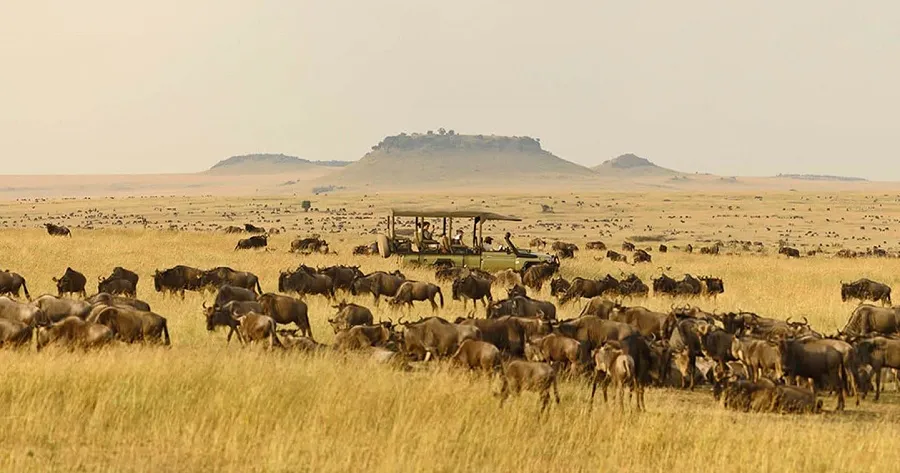
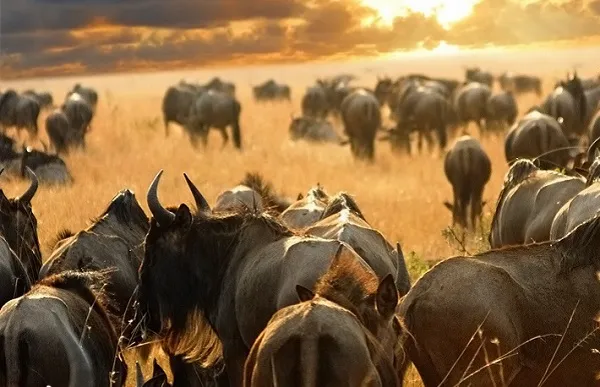
Migration herds
5
Full days in the Serengeti
Lion
+1
Extra crossing opportunity
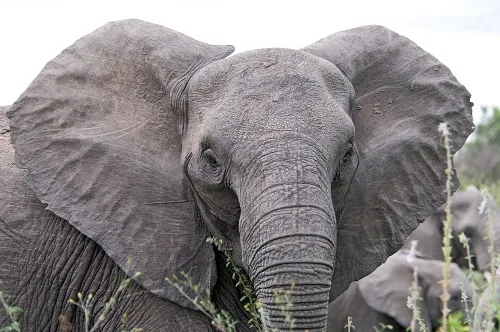
Elephant
4
National parks covered
Ngorongoro
8
Nights included

When to visit

Great Migration Calendar — Best Time to Visit

The Great Wildebeest Migration is a year-round event. Every month offers something extraordinary — the 9-day itinerary gives you more time to experience whichever spectacle your season provides.

Jan – Feb
Southern Serengeti · Ndutu
Calving season — approximately 500,000 calves born in 3 weeks. Explosive predator activity. Cheetah, lion, and wild dog at their seasonal peak.
March
Southern Plains
Herds still on the southern plains. Late calving. Resident wildebeest, zebra, and gazelle in vast concentrations.
Apr – May
Western Corridor
The long march north begins. Herds trek toward the Grumeti. Long columns across the plains with dramatically fewer visitors.
June
Grumeti River
Grumeti River crossings. Giant resident crocodiles await. First dramatic crossing of the annual cycle. Less visited than the Mara.
Jul – Oct
Northern Serengeti · Mara River
The Mara River crossings. The most dramatic wildlife event on Earth. Crocodiles, mass stampedes. Peak season and highest visitor numbers.
Nov – Dec
Eastern Serengeti
Return migration south. Short rains begin. Herds move through the eastern Serengeti toward Ndutu. Vast columns on the plains.
The 9-day advantage: more time means more chances

With five full days in the Serengeti instead of four, the 9-day safari dramatically increases your crossing probability during the Mara River season, and allows deeper immersion in the calving zone during January–February. Our guides track the herds daily and position your safari in real time — the extra day is your insurance policy against the unpredictable rhythms of the migration.

Wildebeest
1.5M+
Wildebeest in migration
Lion
3,000+
Lions in the Serengeti
Elephant
5
Full Serengeti days
Ngorongoro Crater
~30
Black rhino in Ngorongoro

Safari Overview

Five Days Inside the Serengeti

The 9-day Serengeti Migration Safari is our most comprehensive single-ecosystem itinerary — designed for travellers who want more than a glimpse of the Great Migration, but a true immersion in its rhythms, its drama, and its ecology. Where the 8-day itinerary delivers four Serengeti days, this itinerary delivers five: five mornings waking to the sounds of hyenas and lions on the open plains, five full game-drive days positioned in the active migration zone, five sunsets over the endless Serengeti horizon.

The additional day is placed strategically in the Serengeti migration corridor — not at the beginning or end of the itinerary, but in the heart of the park where it creates the greatest impact. This means more time at river crossing points during the Mara River season, more time in the calving concentration during January and February, and more time exploring the broader Serengeti ecosystem with your private naturalist guide on quieter days when the migration rhythm is steadier.

As with all our migration safaris, this itinerary opens with the classic Tanzania northern circuit — two days in Tarangire, one morning at Lake Manyara, and a full day in the Ngorongoro Crater — before transitioning into five Serengeti days. Every section of the route is calibrated to deliver maximum wildlife quality.

Migration herd
5 days in the Serengeti — what the extra day makes possible

River crossings are impossible to schedule. The herd gathers at the river, scouts the far bank for crocodiles, and may stand for six hours before retreating — only to return at dawn the next day. Groups on tight itineraries often miss a crossing they were within an hour of witnessing. With five Serengeti days, your guide can hold position at the most promising crossing site while the herd makes up its mind. This patience is what separates a crossing sighting from a near-miss.

Lion pride
Big Five — all possible on this safari

The 9-day itinerary covers Tanzania's premier Big Five habitat across four parks. Lion, leopard, buffalo, and elephant are virtually guaranteed. Black rhino are seen most reliably in the Ngorongoro Crater — home to the highest density of black rhino in Africa. The additional Serengeti day also increases wild dog sighting probability, as these critically endangered predators require patient tracking across larger territories.

Safari camp
Accommodation across three tiers — 8 nights in the field

Eight nights of accommodation ranging from comfortable TANAPA-licensed lodges (mid-range tier) to exclusive conservancy camps with flying transfers (luxury tier). The 9-day itinerary includes an extra night deep inside the Serengeti — positioned in the migration zone for maximum early morning access, eliminating the long drives from peripheral camps that cost other operators crucial wildlife-viewing time.

Wildebeest calves
Deeper ecology — beyond the crossing

The fifth Serengeti day gives your guide time to shift focus from spectacle to depth: following a single cheetah family across their territory from dawn to dusk, locating and observing wild dog den sites, studying the scavenger hierarchy at dawn kills, or exploring the remote Lobo area in the Northern Serengeti where the migration is often least crowded and most raw. This is wildlife viewing at its most patient and most rewarding.

Great Migration Big Five 5 Serengeti Days Ngorongoro Crater Tarangire elephants Mara River crossings Calving season Expert naturalist guide Photography focus Private 4x4 vehicle Year-round available Hot air balloon option Wild dog tracking
Safari Comparison

8 Days vs. 9 Days — What Changes

Both itineraries follow the same route and cover the same four parks. The difference is time where it matters most — in the Serengeti migration zone.

Feature 8-Day Safari 9-Day Safari
Total nights 7 nights 8 nights
Days in Serengeti 4 full days 5 full days
Mara River crossing probability Very good Maximum
Calving season immersion Very good Maximum
Wild dog tracking opportunity Good Extended
Tarangire National Park 2 days 2 days
Ngorongoro Crater full day Included Included
Lake Manyara morning drive Included Included
Hot air balloon option Optional Optional
Price from (per person) $2,800 $3,200

Day-by-Day Programme

9-Day Serengeti Migration Safari Itinerary

  1. Your 9-day safari begins with a drive southwest through the East African Rift Valley to Tarangire National Park — one of Tanzania's most underrated wildlife destinations and the essential opening chapter of this safari. The Tarangire River is one of the few permanent water sources in the region, drawing wildlife from vast distances during the dry season.

    1. 08:00
      Pickup from Arusha or Moshi hotel

      Meet your expert naturalist guide. Vehicle and equipment check. Drive southwest toward Tarangire via the Rift Valley escarpment.

    2. 11:00
      Enter Tarangire National Park gate

      Begin the first game drive along the Tarangire River. Elephant herds of 300+ commonly seen in the riverbed. Watch for lion, leopard, cheetah, and the park's famous ground hornbills.

    3. 13:00
      Bush lunch — Tarangire riverbed

      Lunch boxes served in the field. Maximum time in the wildlife zone. Afternoon game drive continues immediately after.

    4. 18:00
      Check in to Tarangire camp / lodge

      Welcome briefing from camp manager. Sundowner drinks overlooking the river. Dinner under the stars.

    Elephant herds 300+LionGiraffeBuffaloZebraGround Hornbill
  2. A full day exploring Tarangire's diverse habitats — riverine forests, open savanna, seasonal swamps, and the iconic baobab woodland where ancient trees several thousand years old tower above the landscape. Tarangire has the highest concentration of elephants in Tanzania and the largest population of breeding raptors in East Africa.

    1. 06:00
      Early morning game drive — predator hour

      The hour before breakfast is Tarangire's best predator viewing window. Lion and leopard active around the river. Cheetah hunt on the open plains.

    2. 08:00
      Bush breakfast — continue drives into baobab woodland

      Continue into the baobab woodland — ancient trees 2,000+ years old. Tree-climbing python occasionally found in the baobab hollows.

    3. 17:00
      Sundowner — baobab viewpoint

      Drinks and canapes at sunset with a baobab silhouetted sky. The classic East African safari moment.

    Elephant familiesLeopardCheetahRaptors2,000-yr BaobabsGiraffe
  3. A morning game drive in Lake Manyara National Park — famous for its tree-climbing lions unique to this population, flocks of thousands of flamingo on the alkaline lake, and dense groundwater forest. After a midday departure, the road climbs the dramatic Ngorongoro escarpment to your crater rim lodge.

    1. 06:30
      Lake Manyara — morning game drive

      Enter Manyara at first light. The soda lake shimmers pink with flamingo flocks. Tree-climbing lions found in fever tree woodland. Buffalo herds on the floodplain.

    2. 12:00
      Bush picnic lunch — depart for Ngorongoro

      Drive north to the Ngorongoro Conservation Area. The road climbs the Oldeani escarpment through Maasai community land.

    3. 16:00
      Arrive crater rim lodge

      Your first view of the crater — 260 km² of unbroken wildlife sanctuary 600 m below. Dinner with panoramic sunset over the caldera.

    Tree-climbing lionsFlamingo flocksHippoBuffaloNgorongoro view
  4. A full day inside the Ngorongoro Crater — the world's largest intact volcanic caldera and Africa's most densely stocked wildlife sanctuary. The 260 km² crater floor holds approximately 25,000 large mammals year-round, including the highest density of black rhino in Africa, 7,000 wildebeest, and several resident lion prides with extraordinary manes unique to the crater's isolated gene pool.

    1. 06:00
      Descent into the crater at first light

      Rim to crater floor: 600 m of dramatic escarpment road. The crater emerges from morning mist. By 6:30 am you are inside Africa's most perfect wildlife sanctuary.

    2. 07:00
      Black rhino tracking with expert guide

      The crater's black rhino population — one of Africa's most critically endangered large mammals — is the morning's primary target. Your guide knows the territories and current sightings.

    3. 10:00
      Lerai Forest — lions, leopard, and hippos

      The acacia forest in the crater's south is prime leopard habitat. The hippo pool at the forest edge. Male lions with extraordinary crater manes.

    4. 13:00
      Picnic lunch on the crater floor

      Lunch boxes eaten on the crater floor — a surreal experience with the entire crater visible in every direction.

    5. 16:30
      Crater ascent — depart for Serengeti

      Exit the crater and drive across the Ngorongoro plateau toward the Serengeti. Arrive at Serengeti camp at dusk. The Migration begins tomorrow.

    Black RhinoCrater LionsLeopardBuffalo 5,000+HippoFlamingoZebra 4,000
  5. The Serengeti National Park begins. The name means "endless plains" in the Maasai language — and the first view of the Serengeti's vast, unbroken grassland horizon, with the kopjes rising above it, is the most iconic savanna landscape on Earth. The central Seronera Valley is the year-round wildlife heartland — home to the most reliable lion, leopard, and cheetah sightings in Tanzania.

    1. 06:00
      Morning drive — enter the Serengeti ecosystem

      Dawn light on the open plains. The first sight of the Serengeti horizon. Resident cheetah mothers with cubs frequently encountered in the Seronera corridor.

    2. 11:00
      Seronera kopjes — predator summit points

      The rocky kopjes are used by lion prides as territory markers. Leopard regularly seen in the trees. Serval cats hunt in the kopje grass.

    3. 18:30
      Sundowner on a private kopje

      Climb a kopje with guide and bush drinks — 360-degree view of the Serengeti plains. The quintessential Serengeti moment.

    Cheetah with cubsLion prides on kopjesLeopardZebraSecretary Bird
  6. The day the safari is designed around. Positioned in the active migration zone based on real-time herd intelligence, today is a full-day immersion in the greatest wildlife spectacle on Earth. Whether at the Mara River for crossing drama, in Ndutu for calving season, or along the migration corridor — today is why people fly across the world to the Serengeti.

    Mara River crossing
    Mara River Crossings (July–October)

    Your guide positions the vehicle at the Mara River before dawn. When the lead wildebeest reach the crossing point, thousands follow in a mass stampede — plunging into crocodile-filled water. Multiple crossings are possible in a single day at peak season. The 9-day itinerary allows holding position for two consecutive days if the herd is hesitant.

    Wildebeest calves
    Calving Season — Ndutu (January–February)

    Approximately 500,000 wildebeest calves born in a three-week period — the highest concentration of predator-prey interactions of any time of year. Five Serengeti days allows tracking individual cheetah families across their full daily range and witnessing multiple hunt sequences from start to finish.

    1. 05:30
      Pre-dawn departure — migration zone positioning

      Early start to reach the migration zone before sunrise. Guide communicates with scout network for real-time herd positions.

    2. All day
      Full-day migration immersion — no time limits

      No schedule constraints. Your vehicle stays with the migration activity for as long as it continues. Bush lunch served in the field. Sundown at the migration site.

    1.5M WildebeestNile CrocodileHunting LionsHunting CheetahZebra 300,000Vulture flocksWild Dog
  7. The second consecutive day in the migration zone — the day that justifies choosing the 9-day itinerary over the 8-day. If yesterday's crossing attempt ended with the herd retreating at sunset, today your guide is back at the crossing point before dawn. If yesterday delivered a full crossing event, today explores the aftermath: the scavenger cascade, the crossing herds still flowing through the zone, and the predators sated and resting in the morning shade. Either way, this day delivers what patience earns in the Serengeti.

    1. 05:00
      Pre-dawn — return to crossing point or calving zone

      Your guide uses last night's intelligence to position the vehicle at the most promising location. Dawn is the critical window — the first light often triggers herd movement toward the river.

    2. All day
      Extended migration zone immersion

      Second full day in the migration zone. Different focus from yesterday — tracking individual predators, following the scavenger hierarchy, or finding quieter corners of the migration corridor where wildlife viewing is most intimate.

    3. 18:30
      Sundowner in the migration zone

      The migration herds settle for the night. Lion coalitions begin calling. The African sky fills with stars above the endless plains.

    Second crossing chanceLion coalition trackingWild Dog packScavenger cascadeMigration herdsHoney Badger
  8. The fifth and final full Serengeti day — a day for depth over spectacle. With the migration crossing experience and calving zone immersion already achieved, today is devoted to the broader Serengeti ecosystem: tracking predator families across their territories, following the movements of elephant bulls in the riverine forest, finding the rare wild dog den sites that only patient, multi-day observation reveals. An optional hot air balloon safari at dawn offers a final perspective on the plains from above.

    1. 05:30
      Optional: hot air balloon safari over the Serengeti

      Float silently over the migration herds at dawn. The Serengeti plains golden in first light. Predators moving below. Champagne breakfast after landing. A once-in-a-lifetime addition.

    2. 06:00
      Dawn game drive — deep ecosystem tracking

      This day belongs to the guide's discretion. Away from the main crossing points, the Lobo area, Mara River forests, and Lamai Wedge offer encounters that only multi-day guests ever find.

    3. All day
      Full Serengeti exploration — guide's choice

      Your naturalist guide uses the accumulated intelligence of four previous Serengeti days to plan this final full day. Cheetah coalition tracking, wild dog monitoring, or a slow morning watching oxpeckers and buffalo in the Grumeti riverine forest.

    4. 18:30
      Final Serengeti sundowner

      Last sundowner on the Serengeti plains. The sound of the bush as darkness falls. A night to reflect on everything witnessed.

    Balloon safari optionWild Dog trackingCheetah coalitionBat-Eared FoxLilac-Breasted RollerServal Cat
  9. The final morning on the Serengeti — a dawn game drive before the drive back to Arusha and transfer to Kilimanjaro International Airport. The road from the Serengeti crosses the Ngorongoro plateau and descends through the crater highlands, passing Maasai villages and rift valley views. Eight nights in the bush culminates in a morning that belongs entirely to the Serengeti.

    1. 06:00
      Final morning game drive — Serengeti farewell

      One last sunrise on the plains. Drive with no agenda — let the Serengeti show whatever it chooses for your final morning. Return to camp for breakfast and packing.

    2. 09:30
      Depart Serengeti — drive to Arusha

      5–6 hour drive via the crater highlands. Traditional Maasai bomas visible from the road. Lunch stop en route. Arrive Arusha in the afternoon.

    3. 16:00
      Drop off at Arusha hotel or KIA airport

      End of safari services. Asante sana — thank you for joining us.

    Final Serengeti sunriseCrater highlands driveMaasai village views

Accommodation and Pricing

Choose Your Safari Experience

All packages follow the identical 9-day itinerary. The tier determines accommodation standard, vehicle exclusivity, and extra activities included.

Budget / Group
Shared Safari
Comfortable lodges and tented camps
$3,200 / person (group vehicle)
  • Shared 4x4 safari vehicle (max 6 passengers)
  • All park and conservation fees included
  • Comfortable mid-range lodges and tented camps
  • All meals — full board throughout
  • Professional licensed naturalist guide
  • Expert migration tracking and positioning
  • Bottled water in vehicle daily
  • Airport transfers Arusha / Moshi
  • 5 full Serengeti game-drive days
Most Popular
Mid-Range / Private
Private Safari
Premium tented camps with en-suite
$4,800 / person (private vehicle)
  • Exclusive private 4x4 vehicle
  • All park and conservation fees included
  • Premium tented camps with en-suite facilities
  • All meals plus sundowner drinks and snacks
  • Expert private naturalist guide — yours alone
  • Daily migration intelligence briefing
  • Flexibility to extend all game drives
  • Airport transfers plus Arusha hotel night
  • Professional binoculars provided
Luxury / Flying
Luxury Flying Safari
Exclusive conservancy camps and charter flights
$8,500 / person (all-inclusive)
  • Charter bush flights between all parks
  • Exclusive luxury tented camps and conservancies
  • All meals and premium drinks throughout
  • Private vehicle and private guide (1:2 ratio)
  • Hot air balloon safari over Serengeti included
  • Bush walks with armed ranger included
  • Night game drives where permitted
  • Maasai village cultural visit
  • Full photography support from guide

What is Covered

Inclusions and Exclusions

Included in all packages
  • All TANAPA / NCAA national park entry fees
  • Ngorongoro Conservation Area fees
  • Professional licensed naturalist guide
  • Custom 4x4 safari vehicle with roof hatches
  • All accommodation (8 nights) as per package tier
  • All meals — full board from Day 1 dinner to Day 9 lunch
  • Bottled water, soft drinks and bush snacks during drives
  • Airport transfers Arusha / Kilimanjaro (KIA / JRO)
  • Daily migration intelligence and herd positioning
  • Emergency communication device in vehicle
  • Government-required guide insurance
Not included
  • International flights to KIA / JRO / ARK airport
  • Tanzania tourist visa (approximately $50 USD online)
  • Personal travel and medical evacuation insurance
  • Hot air balloon safari (optional — approximately $650 per person)
  • Alcoholic beverages (unless luxury package)
  • Personal spending money and gratuities
  • Tips for guide (approximately $20 per day recommended)
  • Personal medications and anti-malaria prophylaxis

Route Intelligence

Migration Activity by Month

Book your dates to match the migration phase most meaningful to you. The 9-day itinerary maximises your probability of the key spectacle in every season.

Months Migration Phase Key Activity Predator Action Crowds
Jan–Feb Calving Season Extraordinary Highest of year — cheetah, lion, wild dog Moderate
March Southern Plains Very Good Still excellent — herds concentrated Low
Apr–May Western Corridor Good Good — long columns, good predator action Very low
June Grumeti Crossings Excellent Grumeti crocodiles — dramatic crossings Low
Jul–Oct Mara River Crossings Peak Season Crocodiles, mass crossings, lion hunts High
Nov–Dec Return Migration Very Good Good — herds on eastern plains, short rains Low

What our 9-day safari guests say

Marcus T.
★★★★★
Marcus T. — Australia

"We missed a crossing on day six — the herd turned back at the water's edge after three hours. On day seven, our guide had us back at 5 am. By 7:30, 2,000 wildebeest were in the water. That second day made the entire trip. I cannot imagine doing this in eight days."

Mara River Crossings · September safari
Elena V.
★★★★★
Elena V. — Netherlands

"The fifth Serengeti day was the day we found the wild dog pack. Seven dogs. Our guide had been monitoring their territory for two days and knew exactly where to position us for the morning hunt. That kind of patient, accumulated intelligence only happens on a longer safari."

9-Day Private Package · February safari
Dr. Kwame A.
★★★★★
Dr. Kwame A. — United States

"The 9-day versus 8-day decision felt difficult when I was booking. After living it, it was obvious. The extra day in the Serengeti is not just one more game drive — it changes the entire psychology of the experience. You stop rushing and start seeing."

9-Day Luxury Flying Package · October safari

Expert Answers

Frequently Asked Questions

  • The 9-day safari adds one full day inside the Serengeti — bringing the total to five Serengeti game-drive days rather than four. Both itineraries cover the same four parks with the same guide quality and same accommodation standards. The additional Serengeti day is placed in the active migration zone, not at the beginning or end of the route. This is most valuable during the Mara River crossing season (July–October), when a second consecutive day at the crossing point dramatically increases the probability of witnessing a full crossing event. During calving season, the extra day allows deeper tracking of individual predator families. The price difference is approximately $400 per person for the shared vehicle package.
  • The 9-day safari excels in all migration phases. July–October is the peak crossing season — two consecutive days at the Mara River provide significantly better crossing probability than a single day. January–February delivers the calving season near Ndutu — five Serengeti days allow tracking individual predator families across their full territory. June delivers the Grumeti River crossings. April–May and November–December are the quietest, least expensive months with good wildlife and very low visitor numbers. Our guides position your safari in real time to the most active zone for your dates.
  • For anyone travelling specifically for the Mara River crossings during July–October, we consider the 9-day safari the better choice. The crossing is the most spectacular single wildlife event on Earth, and it cannot be scheduled. Having two consecutive days in the crossing zone rather than one is a meaningful insurance policy against the herd's unpredictability — and the cost difference is modest relative to the investment already made in flights and the overall safari. For calving season and other periods, the 8-day delivers excellent value, and the 9-day adds depth rather than access to a specific event.
  • The 9-day Serengeti Migration Safari costs from $3,200 per person (shared vehicle, comfortable lodges) to $8,500 per person (luxury flying safari with charter flights, exclusive conservancy camps, and hot air balloon included). The mid-range private vehicle package is $4,800 per person — our most popular option. All packages include all park fees, 8 nights accommodation, all meals, expert guiding, and airport transfers. International flights and visa are not included. Prices are typically 10–15% higher during peak season (July–October).
  • Yes — the Tanzania Kilimanjaro and Migration Safari combination is one of the most extraordinary adventures available anywhere in the world. Both depart from Moshi and share the same starting point and guide infrastructure. Most travellers climb Kilimanjaro first (7–9 days) and then transition directly to the Serengeti safari, or vice versa. We offer combined package pricing with reduced total cost compared to booking separately, and manage the seamless logistics between mountain and bush. The 9-day safari is particularly popular as the Kilimanjaro follow-on — the extended time in the Serengeti provides a complete contrast to the mountain's altitude and austerity.
  • Tanzania is one of Africa's most politically stable and safest tourism destinations. The northern safari circuit has an excellent safety record and well-developed tourism infrastructure. Practical preparation: malaria prophylaxis is strongly recommended for the Serengeti zone; travel insurance with medical evacuation cover is essential; a Tanzania tourist e-visa ($50) is obtained online before travel; and a yellow fever vaccination certificate may be required depending on your country of origin. All safari vehicles carry emergency communication equipment and the guide holds comprehensive first aid training. We provide a full pre-safari information pack — covering health, visa, packing, and travel logistics — on booking confirmation.
9-Day Migration Safari from $3,200