Understanding the world's greatest wildlife event
What Is the Great Wildebeest Migration — The Complete Science
The Great Wildebeest Migration is the largest terrestrial animal movement on Earth — a continuous, year-round circuit made by 1.5 million blue wildebeest, 300,000 Burchell's zebra, and 500,000 Thomson's and Grant's gazelle through the 30,000 km² Serengeti–Mara ecosystem straddling Tanzania and Kenya. It is not a seasonal event with a start and end point. It is a permanent state: the migration is always happening, always moving, and always extraordinary — but in different zones and in different forms depending on the month.
The migration is driven entirely by rainfall and grass. The wildebeest follow the green — short-grass nutritional plains in the wet season, permanent water in the dry. The cycle is ancient, unbroken, and largely predictable at the seasonal level though unpredictable at the daily level in ways that make expert guide intelligence the single most important determinant of migration encounter quality. Understanding this distinction (predictable season, unpredictable day) is the foundation of great migration planning.
The migration's primary species. Blue wildebeest have evolved a highly specialised grass dependency they require short, nitrogen-rich grass that follows rain at specific times of year across the ecosystem.
Zebra move ahead of the wildebeest, cropping the taller, less nutritious grass first — a facilitation relationship that benefits both species. Zebra's presence is often the first sign that the migration is approaching a zone.
Gazelle follow behind the wildebeest, grazing the shortest, most nutritious regrowth that the larger animals leave behind. The three-species grazing sequence is one of the ecosystem's most perfectly evolved relationships.
The full migration circuit from Ndutu in the southern Serengeti to the Masai Mara in Kenya and back spans approximately 1,200 km completed in a continuous annual cycle that has operated for at least 1.5 million years.
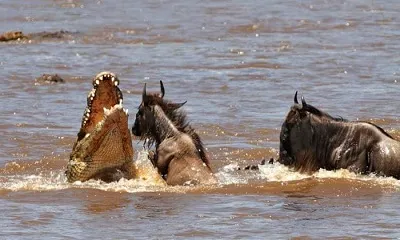
Many visitors arrive expecting to see the Mara River crossing the most photographed migration event without understanding that crossings cannot be scheduled. They occur when the herds decide to commit, which can be after hours of build-up, or not on a particular day at all. The solution is not luck it is expert guide positioning based on multi-day herd tracking and network intelligence from other guides in the field. Our guides have been positioned for successful crossings by combining three days of observation with real-time network data. A guide who tells you a crossing will happen at a specific time is guessing. A guide who positions you at the right crossing point after two days of herd tracking and intelligence is doing the work.
Month-by-month the complete location calendar
Great Migration Month-by-Month Guide 2026 Where the Herds Are Every Month
The migration follows a broadly consistent annual calendar driven by rainfall, grass growth, and calving cycles. Month-by-month location and primary events below with honest assessment of viewing quality and the specific experiences each month delivers.
The entire migration assembles on the southern short-grass plains (Ndutu, Lake Masek, Kusini) in preparation for calving. The spectacle of the full 1.5 million animal herd concentrated on open plains is genuinely overwhelming — horizons of wildebeest in every direction. Predator density surges in advance of calving. A spectacular and underrated month that precedes the peak calving intensity. Access: Ndutu lodge area; roads excellent. Accommodation: mid-range rates.
February is the migration's calving peak — the most consistently rewarding wildlife window of the entire year for daily predator-prey encounter quality. Approximately 500,000 calves are born over a 3-week period centred in early February, with the highest daily rate reaching 8,000 calves per day. Every predator species concentrates on the calving grounds: lion prides in coordinated hunts, cheetah sprinting across the open plains, hyena clans working the herd edges, leopard in the fringing woodland. A wildebeest calf can run within minutes of birth — the first 24 hours are the window of maximum vulnerability. For daily encounter quality, experienced guides consistently rate February as their preferred month. Access: Ndutu; roads typically excellent. Accommodation: mid-range to high rates.
After calving, the herds begin their slow northward journey through the central Serengeti's long-grass areas. The migration column stretches for kilometres across the plains — a river of wildebeest moving purposefully north. Calves are now strong but still vulnerable; predator action continues at elevated levels. Long rains begin in late March — lush green landscapes and vivid photography conditions. Lower accommodation rates and fewer visitors than peak season. An excellent and underrated migration window.
The long rains (April–May) bring Tanzania's lowest accommodation prices — 25–40% below peak — with no reduction in park access or guide quality. The migration column is moving through the central Serengeti, and the landscape is at its most photogenic: intensely green, dramatically lit, and largely uncrowded. Some access roads are affected by heavy rain and certain camps close temporarily. The resident wildlife (Seronera lion prides, kopje leopards, cheetah on the central plains) is excellent year-round. For travellers with flexibility, April–May delivers extraordinary value and real wilderness solitude.
The migration reaches the Grumeti River in the western Serengeti — the first major water crossing of the northward journey. The Grumeti hosts giant Nile crocodiles (the largest in the Serengeti ecosystem) and produces spectacular crossing events as the herds bunch on the southern bank before committing. The western corridor is less visited than the northern Serengeti — a more remote, less crowded migration experience with comparable excitement. Camps in the western corridor (Grumeti area) are excellent and typically more available than northern Serengeti equivalents. The dry season begins; skies clear; wildlife concentrates at water.
The migration reaches the Mara River in July — the most famous crossing point in wildlife history. The northern Serengeti (Lamai Wedge, Kogatende, Mara River camps) becomes the world's most sought-after safari address. The first crossings of the season are often the most dramatic — the lead animals are cautious, the herds massive, and the crocodile welcome committee at full hunger after months without the migration feast. July is high season: book accommodation 6–9 months ahead. The crossing window opens and the northern Serengeti delivers its signature experience for the first time each year.
August and September deliver the highest Mara River crossing probability of the year — the herds cross repeatedly in both directions as they probe the Masai Mara in Kenya before returning south. Multiple crossings can occur at different points in a single day, and experienced guides position vehicles hours in advance at the established crossing points. September is widely regarded by experienced guides as the single finest migration month — crossing frequency, herd size, and predator density are all at their annual maximum. August–September accommodation is the most competitive in Tanzania: book 12 months ahead for the premium northern Serengeti camps. The Lamai Wedge (north of the Mara River) delivers the finest crossing positions in the ecosystem.
October marks the final phase of the Mara crossing season as the herds begin their southward return. Crossings continue — sometimes in reverse, south to north — and the northern Serengeti remains the prime location. Short rains typically begin in late October, ending the dry season. The combination of late-season crossing action, the onset of green season freshness, and slightly lower rates than August–September makes October an excellent and underrated migration month. The transition between seasons is often visually spectacular: golden dry plains give way to the first green flush. Book northern Serengeti accommodation 6–9 months ahead.
The short rains bring fresh grass south and the herds follow — the great southward return begins, with the migration column moving back through the central and southern Serengeti toward the Ndutu calving grounds. The landscape is dramatically green and vivid. Resident wildlife (central Serengeti lion prides, kopje leopards, Ngorongoro crater) is excellent. November is a genuinely outstanding value window: rates 10–20% below peak, excellent wildlife, low visitor numbers. The Christmas–New Year window (December 20 – January 5) commands a premium. Outside Christmas, November–December is one of the finest value safari windows available.
The world's most famous wildlife event — expert guide
The Mara River Crossing — The Complete Expert Guide
The Mara River crossing is the centrepiece of the Great Migration and arguably the most famous wildlife event on Earth. Understanding what it actually is — the mechanics, the psychology of the herds, and the role of guide intelligence — is the difference between a meaningful encounter and an ordinary game drive. Here is everything you need to know.
Why the Wildebeest Cross — and Why They Hesitate
The Mara River crossing is not simply wildebeest crossing a river to get to the other side. It is one of the most psychologically complex wildlife behaviours observable in the African bush — and understanding why the herds hesitate makes the eventual crossing far more comprehensible and extraordinary to witness.
The river crossing is the migration's primary mortality event. The Mara River is home to Africa's largest Nile crocodiles — individuals up to 5 metres long and 500 kg, specifically positioned at established crossing points after months of waiting. The herds know this. A group of wildebeest approaching the river will often spend hours — sometimes an entire day — assembling on the bank, pressing forward and retreating, testing the water and withdrawing. The tension is visible: animals push each other toward the water; a lead animal reaches the bank and turns back; the crowd thickens. Then, triggered by an invisible decision at the front — often a single animal's commitment — the crossing begins.
Once started, it cannot be stopped. Thousands of animals pour into the water simultaneously, the crocodiles erupt from the shallows, and the spectacle achieves an intensity that experienced safari guides describe as unlike anything else in the animal world. Crossings typically last 10–90 minutes. The largest crossings involve 20,000–50,000 wildebeest in the water simultaneously. The noise — hooves, splashing, roaring, bellowing — carries for kilometres.

Primary Crossing Season · Northern Serengeti
Mara River Crossings
July–October (peak: August–September)
The world's most famous wildlife event — up to 50,000 wildebeest crossing simultaneously at established points on the Mara River, with Nile crocodiles and the full predator suite creating a spectacle of primal intensity that no other wildlife encounter on Earth replicates.
Book northern Serengeti accommodation 9–12 months ahead for August and September
Allocate a minimum of 3 days at the Mara River — crossings are unpredictable day-to-day
Guide network intelligence (daily updates from other guide vehicles at the river) is essential for positioning
Dawn positioning (arrive at crossing point before 7 am) maximises crossing probability
The Lamai Wedge (north bank, Tanzania side) delivers superior viewing angles to the southern bank

Western Corridor Crossing · Less Visited
Grumeti River Crossings
June (primary window)
The Grumeti River in the western Serengeti is the migration's first major water crossing — hosting the ecosystem's largest crocodiles and producing dramatic crossing events with significantly fewer visitor vehicles than the Mara. For guests who want crossing drama without the August Mara crowds, the Grumeti in June is a deeply rewarding alternative.
Grumeti crocodiles are the largest in the Serengeti — up to 6 metres and visibly more massive than Mara individuals
Western corridor camps have better availability than northern Serengeti equivalents in crossing season
Combine with a northern Serengeti leg for the complete crossing experience in one trip
Road quality in the western corridor can be challenging — high-clearance 4x4 essential
The Primary Crossing Points — Where to Position
The Mara River has established crossing points used by the migration year after year — these are the locations where the riverbank geometry, approach terrain, and water depth combine to make crossing feasible. Knowing which crossing point the herd is targeting on a given day is the guide's primary intelligence task. The main crossing points in Tanzania's northern Serengeti (the Lamai area north of the river and the Kogatende area south) each have different viewing characteristics, different vehicle density on peak days, and different guide network intelligence dynamics.

The Lamai Wedge is the triangular area of Tanzania north of the Mara River — the strip between the river and the Kenya border. Camps and viewing positions on the Lamai Wedge (the north bank) have a critical advantage during the crossing season: they observe the herds approaching from the Kenya side returning south into Tanzania, which means more deliberate, committed crossings rather than nervous first-crossings. The viewing angles from the north bank also provide better photographic positions for the iconic crossing images. Our guides specifically recommend Lamai-area positioning for August and September for guests whose primary goal is a quality Mara River crossing encounter.
How to Maximise Your Crossing Probability — The Expert Protocol
Crossings are unpredictable day-to-day — a 1-day or 2-day Mara visit gives inadequate probability. Three full game-drive days at the river allows your guide to track herd buildup across the observation window and apply accumulated intelligence for the highest-probability positioning. Many guides with decades of Mara experience say their finest crossings came on the third day of a three-day positioning exercise.
Crossings are most common in the morning hours. Positioning before 7 am means your vehicle is in place before the herd arrives at the bank — not racing to catch up after a crossing has begun. Our guides leave camp before dawn during the peak crossing season to ensure optimal position before other vehicles and before the herd commits.
Your guide is in continuous radio and phone contact with other guides across the northern Serengeti. Reports of herd buildup — thousands of wildebeest massing on the bank — travel instantly through this network. When a build-up begins at a specific crossing point, guides in the network converge. The guide who has been tracking herd position for two days will be first at the crossing point on the morning that matters. This intelligence is the most important variable in your crossing probability.
When a large herd has assembled at the bank and the tension is building, do not leave. Crossings can take hours to commit — the animals push forward and retreat repeatedly. The commitment moment is sudden and total: when the lead animal goes in, everything goes in. Guests who leave after 90 minutes of watching a bank build-up routinely miss the crossing by 20 minutes. Pack a full cooler, breakfast, and the patience the migration rewards.
On peak days in August and September, multiple vehicle concentrations can form at different crossing points simultaneously. Your guide chooses the position based on intelligence and observation — not crowd following. The crossing point with the most vehicles is not always the crossing point where the herd will commit. Our guides have positioned at quieter crossing points — chosen on herd-approach angle intelligence — and watched a single crossing event that the larger vehicle congregation missed entirely.
The most rewarding daily wildlife window of the year
Calving Season 2026 — The Expert's Favourite Migration Experience
The calving season in the southern Serengeti (Ndutu) is the migration's most underrated experience and the most consistently rewarding predator-prey wildlife window in the world. It is less famous than the Mara crossing — but experienced safari guides, conservation photographers, and wildlife filmmakers rate it higher on daily encounter quality. Here is why.
The Calving Event — What Actually Happens
Between late January and mid-March, approximately 500,000 wildebeest calves are born on the Ndutu short-grass plains — with the peak reaching approximately 8,000 calves per day in early February. Wildebeest birth is synchronised to a remarkable degree: 80% of calves are born within a 3-week window. This synchrony is a survival strategy — when 500,000 calves are born simultaneously, the predator community is overwhelmed by abundance and individual calf survival improves. But for the safari guest, this concentration of birth events in a small area over a compressed period delivers the finest predator-prey encounter density of any wildlife event on Earth.
A wildebeest calf can stand within 6 minutes of birth and run within 24 hours. The first day of life is the window of maximum vulnerability — and every predator species in the Serengeti ecosystem concentrates on the calving grounds to exploit it. Lion prides hunt in coordinated groups across the open plains. Cheetah sprint across unobstructed sight lines. Hyena clans work the herd edges in organised groups. Leopard wait in the fringing woodland. African wild dog, where present, hunt cooperatively. The encounter rate across a calving season morning can exceed anything the dry season delivers — multiple hunts, multiple kills, multiple species, across a continuous 6-hour game drive.

The Mara River crossing is the most spectacular single event in the migration — when it happens on your game drive, it is incomparable. But crossings are not guaranteed on any single day; guests can wait three days and see nothing cross. The calving season, by contrast, delivers extraordinary predator-prey action from the first morning game drive. A guest arriving in February at Ndutu will typically witness lion activity, cheetah on the plains, and hyena working the herd edges within the first 90 minutes. The daily encounter floor is higher in February than in any other month. For guests who want consistent, sustained wildlife drama rather than a single spectacular event, calving season is the correct choice — and at lower accommodation rates than peak crossing season.
Calving Season Predator Calendar — What You Will See

Apex Predator · Calving Season Specialist
African Lion
Ndutu lion prides expand territory during calving season — the plains support temporary super-prides of 20+ individuals
Coordinated pride hunts on the open Ndutu plains at dawn are the calving season's most frequent large-predator event. The absence of cover forces all action into open sight lines. Cubs born 4–6 months before calving season observe hunts from a young age — one of Africa's finest predator behavioural observation windows.
Speed Predator · Calving Season Peak
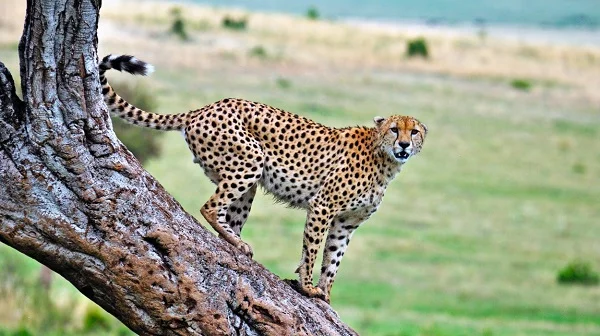
Cheetah
Calving season on the Ndutu short-grass plains is the world's finest cheetah viewing window — unobstructed sight lines and abundant prey in concentrated space
The Ndutu short-grass plains in February are the global capital of cheetah hunting observation. The terrain is flat, the grass short, and the calves newly mobile and inexperienced. Cheetah sprints at 120 km/h across open grassland, visible in full from the vehicle, represent the pinnacle of African wildlife photography. Female cheetahs with cubs use the calving grounds as a teaching environment.

Dominant Predator · Calving Season Beneficiary
Spotted Hyena
Spotted hyena density in the Ndutu calving zone reaches its annual maximum in February — clans of 30–50 individuals work the herd edges continuously
Hyena are the calving season's dominant predator by kill volume. Large clan hunts — coordinated pursuit across the plains with multiple animals separating a calf from the herd — are a daily occurrence in February. The calving season corrects the common misconception that hyena are primarily scavengers: in February on the Ndutu plains, they are the ecosystem's most prolific active hunter.
Where the migration is — understanding Serengeti geography
Serengeti Zones & the Migration — The Complete Geographic Guide
The Serengeti is not a single homogeneous landscape — it is five ecologically distinct zones, each hosting the migration at different times and delivering different wildlife character. Understanding the zones is the foundation of intelligent migration camp selection.
Southern Zone — Ndutu
Best: December–March (calving)
Short-grass plains and seasonal lakes. The calving grounds — the migration's nursery. Flat, open, treeless: ideal for cheetah, lion on open plains, and unobstructed wildlife photography. Ndutu Lodge and mobile camps are the base.
Central Zone — Seronera
Best: Year-round (resident wildlife)
Kopje granite outcrops, acacia woodland, Seronera River. The park's most reliable year-round wildlife zone — resident lion prides, kopje leopards, and cheetah. Migration passes through March–May and October–November. The park's main infrastructure hub.
Western Corridor — Grumeti
Best: June (Grumeti crossings)
Woodland, Grumeti River, giant crocodiles. The migration's first major crossing zone in June. Less visited than the northern Serengeti — a more remote, wilderness-feeling crossing experience with the ecosystem's largest crocodiles.
Northern Zone — Lamai & Kogatende
Best: July–October (Mara crossings)
Mara River, Lamai Wedge, Kenya border. The world's most sought-after migration zone during the crossing season. The Lamai Wedge (north of the Mara) delivers the finest crossing positions. Remote and extraordinary — the Serengeti at its most elemental. Book 12 months ahead for August.
Where to stay for the migration — 2026 camp guide
Best Migration Safari Camps Tanzania 2026 — Expert Camp Selection by Season
Camp selection is the most consequential planning decision in a migration safari — the right camp at the right location in the right season puts you at the migration's heart. The wrong camp, even within the same park, can mean hours of daily driving just to reach the action. Here is our expert guide to camp selection for each migration season.
Calving Season Camps — Southern Serengeti (January–March)
Budget · Calving Season
Ndutu Safari Lodge
$300–$450/pp/night · All-inclusive
Ndutu Plains — calving ground centre
The original and best-located permanent lodge for the calving season — positioned on the Ndutu lake edge at the heart of the calving grounds. Game drives begin immediately from the lodge with no transit time. Established wildlife at the water's edge from the room veranda. The practical choice for the most rewarding calving season positioning.
Mid-Range · Mobile Camp
Ndutu Mobile Tented Camp
$250–$400/pp/night · All-inclusive
Ndutu short-grass plains — repositionable
Mobile camps (seasonal, repositionable) in the Ndutu area during calving season offer the flexibility to relocate as the migration moves across the plains. Typically 8–16 tents with full hospitality. The best mobile camps follow the migration's daily movement and position within kilometres of the highest-activity zones.
Mid-Range · Good Value
Lake Masek Tented Camp
$200–$320/pp/night · All-inclusive
Lake Masek — Ndutu fringe
On the shores of Lake Masek with views over the water and across the plains. Flamingo on the lake, wildebeest on the lakeshore, and easy access to the calving grounds. A fine value alternative to the Ndutu main lodge with excellent wildlife right at the camp perimeter and typically better availability.
Mara Crossing Season Camps — Northern Serengeti (July–October)
Premium · Lamai Wedge Position
Lamai Serengeti / Alex Walker's Serian
$700–$1,200/pp/night · All-inclusive
Lamai Wedge — north of Mara River
The most coveted migration camp addresses in Tanzania — positioned north of the Mara River with direct access to the crossing viewpoints without crossing the river daily. Lamai-area camps observe the herds approaching from Kenya and the finest south-to-north crossing events. Limited rooms; book 12 months ahead for August and September.
Mid-Range · Kogatende Area
Kogatende Mobile / Permanent Camps
$400–$700/pp/night · All-inclusive
Kogatende south of Mara River
Kogatende-area camps (south bank) provide excellent access to the primary Mara crossing points and typically have better availability than the ultra-premium Lamai camps. The viewing angle from the south bank is different but the crossing intensity is identical both banks deliver extraordinary events when crossings occur.
Budget · Northern Serengeti
Northern Serengeti Group Joining Camps
$260–$280/pp/night · Bed & breakfast
Northern Serengeti various positions
Group joining safaris with fixed northern Serengeti camp accommodation deliver the Mara crossing season at significantly lower per-person cost. The guide and vehicle are shared (maximum 7 guests), but the park access, crossing viewpoints, and river intelligence are identical to private safari. The budget migration option for solo travellers and small groups.
How much does a migration safari cost?
Great Migration Safari Cost Guide 2026 Every Budget Tier Explained
Migration safari costs vary significantly by season, accommodation tier, and whether you choose a private or group joining format. Here is the complete 2026 cost guide for every budget.
Budget
From $1250
5-Day Group Joining Migration Safari
Per person all-inclusive
4x4 Land Cruiser (shared, max 7)
Licensed expert guide
All park fees included
Accommodation (budget/mid-range)
All meals included
Most Popular
From $1,850
5-Day Private Migration Safari
Per person (2 guests) — all-inclusive
Dedicated private 4x4 Land Cruiser
Expert personal guide
All park fees included
Mid-range accommodation
Full flexibility and private pace
Extended
From $2,650
7-Day Private Migration Safari
Per person (2 guests) — all-inclusive
3+ days at Mara River zone
Ngorongoro Crater descent
Tarangire elephants
Highest crossing probability
Full circuit with Serengeti depth
Luxury
From $6,500
7-Day Luxury Migration Safari
Per person (2 guests) — all-inclusive
Lamai Wedge premium camps
Private concession access
Off-road driving privileges
Night drives and bush dinners
Fly-in options available
| Season | Migration event | Wildlife quality | Accommodation rates | Availability | Book ahead |
|---|---|---|---|---|---|
| Jan–Feb (calving) | Calving season — 8,000 calves/day | Exceptional | Mid-range — below crossing peak | Book ahead | 6–9 months |
| July (early crossing) | First Mara crossings of season | Peak | Peak rates | Limited | 9–12 months |
| Aug–Sep (peak crossing) | Maximum crossing frequency | Peak | Highest of year | Book now | 12 months |
| October | Final crossings + southward return | Excellent | Slightly below Aug–Sep | Book ahead | 6–9 months |
| Jun (Grumeti) | Grumeti River crossings | Excellent | Below Mara peak | Available | 4–6 months |
| Apr–May (green season) | Migration column moving north | Good | 25–40% below peak | Excellent | 2–3 months |
| Nov–Dec | Southward return — herd column | Good | 10–20% below peak | Good | 3–4 months |
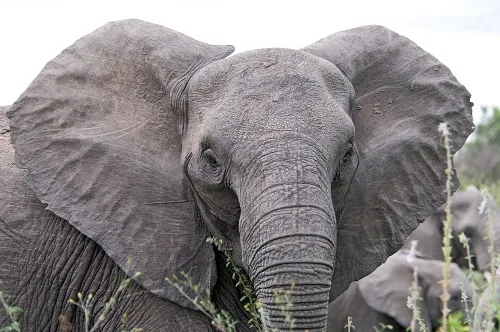
The calving season (January–February) delivers accommodation rates 20–35% below the peak Mara crossing season (August–September) while many experienced guides rate the daily wildlife encounter quality as superior. For guests whose budget doesn't stretch to peak crossing season rates, the calving season is not a compromise: it is a different and often more rewarding experience at a lower price. The Ndutu plains in February offer some of the finest wildlife value in the world.
What to bring — migration safari specific
Great Migration Safari Packing Guide 2026 — What You Actually Need
Migration safari packing has specific requirements beyond the standard Tanzania safari list. The Mara River bank involves long waits in a stationary vehicle; the calving season requires maximum telephoto reach for open-plains predator photography; the northern Serengeti in July–October can be surprisingly cold at dawn. Here is the migration-specific packing list.
📷 Photography — Migration Specific
Telephoto zoom 400–600mm minimum — calving season cheetah sprints require maximum reach
Beanbag window mount — essential for Mara bank waiting sessions (hours of stationary shooting)
Minimum 3× 256GB memory cards — crossing events produce thousands of frames
Minimum 4 camera batteries — 6–8 hour Mara bank sessions drain batteries
Dust cloths and blower — Mara bank is significantly dustier than other Serengeti zones
Small laptop or iPad for evening image backup — memory cards fill at crossings
🧥 Clothing — Season Specific
Warm fleece or down jacket — northern Serengeti dawn drives reach 8–12°C in July–October
Wind layer — Mara bank is exposed and often breezy at dawn waiting sessions
Neutral colours only — khaki, olive, tan, cream. Never bright colours or white
Light long sleeves — calving season plains offer no shade cover; sun protection critical
Wide-brim hat with chin cord (blows off the vehicle roof hatch at speed)
Comfortable camp shoes — evenings in tented camps are casual
🎒 Mara Bank Essentials
Full cooler with drinks and food — Mara bank waits can extend 4–6 hours without lodge return
Sunscreen SPF 50+ and reapply every 90 mins — river bank offers no shade
Polarised sunglasses — river reflection glare is intense during midday waits
Binoculars 8×42 — for spotting distant herd movement and early crossing buildup
Patience — the most important item at the Mara River bank. The migration waits for no one
Downloaded field guides and offline wildlife resources — no signal in northern Serengeti
What our migration safari guests experience
Migration Safari Guest Reviews — Real Encounters from 2025–2026
"The guide had been tracking the northern herd buildup for two days before our morning at the Mara. He positioned us at the primary crossing point before 6:45 am. By 9:20 am, the first lead animal entered the water — and within 90 seconds the entire bank erupted. 6,000 wildebeest in the river simultaneously. Crocodiles erupting from the shallows. The noise alone — you cannot prepare for the noise. I have been on safari 8 times. I have never witnessed anything at this intensity. The guide's two days of pre-positioning was the entire reason we were at the right point at the right moment."
7-day private migration safari · September 2025 · Northern Serengeti"We chose February calving season on the guide's recommendation after originally planning August. He explained that calving delivers more consistent daily action than crossing season. He was correct beyond anything I expected. Day 1: a lion pride hunt at dawn, three kills before 10 am, cheetah sprint at 11:15, hyena clan at midday. Day 2: we watched a wildebeest calf born from 30 metres and within 15 minutes a hyena had separated it from the mother. Day 5: wild dog pack cooperative hunt ending in a kill in full view of the vehicle. Five days of that intensity. I came back and booked the August crossing season for next year — but calving season was the superior overall experience."
5-day private calving season · February 2026 · Ndutu
"Solo traveller, group joining, $1250 for 5 days. I was the only solo in our vehicle — the other 4 guests became travel friends by Day 2. Our guide had 22 years in the Serengeti and positioned us for a Mara crossing on Day 4 — he had been watching the herd build since Day 2 and moved us to the secondary crossing point the night before based on herd angle intelligence. The primary crossing point had 14 other vehicles. We had 2. Our crossing — 3,500 wildebeest in 26 minutes — was witnessed essentially privately. The guide's knowledge and positioning was everything. At $1250 all-inclusive with park fees, it was the greatest wildlife value experience of my life."
5-day group joining migration · July 2025 · $1250/ppEvery migration question answered by expert guides
Great Migration Tanzania FAQ 2026 — Complete Planning Answers
-
The migration is always happening — there is no single "best time" that applies to every traveller. For the Mara River crossings (the world's most famous migration event): July–October in the northern Serengeti, with September delivering the highest crossing probability. For calving season (the most consistently rewarding daily predator encounter window): late January through February in the southern Serengeti (Ndutu). For green season value (same wildlife, lower prices): April–May. For the Grumeti River crossing with fewer crowds: June. Each migration season offers a genuinely extraordinary and distinct experience — the choice depends on which specific event you want to prioritise and your budget.
-
No safari operator can guarantee a Mara River crossing crossings are not predictable day-to-day, and any operator who guarantees one is not being honest. What we can do and what distinguishes expert guides from average ones is maximise your crossing probability through multi-day herd tracking, real-time guide network intelligence, dawn positioning at the correct crossing point, and the patience to wait as long as the herd requires. In August and September, crossing probability for a 3-day Mara River positioning exercise is very high most guests see at least one crossing per 3-day stay. Shorter stays have lower probability. The calving season, by contrast, does not have the same unpredictability problem predator action at Ndutu in February begins reliably from the first morning.
-
They are different experiences that cannot be fairly compared both are extraordinary. The Mara crossing is the world's most spectacular single wildlife event when it occurs a sensory and emotional experience unlike anything else in the natural world. But it is event-dependent and not guaranteed on any given day. The calving season delivers consistent, daily predator-prey action of extraordinary quality that begins immediately and continues throughout the stay. Many experienced safari professionals (guides, wildlife filmmakers, conservation photographers) rate the calving season as the superior overall experience precisely because the encounter quality is consistent rather than event-dependent. For first-time safari guests, the calving season reduces the anxiety of "will we see acrossing?" while delivering equally extraordinary wildlife. For repeat visitors who have done calving season, adding a crossing season trip completes the migration picture. The ideal if budget allows is to do both: calving season in February, crossing season in August or September.
-
Allocate a minimum of 3 full game-drive days at the Mara River zone. Two days is not enough on each of the first two days, the guide is tracking herd position and building crossing-point intelligence. The third day applies that accumulated intelligence for the highest-probability positioning. Many guests on one-day Mara visits do see crossings (August and September have the highest daily crossing probability), but the 3-day allocation is the professional recommendation for maximising crossing probability. A 7-day safari with 3–4 days in the northern Serengeti (including the Mara zone) is the optimal format for guests whose primary objective is the crossing.
-
Yes the migration is happening in some form every month of the year. The critical understanding is that "migration" does not mean "crossing." The Mara River crossing is the most famous single event, but the 1.5 million wildebeest are visible in the Serengeti in every month calving in January–February, column movement in March–May, Grumeti crossings in June, Mara crossings in July–October, southward return in November–December. The calving season (January–February) is in many ways more wildlife-rich than the crossing season. The long-grass columns of March–May are extraordinary at scale. Even in the "off-season" months (April–May), the resident wildlife of the Serengeti (lion, cheetah, leopard, elephant, buffalo, giraffe, the full ungulate spectrum) is excellent and the landscape is at its most beautiful. There is genuinely no bad month for a Tanzania migration safari.
-
The Mara River has a series of established crossing points that the herds use repeatedly across crossing seasons. In Tanzania's northern Serengeti, the primary crossing zones are in the Kogatende area (south bank) and the Lamai Wedge (north bank). The specific crossing point active on a given day depends on herd approach angle, water level, and the lead animals' commitment it is not predictable day-to-day. Our guides track herd movement and approach direction from the previous day and use guide network reports from across the river zone to determine which crossing point to target on any given morning. The Lamai Wedge positions (north bank) typically have superior viewing angles for south-crossing events and we recommend Lamai-side camp positioning for guests whose primary goal is crossing photography.
-
A Mara River crossing typically follows a recognisable sequence. First: herd assembly. Wildebeest begin massing on the bank hundreds, then thousands, pressing toward the water and retreating. This phase can last 30 minutes or 4 hours. The tension builds visibly: animals at the front are pushed by those behind, the crocodiles position in the shallows, and the collective anxiety of the herd is palpable. Second: the trigger. A single lead animal commits and enters the water often abruptly after a long hesitation. Third: the cascade. Once the lead animal crosses the point of no return, the herd behind erupts into the water simultaneously — the crossing cannot be stopped once it begins. Fourth: the crossing. Wildebeest pour across the river in a continuous stream. Crocodiles strike at the legs of swimming animals. Some are dragged under; most make it. The noise is overwhelming: hooves, water, bellowing, the churning of thousands of bodies. Fifth: the exit. Animals scramble up the opposite bank and immediately run from the river to safety. Stragglers become targets for waiting predators on both banks. A full crossing lasts 10–90 minutes depending on herd size and crossing commitment. The largest events — 20,000–50,000 animals crossing — can last 2 hours.
-
The same migration herds cross between Tanzania and Kenya the Mara River forms the border between the Serengeti (Tanzania) and the Masai Mara (Kenya). The key differences for safari planning: Tanzania's northern Serengeti is larger, more remote, less commercially developed, and typically less crowded than the Masai Mara on peak days. The Masai Mara has better international flight connections (Nairobi is a major hub) and a more extensive luxury camp infrastructure with more brand-name options. Tanzania allows crossings in both directions to be observed from the same crossing-season positioning: herds crossing south-to-north into Kenya in July–August and north-to-south returning in September–October. The Lamai Wedge in Tanzania's northern Serengeti is consistently recommended by experienced migration guides as the finest crossing-season base in the entire ecosystem — superior even to the finest Masai Mara camps. For first-time migration visitors choosing between the two, Tanzania delivers the more genuine wilderness experience at comparable or lower cost. For repeat visitors who have done the Masai Mara, Tanzania's northern Serengeti completes the picture.