 Dawn drive — the best 90 minutes of any safari day
 Neutral colours — mandatory, not optional

The Tanzania safari is one of the most extraordinary experiences available to a human being in the 21st century. It is also one of the most misunderstood. The gap between what most first-time travellers expect and what they actually encounter — in both directions — is larger than for almost any other type of travel. These 23 lessons are drawn from thousands of clients' first-safari experiences, from our guides' collective decades in the bush, and from honest post-trip conversations about what people wish had been different. Some are logistical. Some are philosophical. All of them matter.
Most first-time safari planners spend weeks comparing parks and virtually no time comparing camps. This is the wrong allocation. The park determines what wildlife is theoretically available. The camp determines the vehicle you're in, the guide leading your game drives, the quality of food you eat, how close to the bush you sleep, and whether the experience feels generic or genuinely special. Two people can visit the same Serengeti on the same dates — one in a budget shared vehicle from a 60-tent lodge, one in a private Land Cruiser with a specialist guide from a 10-tent luxury camp — and have experiences that share almost nothing except the landscape. The wildlife does not know the difference. Everything else does.
Before you compare parks, compare camps. Decide your accommodation tier first, then build your itinerary around it. If your budget allows for four nights at a mid-range camp or seven nights at budget camps, consider choosing the four nights. The depth of experience is not proportional to the number of nights.
July to October is Tanzania's high season, and the Serengeti wildebeest river crossings in August–September are a genuine wildlife spectacle. But "peak season" does not mean the wildlife is better everywhere — it means visitor numbers are highest, roads are most congested, and accommodation is most expensive. January–February (calving season in the Southern Serengeti) and November–December (short rains, lush landscape) are both outstanding wildlife periods with a fraction of the crowds. The best safari experience for many travellers is not in peak season — it is in the shoulder months, with better camp availability, lower prices, and fewer vehicles at each sighting.
If you cannot travel July–October, do not feel you are missing out on a "lesser" safari. Ask your operator which month is optimal for your specific wildlife priorities — the answer is often not peak season.
Tanzania safari pricing is one of the most confusing markets in travel because quotes are almost never structured the same way. A $200/night quote that excludes park fees ($60–$70/person/day in the Serengeti), game drives ($80–$120/day extra), drinks, and park entry adds up to $420/night in reality. A $450/night all-inclusive quote — meals, drives, park fees, drinks, laundry — may be genuinely better value. The practice of excluding park fees in particular is widespread, because it makes the headline price look lower. Always ask for a fully itemised quote before comparing.
When comparing quotes, always ask: Does this include park fees? Game drives? Drinks? Private vehicle? Laundry? Resilience Safaris quotes are fully itemised with every inclusion listed. Never compare a partial-inclusion quote against a full-inclusion quote without adjusting.
Most travellers assume the private vehicle upgrade is about comfort and prestige. It is not. It is about game viewing. In a shared vehicle with 6 guests, decisions are made by committee: when to leave a sighting, whether to follow a leopard into the bush, whether to stay for the kill or drive back for lunch. In a private vehicle, the guide makes every decision based purely on your interests and what the wildlife is doing. You stay as long as you want. You go where you want. You drive in silence when silence is needed. Over four or five days, this compound difference in the quality of game viewing is enormous.
If your budget allows any single upgrade, make it the private vehicle. It costs $100–$200 per day extra at mid-range camps and is included at luxury camps. It is the best-value wildlife upgrade available on a Tanzania safari.
This is the most costly lesson first-timers learn — usually when they try to book six months before a July departure and find every camp they want is full. The best luxury tented camps in the northern Serengeti for the river crossing season have 10 to 16 tents. They sell to repeat clients and travel agents with allocations before the general public ever sees availability. The window to book a specific camp for a specific peak-season week closes long before most people start planning. There is no price premium for booking early — you pay the same rate. The only cost of booking late is not getting what you want.
For July–October travel: book 9 to 18 months in advance. For all other months: 3 to 6 months. If your dates are fixed and your dream camp matters, contact Resilience Safaris today — not when you've finalised everything else.
"The safari brochure shows you what you might see. What it never shows you is what it actually feels like to sit in silence while a lion walks past your vehicle at 1.5 metres, or to hear a hyena clan at 2am, or to watch a leopard teach her cub to hunt at dusk. Prepare for the logistics. But understand that the experience will exceed everything you've prepared for."
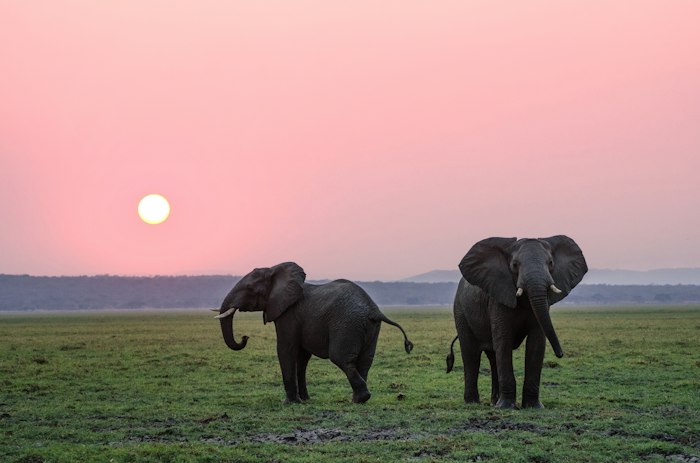
— Resilience Safaris guide, Serengeti, 2025This is not a stylistic preference — it is a practical safety recommendation. Tsetse flies, which are present in many Tanzania safari areas (particularly Tarangire and western Serengeti), are strongly attracted to dark colours and especially to dark blue and black. Their bite is painful and can transmit sleeping sickness, though the risk to tourists is very low. The correct colour palette for a Tanzania safari is: khaki, beige, olive green, sand, stone, brown, and muted grey. Bright white and vivid colours should also be avoided — they are visible from distance and can disturb wildlife. Note: camouflage-pattern clothing is illegal for civilians in Tanzania. If it appears in the landscape, wear it. If it does not, leave it at home.
Pack only earth tones. If your existing wardrobe has nothing appropriate, invest in two or three lightweight long-sleeved shirts and convertible trousers in khaki or olive before you leave. You will wear them for every game drive.
The single most universally regretted packing omission on a first Tanzania safari is not bringing binoculars — or bringing inadequate ones. The Serengeti is vast. Animals are often 100 to 300 metres away when first spotted. A 8×42 binocular brings a distant lion pride into intimate close-up that no camera phone can replicate. Binoculars also transform birding: the African fish eagle 80 metres away in a tree goes from a dark shape to a magnificent portrait in seconds. The minimum useful specification is 8×42 (8x magnification, 42mm objective lens). Compact 10×25 binoculars sold as "travel binoculars" are inadequate for safari — they are too dark at dawn and dusk when most viewing happens.
Buy or borrow a quality 8×42 binocular before you travel. You do not need to spend $500 — a $120–$200 binocular at 8×42 is entirely adequate. Some camps loan binoculars but quality varies; your own is always better.
The Serengeti dry season produces fine red-orange volcanic dust that gets into everything. It is abrasive, it is pervasive, and it will destroy camera equipment, damage laptop fans, ruin non-sealed lenses, and shorten the life of any battery-powered device left unprotected. Every piece of camera equipment should be in a dust-sealed bag when not in use. Lens changes should be done inside your bag or your clothing, not in open air. Bring a large supply of lens cloths. Your camera bag should be sealed with zip closures, not velcro. Phone cases with sealed ports exist and are worth buying before you travel.
Protect every electronic device before the first drive. Bring a dry bag for your camera. Pack more lens cloths than you think you need. Seal your phone in a dust-proof case. The dust on the last day of the Serengeti looks like it has been there since the beginning of time.
If your Tanzania safari includes a flight on a light charter aircraft — a Cessna 208 Caravan, a Pilatus PC-12, or similar — the luggage weight limit is typically 15 kilograms per person total, in a soft-sided bag only. This is not a guideline. Hard-sided suitcases cannot be physically accommodated in the luggage holds of these aircraft. Wheels and rigid frames don't fit. The pilot will weigh your bag before boarding and excess will be left behind or stored at the departure town. Pack in a soft duffel bag or a soft-sided carry-on. Store your main suitcase at your Arusha or Moshi hotel for the duration of the safari.
Buy or rent a soft duffel bag before you travel. Pack your entire safari kit — clothes for every day, camera equipment, toiletries — into 15 kg maximum. It is easier than it sounds: safari clothes are lightweight. Leave the rest at your city hotel.
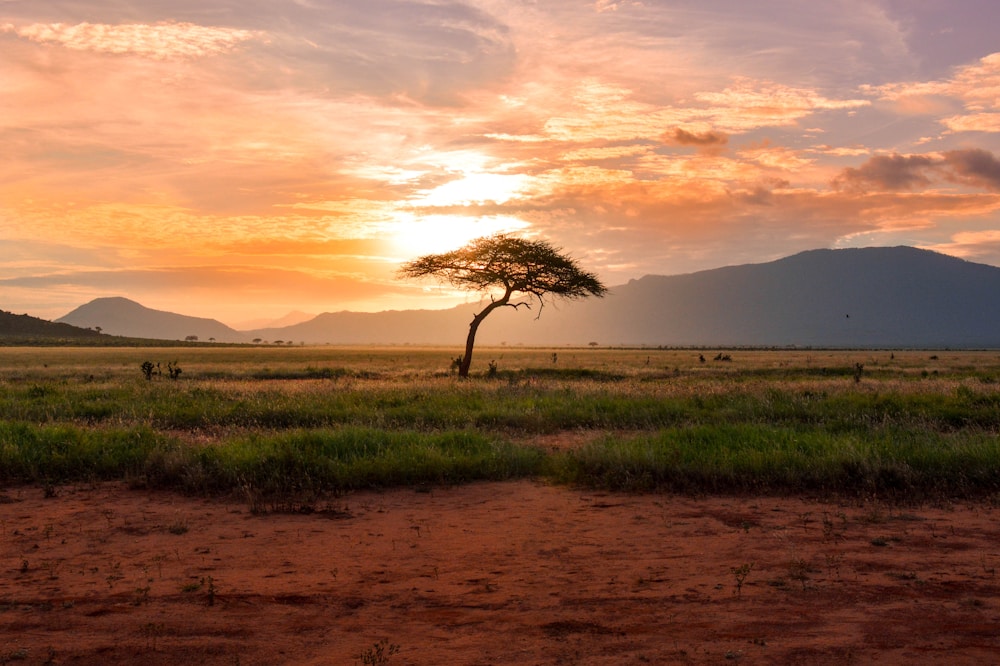
The Serengeti at 5:30am in July feels nothing like what photographs of the East African plains suggest. The altitude (around 1,500 metres), the pre-dawn darkness, and the open roof of the game drive vehicle combine to make the first hour of a dawn drive genuinely cold — 8°C to 12°C is common. Experienced safari-goers wear a fleece or a down gilet for the first 90 minutes, removing it as the sun rises. First-timers in shorts and a single layer are miserable. The same layer is useful at the Ngorongoro Crater rim, which sits at 2,300 metres and is cold at any time of day.
Pack a fleece or lightweight down jacket in your vehicle daypack. A merino wool mid-layer is ideal — warm, packable, and neutral in colour. Do not rely on the camp to provide wraps for game drives, though many better camps do.

The health information in this section is general guidance for travellers planning a Tanzania safari. It is not medical advice. Consult a qualified travel medicine physician or GP at least 4 to 6 weeks before departure for personal medical advice based on your health history and specific itinerary.
Tanzania is a malaria-endemic country. The Serengeti, Tarangire, Lake Manyara, and all northern circuit safari areas carry active malaria transmission risk year-round — with higher risk during and after the rainy seasons. Malaria prophylaxis (preventive medication) is strongly recommended for all travellers, including those who have travelled to malarial regions before. The most commonly prescribed options are Malarone (atovaquone-proguanil — taken daily, starting 1–2 days before travel and for 7 days after), Doxycycline (taken daily, starting 2 days before, 4 weeks after), and Lariam/mefloquine (weekly, 3 weeks before, 4 weeks after). Medication alone is not sufficient — also use insect repellent with DEET, sleep under provided mosquito nets, and wear long sleeves at dusk and dawn.
See a travel medicine doctor 4–6 weeks before departure. They will prescribe the right prophylaxis for your health profile, advise on vaccines (Yellow Fever, Typhoid, Hepatitis A are commonly recommended for Tanzania), and ensure you have adequate cover for your itinerary.
The Serengeti sits at 1,500 metres above sea level under a near-equatorial sun. The open roof hatch of a game drive vehicle gives you no shade during the mid-morning and noon drives. The dry season air provides no humidity buffer. A fair-skinned person can burn severely within 45 minutes without protection — even on an overcast day at altitude, UV radiation is high. Many first-time safari travellers are surprised by how intense the sun feels during game drives; even experienced travellers in tropical destinations underestimate it because they are not usually sitting stationary in an open vehicle for 4 hours at midday.
Pack SPF 50+ sunscreen and reapply every 90 minutes during game drives. Wear a wide-brimmed hat (not a baseball cap — side protection matters). Wear long-sleeved shirts rather than relying on sunscreen alone. A light bandana or buff for the neck is useful and adds no weight.
There are no public toilets in the Serengeti. On a game drive that departs at 05:30 and returns at 09:30, you will be in open savanna for four hours. "Bush toileting" — discreetly using the cover of a bush or termite mound — is the reality for any longer game drive, and your guide is entirely accustomed to facilitating this. Knowing this in advance — rather than being caught by surprise — makes the morning drive significantly more comfortable psychologically. Some longer drives carry a portable toilet; ask your camp in advance. Bring a small zip-lock bag with tissue and hand sanitiser in your vehicle daypack.
Ask your guide early in the drive about the toilet protocol. Pack tissue and hand sanitiser. Use the camp facilities before departure. Do not let the prospect of bush toileting put you off the dawn drive — the dawn drive is the highlight of the safari.
A serious medical emergency in a remote Tanzania safari camp is a helicopter or light aircraft evacuation to Nairobi (the region's primary centre for serious medical care), followed potentially by an international medical flight home. These costs can reach $50,000 to $150,000 or more. Standard travel insurance often provides inadequate evacuation cover — check the specific medical evacuation limit on your policy, not just the "medical expenses" cover. AMREF Flying Doctors operates emergency air evacuation from most Tanzania park areas and is the standard benchmark. Many camps are affiliated with AMREF. A comprehensive travel insurance policy with medical evacuation cover of at least $250,000 is the minimum for a Tanzania safari.
Check your travel insurance policy specifically for: medical evacuation limit, repatriation cover, and pre-existing condition exclusions. Buy specialist safari travel insurance if your standard policy is inadequate. The cost of an evacuation without cover will exceed the cost of your entire trip.
The most transformative behavioural change on a game drive is learning to stay quiet. This sounds obvious. It is not. Most travellers — even well-intentioned ones — make continuous verbal commentary during sightings ("Oh wow," "Did you see that?" "Where's it going?") that disrupts the experience for others, disturbs the animals, and prevents the guide from hearing and reading the environment. A genuinely expert guide communicates through whispers and hand signals when needed. The vehicle itself, the engine, and the road noise are the only sounds the animal is processing. The passengers who stay quiet see more and experience more. The experience of absolute silence in the presence of a wild lion is something that is simply not available to people who keep talking.
On the drive out from camp, agree with your fellow travellers on a silence protocol for sightings. When the guide stops, everyone goes quiet until the guide speaks or the animal has moved on. Your photos will be better. Your experience will be deeper.
The "Big Five" — lion, leopard, elephant, buffalo, rhinoceros — was originally a hunting term describing the five most dangerous animals to hunt on foot. It has become a tourist checklist that drives a significant portion of first-timer safari behaviour: people who spend an entire drive scanning for leopard, ignoring the extraordinary cheetah coalition resting 40 metres from the vehicle because cheetah is not in the Big Five. Or who drive past 2,000 wildebeest — one of the great wildlife spectacles on Earth — because wildebeest is not in the Big Five. The most memorable wildlife moments on a Tanzania safari are rarely the checkboxes. They are often the unexpected: the hyena hunt you witnessed by accident, the giraffe birth you happened upon, the moment 400 flamingos rose simultaneously from a soda lake at dawn.
Tell your guide your interest in specific animals, but also tell them you want to see whatever the landscape offers. Stop for everything. The pangolin, the dung beetle, the bee-eater colony in the termite mound — all of these are extraordinary. The Big Five will largely take care of themselves.
Most large mammals in East Africa are most active in the 90 minutes after sunrise and the 90 minutes before sunset. In the middle of the day — from approximately 10:30 to 15:30 — the heat suppresses activity and most animals are in shade. Experienced safari-goers use the midday break exactly as camps design it: rest, eat, swim, read. First-timers who try to game-drive through midday in pursuit of more sightings are often disappointed, exhausted, and physically drained by the combination of heat and dust. The rhythm of a safari — dawn drive, camp breakfast, midday rest, afternoon drive, sunset, camp dinner — is not arbitrary. It is calibrated to the biology of the wildlife.
Sleep or rest at midday. Do not feel guilty about it. You will be better company at the campfire that evening and more alert on the next dawn drive. The rest is not wasted time — it is part of the rhythm of a good safari.
The quality of your game-viewing experience depends more on your guide than on any other single factor — more than the park, more than the season, more than the vehicle. An expert guide knows where to find animals before they appear. They read tracks, dung, vulture behaviour, the direction a herd of zebra is facing, the quality of light on a distant kopje. They know which termite mound the leopard uses as a scratching post and which waterhole the lions visit at noon. A less experienced guide drives the roads and responds to radio calls. The same park, same season, same camp — with a different guide quality — can yield a profoundly different experience.
When booking, ask specifically about your guide's experience and specialisation. Tell your operator if you have specific interests — predator behaviour, birding, tracking. Tip your guide generously ($15–$25 per day, in USD cash, at the end of the safari). A guide who feels valued delivers a better experience.
The most common source of disappointment on a first safari is expecting the wildlife experience to deliver peak moments consistently and predictably. It does not. Some mornings the Serengeti is quiet. Some days the leopard everyone found yesterday has moved overnight and is nowhere to be seen. Some weeks the migration is not where the map said it would be. This variability is not a failure — it is the nature of a wild, unscripted ecosystem. The best safari-goers learn to find the ordinary extraordinary: the journey, the light, the landscape, the life of the bush between the headline moments. The patience to sit quietly at a waterhole for forty minutes — and then experience what happens when the lions finally come — is a skill the bush teaches that you will not find anywhere else.
Release the itinerary mentality before you arrive. Trust your guide. Extend the sittings. Look at what is in front of you rather than what you wish was there. The safari will exceed your expectations — but only if your expectations are shaped by the bush, not the brochure.
Tanzania safari camps operate almost entirely on USD cash transactions for tips, sundries, and extras. Cards are accepted at many lodges for the main bill, but the camp shop, the tip boxes, the community entrance fees at cultural sites, and many small transactions are cash only. Remote camps like Lake Natron have no ATM within 4 to 5 hours of driving. In the Serengeti and Ngorongoro, the nearest ATM is Arusha — which you may have left 3 days ago. Calculate your entire cash needs for the safari before you leave your departure city: tips for guides ($15–$25/day), tips for camp staff ($10–$15 per person per night), any extra drinks not covered by your all-inclusive rate, curio purchases, and a reserve buffer.
Withdraw sufficient USD before leaving Arusha. Bring notes in small denominations ($1, $5, $10, $20 — large denomination notes are sometimes refused). Keep cash in a money belt or secured zipped pocket, not in a bag left in the vehicle. $300–$500 per person in USD cash is a typical budget for 5 nights of tips and extras.
Tipping on a Tanzania safari is a meaningful part of the income of everyone who made your experience possible, and it follows established conventions that most first-timers do not know. For your guide/driver: $15 to $25 per day total from the group, paid in USD cash at the end of the safari (not per day, not per person). For camp staff collectively: $10 to $15 per person per night, placed in the designated camp tip box at checkout. For specific outstanding service (a waiter, a tracker on a walking safari): $5 to $10 per exceptional individual interaction. These amounts are guidelines, not floors or ceilings. A guide who produced an exceptional safari experience — who found the leopard with cubs that nobody else saw, who positioned the vehicle for the perfect cheetah hunt at dawn — is worth significantly more.
Prepare your tip envelopes before the last morning. A sealed envelope with the guide's name and a handwritten note alongside the USD is the appropriate form. Do not tip with cards, local currency, or goods (unless specifically asked). A well-tipped guide remembers the guest; a well-tipped camp remembers the operator. Everyone benefits.
Most Tanzania safari camps beyond the entry level have limited or no mobile phone signal and minimal Wi-Fi — by design, by location, or both. Remote camps in the Serengeti, Ruaha, and Lake Natron have no connectivity at all. This is one of the most profound experiences available to a person who spends their working life connected: to sit at a campfire under a sky so full of stars that the Milky Way is a physical object overhead, hearing only the night sounds of the African bush, with nowhere to look and nothing to scroll. First-timers who spend energy trying to find signal, checking in with work, or managing their social channels are not on safari — they are at an expensive location while remaining wherever they were before they left. The safari asks you to arrive. The ones who do, always remember it.
Set an out-of-office. Brief your work. Then leave your phone in your tent for at least one full day. Take it on drives for photography. But at camp, in the evening, at the campfire — be present. The game drive photographs will still be there. The lion crossing in front of your vehicle at dawn will not be.
This is the lesson that sounds most like a brochure tagline until you return home, and then it sounds most accurate. Almost universally, people who complete their first Tanzania safari describe a shift in perspective that is difficult to articulate clearly but is not difficult to feel. It has something to do with scale — with being in a landscape so large and so old and so indifferent to human concerns that your own concerns temporarily find their right proportions. It has something to do with the wildlife — with the realisation that the lion does not know you are there, does not perform for you, and does not care whether you leave or stay. And it has something to do with what is lost when you return: the quiet of the bush, the rhythm of the day, the absolute clarity of what matters when there is nothing artificial around you. You will want to come back. Everyone does.
Do not treat the safari as a checklist to complete. It is an experience to inhabit. Go slowly. Look at things for longer than you think you need to. Talk to your guide about what they see that you don't. And when you get home and start planning your return, that is normal. That is what the bush does.
The Complete Tanzania Safari Packing Checklist
Print this checklist before you pack. Everything on it is either essential or significantly improves the experience.
Frequently Asked Questions
-
Wear neutral, muted earth tones — khaki, beige, olive green, sand, brown, and grey. Avoid dark colours, especially dark blue and black, which attract tsetse flies. Avoid bright white or vivid colours visible from distance. Camouflage-pattern clothing is illegal in Tanzania for civilians and must not be worn. The practical rule: if the colour appears in the landscape around you, wear it.
-
Yes. Tanzania is a malaria-endemic country and all safari areas carry transmission risk year-round. Malaria prophylaxis is strongly recommended for all visitors. Consult a travel medicine physician at least 4 to 6 weeks before departure. Common options are Malarone, Doxycycline, and Lariam — your doctor will advise based on your health history. Medication alone is not enough: also use DEET repellent, sleep under mosquito nets, and wear long sleeves at dusk and dawn.
-
Light aircraft charter flights typically have a 15 kg (33 lb) per person luggage limit, in a soft-sided bag only. Hard-sided suitcases and rigid-frame bags cannot be accommodated in the narrow luggage holds of bush aircraft. The 15 kg limit includes carry-on luggage and is enforced at the aircraft. Store excess luggage at your Arusha or Moshi hotel. Pack in a soft duffel bag.
-
For your guide/driver: USD $15 to $25 per day total from the group, paid in cash at the end of the safari. For camp staff collectively: USD $10 to $15 per person per night, in the camp tip box at checkout. For individual exceptional service: $5 to $10 per interaction. Always tip in USD cash. Prepare tip envelopes before your last day with the guide's name and a handwritten note. A well-tipped guide and camp team make a material difference to the quality of the next guest's experience, not just your own.
-
The single most common mistake is under-investing in accommodation to afford more nights or more parks. The result is more time in the bush with diminished quality throughout — a shared vehicle, a less experienced guide, a less atmospheric camp. Three nights in a well-chosen camp at the right tier will stay with you longer than seven nights in budget accommodation across four parks. The wildlife at different budget levels is the same. Everything surrounding it is not. Spend the budget on fewer, better nights rather than more, lesser ones.